
What Home Wellness Equipment Really Costs to Run: Sauna, Cold Plunge, HBOT and Red Light
Short answer: the equipment with the biggest power rating is usually not the one that costs most to run. What matters is duty cycle — how many hours per day the thing actually draws power. A 1864 W red light panel used for 20 minutes a day is a rounding error on your bill. A cold plunge chiller cycling around the clock is the one to plan for. This guide shows you the arithmetic so you can work out your own numbers instead of trusting anyone's headline figure, including ours.
Running costs are the part of a wellness equipment purchase that almost nobody quantifies before buying, and the part that quietly continues for the next decade. The problem is that published estimates vary enormously, use assumptions they rarely state, and are quoted in units that are not comparable to each other.
So rather than hand you a number, this guide hands you the method — and is honest about which of these machines can be estimated reliably and which genuinely cannot.
The only formula you need
Electricity is billed in kilowatt-hours (kWh). One kilowatt-hour is 1,000 watts drawn for one hour. Everything follows from that:
Cost = (watts ÷ 1,000) × hours run × your electricity rate
The three inputs deserve individual attention, because two of them are where people go wrong.
1. Watts — and why the nameplate is not the answer
Nameplate maximum draw is not average operating consumption. This distinction is the single largest source of bad cost estimates.
A sauna heater pulls near its maximum while heating from cold, then drops sharply once it reaches the set temperature and only draws power intermittently to hold it. Golden Designs describes exactly this behaviour on its published FAQ: "Our double-panel wall construction allows our saunas to maintain the heat within the sauna requiring the use of less energy input. Furthermore, the lack of continuous flow of energy once the set temperature is reached on the sauna leads to the consumption of less energy." They state plainly that their saunas "do not draw a continuous flow of energy."
The same applies to a chiller, a compressor, and anything else thermostatically controlled. Multiplying the nameplate figure by session length will overstate consumption — sometimes by a lot.
2. Hours — the number that actually decides your bill
This is where the intuition fails. Consider two devices at opposite extremes:
- A 1864 W full-body light panel, run 20 minutes a day.
- A cold plunge chiller drawing far less, but cycling on and off 24 hours a day, every day.
The panel has roughly nine times the peak power draw. It will still cost a fraction of what the chiller costs, because 20 minutes is 1.4% of a day. Duty cycle beats power rating, almost always.
3. Your electricity rate — not a national average
Rates vary by state, utility, tariff and time of day. For a reference point, the U.S. Energy Information Administration's Electric Power Monthly put the average U.S. residential retail price at 18.44 cents per kilowatt-hour in May 2026, up from 17.37 cents a year earlier.
Every figure below uses that 18.44¢ rate so the comparisons are consistent. Your rate is on your bill, and it is the one that matters. If you pay 30¢, multiply everything here by about 1.6.
What the equipment actually draws
These are published figures for equipment in this range, quoted as published.
| Equipment | Published power | Source of figure |
|---|---|---|
| RDPRO1500-FS7 red light panel | 463 W | Stated power consumption |
| RDPro6000-FS7 red light panel | 1864 W | Stated "1864W power system" |
| CY5 hyperbaric chamber | 660 W integrated | Stated A/C power |
| CY9 hyperbaric chamber | ≈850 W system power | Stated system power |
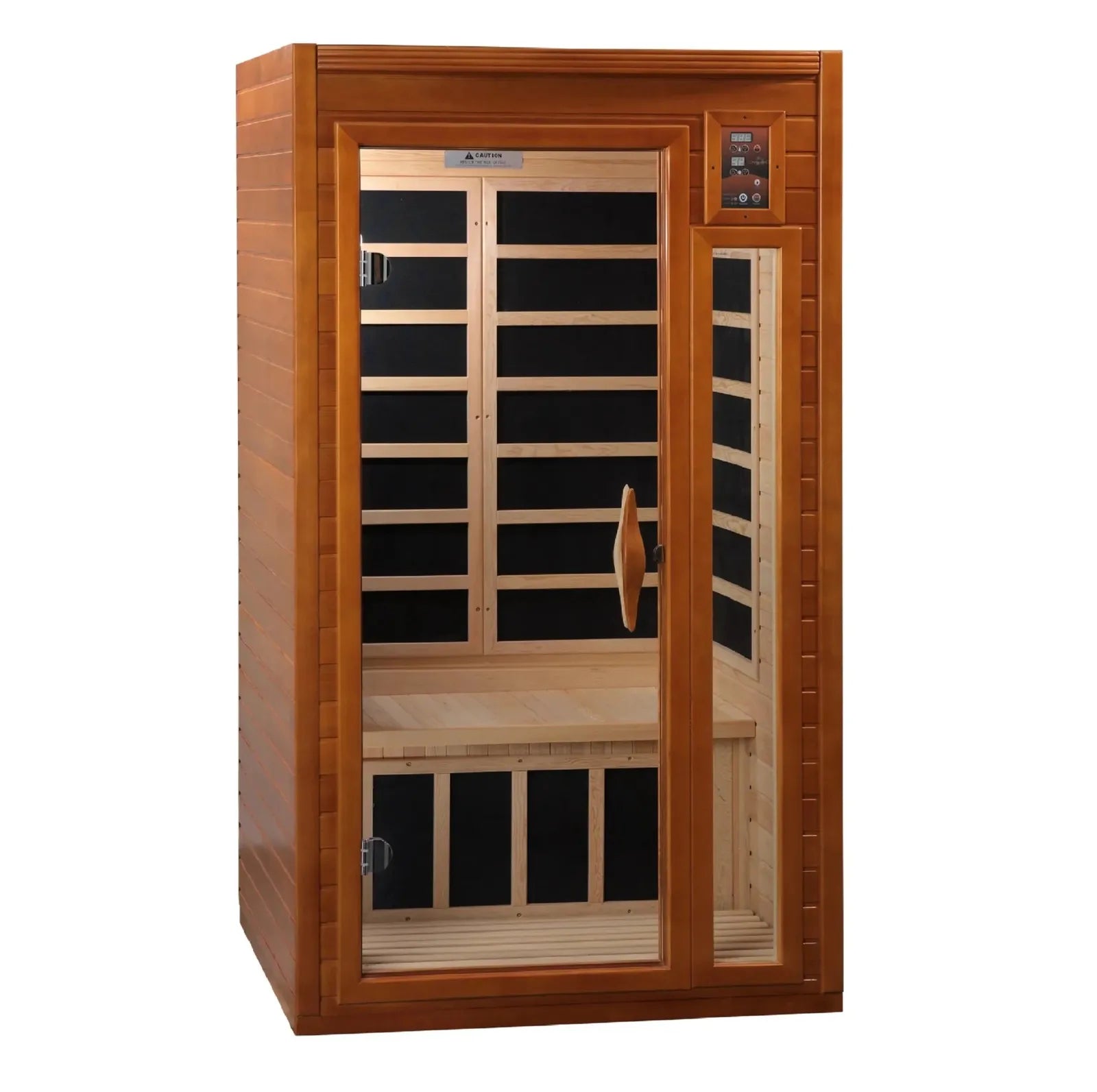
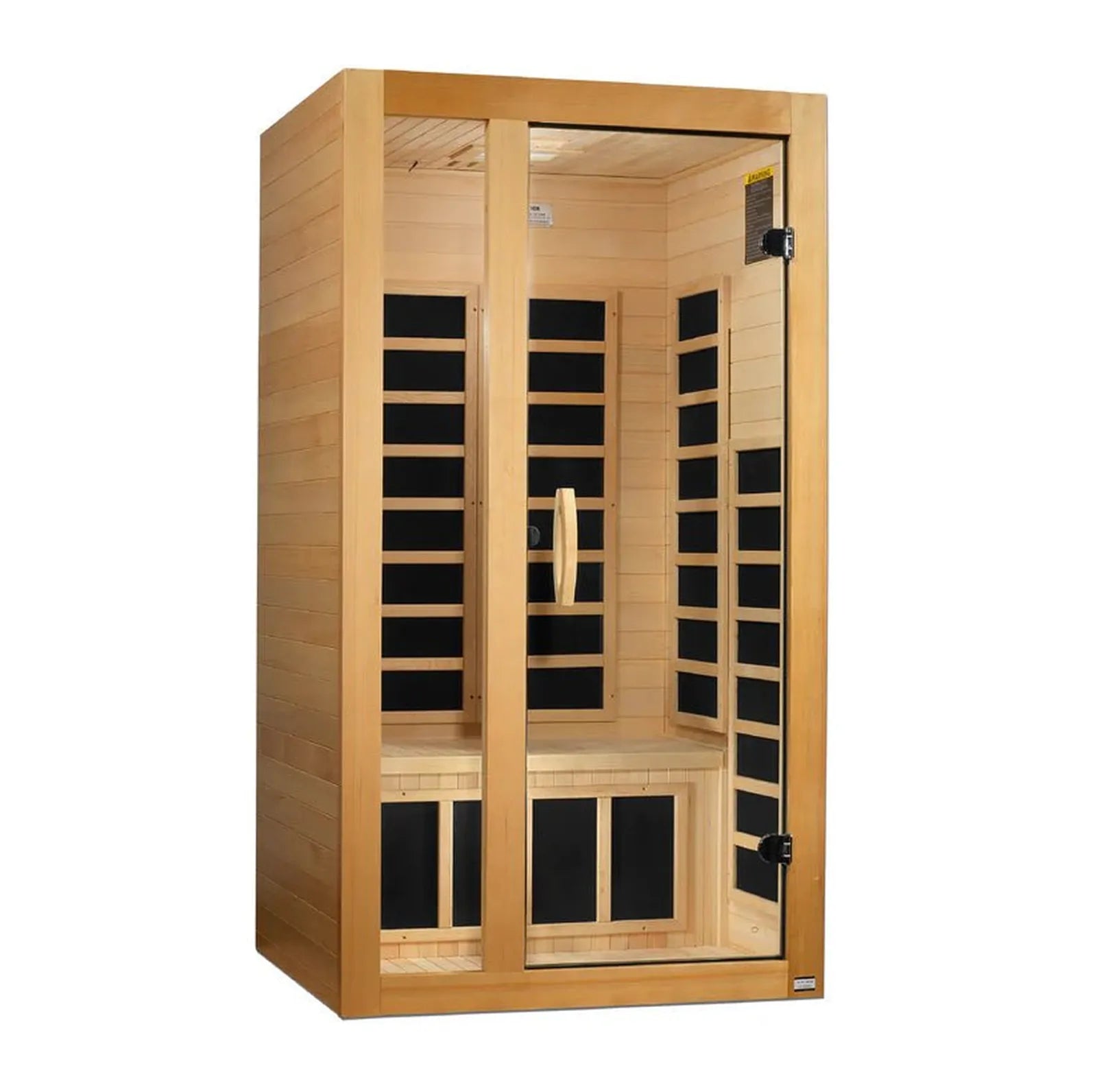
| Dynamic infrared saunas (1–2 person) | Dedicated 120V / 15A circuit | Circuit requirement, not a wattage |
| Cold plunge chillers | 0.8–1.0 HP, or a watt figure of ambiguous meaning | Varies by manufacturer |
Notice that only the red light panels and the hyperbaric chambers publish an actual wattage. The saunas publish a circuit, and the chillers publish horsepower or an unqualified watt number. That difference determines how confidently each can be estimated below.
Red light therapy: genuinely inexpensive to run
Short sessions and a known wattage make this the easiest category to calculate, and the answers are small.
| Panel | Per 20-minute session | Daily use, 30 days |
|---|---|---|
| RDPRO1500-FS7 (463 W) | 0.154 kWh — about 3¢ | 4.6 kWh — about $0.85 |
| RDPro6000-FS7 (1864 W) | 0.621 kWh — about 11¢ | 18.6 kWh — about $3.44 |
Even the institutional-grade 1864 W panel, used every single day, lands under four dollars a month at the national average rate. LED panels draw fairly steadily while switched on, so these figures are more reliable than the thermostatically controlled equipment below. Session length drives the number, which is one more reason to follow a defined protocol — see our guide to dosage, distance and time.
Hyperbaric chambers: modest, with one caveat
| Chamber | Per 60-minute session | 5 sessions/week (≈21.7/month) |
|---|---|---|
| CY5 (660 W) | 0.66 kWh — about 12¢ | 14.3 kWh — about $2.64 |
| CY9 (≈850 W) | 0.85 kWh — about 16¢ | 18.4 kWh — about $3.40 |
The caveat: does that figure include the oxygen concentrator? A concentrator is a separate machine running for the whole session with its own draw, and the published "system power" figures do not clearly state whether it is included. Ask your supplier explicitly whether the quoted wattage covers the chamber only or the chamber plus oxygen supply — it materially changes the answer. Our oxygen concentrator requirements guide covers what these machines have to deliver.
Infrared saunas: where the published numbers disagree
This is the category where we have to be careful, because two pieces of published evidence do not reconcile and we are not going to pretend otherwise.
What the electrical specification allows
The 1–2 person Dynamic cabins in this range specify a dedicated 120V/15A circuit. That sets a hard physical ceiling: 120 V × 15 A = 1,800 W. Nothing plugged into that circuit can draw more than 1.8 kW, and continuous-load convention means sustained draw is normally designed lower still.
Running the arithmetic at the absolute ceiling, for one hour a day over 30 days:
- 1.8 kW × 30 hours = 54 kWh → about $9.96 per month at 18.44¢/kWh.
- At a more realistic 1.5 kW average: 45 kWh → about $8.30 per month.
- And because the heater cycles down once up to temperature, actual consumption should fall below those figures, not above.
What the manufacturer publishes
Golden Designs' FAQ states: "To use our 1 and 2 person model saunas for about an 1-hour a day for 30 days would result in an average utility cost of about $40 - $80 per month depending on your utility rates."
These two things do not obviously reconcile, and we are flagging that rather than resolving it. To spend $40 in a month on 30 hours of use at the U.S. average rate of 18.44¢/kWh, a cabin would need to consume about 217 kWh — an average draw of roughly 7.2 kW. That is about four times what a 120V/15A circuit can physically deliver.
There are plausible explanations we cannot verify from the published material: the estimate may span the manufacturer's wider catalogue including larger 240 V models rather than the 120 V cabins listed here; it may assume utility rates well above the national average; it may deliberately be a conservative upper bound; or it may bundle assumptions that are not stated. We are not going to guess which, and we are not going to repeat either number as the definitive answer.
What to do instead: ask for the actual rated wattage of the specific model you are considering, then run the formula with your own electricity rate. That single question resolves the ambiguity for your purchase.
What can be said with confidence is the shape of the answer: a cabin on a 120V/15A circuit is bounded above by about 54 kWh for 30 hours of use, and heat-up draws more than hold. If you want to reduce it further, the levers are session length, preheat discipline and insulation quality — and keeping the cabin in good condition, which our ownership and maintenance guide covers.
Cold plunge: the one that usually costs most, and can't be estimated from the spec sheet
We are not going to give you a cold plunge running cost, because the honest answer is that the published specifications do not support one.
The reasons are specific:
- Chillers publish horsepower, not consumption. Horsepower is a compressor rating, and where a watt figure is given it is often unclear whether it describes input power or cooling output — a problem we examined in detail in our chiller sizing guide.
- Duty cycle is the dominant variable and it is site-specific. Insulation quality, lid fit, ambient temperature, target temperature, how many people use it and how often you refill all change how many hours the compressor actually runs.
- The circulation pump adds a small continuous load on top of the compressor.
What we can do is show why this category deserves your attention, using a clearly hypothetical scenario rather than a specification:
| Illustrative scenario — not a product specification | Monthly energy | Monthly cost at 18.44¢ |
|---|---|---|
| If a chiller averaged 200 W across the full 24 hours | 144 kWh | about $26.55 |
| If it averaged 400 W across the full 24 hours | 288 kWh | about $53.11 |
Those two rows are worked examples of the arithmetic, not measurements of any product we sell. They are included to make one point: at a modest 200 W average, an always-on chiller would cost roughly seven times what the 1864 W red light panel costs — despite having about one-ninth the peak power draw. That is duty cycle doing the work.
To get a real figure for your own setup, ask the manufacturer for the compressor's rated input power and an expected duty cycle at your ambient temperature, or simply put a plug-in energy monitor on it for a week and measure. Measurement beats estimation here.
The four levers that actually reduce running cost
- Insulation and covers. For anything thermostatically controlled — sauna or plunge — this reduces how often the machine has to work. It is the cheapest efficiency upgrade available.
- Ambient conditions. A chiller in a hot garage works harder and rejects heat less efficiently at the same time. A sauna in a cold, draughty room takes longer to reach temperature.
- Session discipline. Hours are the dominant term. Preheating a sauna for an hour before a twenty-minute session is where a surprising amount of consumption hides.
- Your tariff. If your utility offers time-of-use pricing, shifting a chiller's heaviest pull-down or a sauna preheat outside peak hours can matter more than any equipment choice.
Putting it together
Across a plausible mixed setup at the national average rate, the ranking is usually: cold plunge chiller first by a wide margin, sauna second, hyperbaric third, red light a distant fourth. That ordering is driven almost entirely by hours of operation, not by how powerful each device is.
Running cost is only one line in the ownership picture, alongside purchase price, maintenance, consumables and service. For the broader financial framing, our guide to home wellness technology as a long-term investment covers the wider case.
Frequently asked questions
How much does it cost to run an infrared sauna per month?
It depends on the model's actual wattage, your session pattern and your electricity rate. What can be stated with confidence is the ceiling: the 1–2 person cabins in this range are specified for a dedicated 120V/15A circuit, which caps draw at 1,800 W. One hour a day for 30 days at that absolute maximum is 54 kWh, or about $9.96 at the U.S. average of 18.44¢/kWh — and real consumption should be lower because the heater cycles down once at temperature. Note that Golden Designs separately publishes an estimate of $40–$80 per month for the same usage pattern; that figure does not reconcile with a 120V/15A circuit at average rates, so ask for your specific model's rated wattage rather than relying on either number.
How much electricity does a red light therapy panel use?
Very little, because sessions are short. A 463 W panel used for 20 minutes uses about 0.154 kWh — roughly 3 cents at 18.44¢/kWh, or about 85 cents a month with daily use. Even an 1864 W full-body panel used daily for 20 minutes comes to roughly $3.44 a month.
What costs more to run, a sauna or a cold plunge?
In most setups the cold plunge, because its chiller cycles around the clock while a sauna runs only during sessions. Duty cycle dominates. The exact answer depends on your tub's insulation, ambient temperature and usage, which is why measuring with a plug-in energy monitor is more reliable than any published estimate.
Why do manufacturer running-cost estimates vary so much?
Because they rest on unstated assumptions: which model, what electricity rate, how long the preheat is, what ambient temperature, and whether the figure is nameplate maximum or average consumption. Two honest estimates can differ several-fold purely on assumptions. Always ask what rate and what usage pattern an estimate assumes.
Is nameplate wattage the same as what the equipment actually uses?
No, and this is the most common source of error. Nameplate maximum draw is the ceiling, not the average. Thermostatically controlled equipment draws near maximum while heating or cooling to target, then far less to hold it — Golden Designs states that its saunas "do not draw a continuous flow of energy" once up to temperature.
Does an oxygen concentrator add much to hyperbaric running costs?
It runs for the whole session and draws its own power, so it is not negligible. The complication is that published "system power" figures do not always make clear whether the concentrator is included. Ask your supplier whether the quoted wattage covers the chamber alone or the chamber plus oxygen supply.
How do I work out my own running cost?
Use watts ÷ 1,000 × hours × your rate. Get the wattage from the nameplate or the manufacturer, use realistic hours rather than optimistic ones, and take the rate from your own bill rather than a national average. For thermostatically controlled equipment, a plug-in energy monitor over a week will beat any calculation.
Where to go next
Running cost interacts with how equipment is specified and installed. Our chiller sizing guide explains why an oversized or under-insulated setup runs longer, the home sauna electrical guide covers circuit requirements, and cold plunge electrical requirements covers the supply side for chillers.
For equipment choices that affect consumption, see sauna heater types and hyperbaric chamber site planning.
To browse hardware, see the sauna collection, cold plunge chillers, red light therapy, or hyperbaric chambers.
Tell our team which model you are considering and your electricity rate, and we will work the numbers through with you using the manufacturer's actual figures rather than a general estimate.