Red Light & Near-Infrared Buyer’s Guide
Understanding the science of light exposure is the key to choosing the right system for your home. Our Red Light Buyer’s Guide cuts through the jargon to explain the technical specifications that actually matter: irradiance levels, flicker rates, and wavelength precision. Whether you are comparing 660nm red light for surface tissue or 850nm near-infrared for deeper radiant warmth, this guide provides a side-by-side analysis of panels, full-body pods, and portable wraps to help you build the ultimate photonic environment.
Red Light Therapy Guides & Insights
Explore expert articles covering red light therapy technology, device comparisons, setup considerations, and how to choose the right system for your wellness routine.
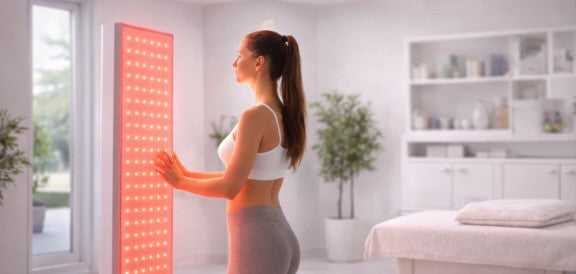
Red Light: what to expect
Read Guide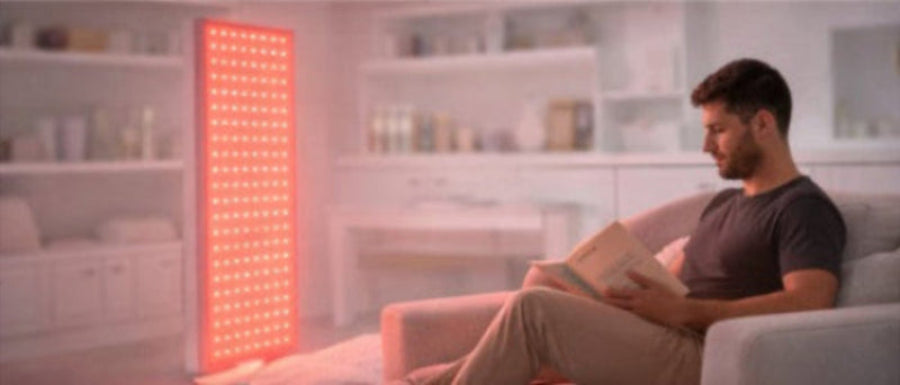
Red Light: behind the science
Read Guide
Red Light Timelines
Read Guide
Learn More
Explore All GuidesThe Essentials of Red Light Therapy (RLT)
A Modern Approach to Skin Vitality and Wellness
Red Light Therapy, also known as Low-Level Laser Therapy (LLLT) or photobiomodulation, uses specific wavelengths of light to interact with the body. Rather than relying on heat, it uses light energy to support natural cellular processes.
Understanding the Wavelengths: 660nm vs. 850nm
The Science of Light Penetration
Red Light Therapy utilizes specific frequencies measured in nanometers (nm) to determine how light interacts with your body.
| Wavelength | Spectrum | Primary Focus | Interaction |
|---|---|---|---|
| 660nm | Visible Red Light | Skin Surface & Radiance | Interacts with outer skin layers |
| 850nm | Near-Infrared (NIR) | Deep Tissue & Recovery | Travels deeper for muscle support |
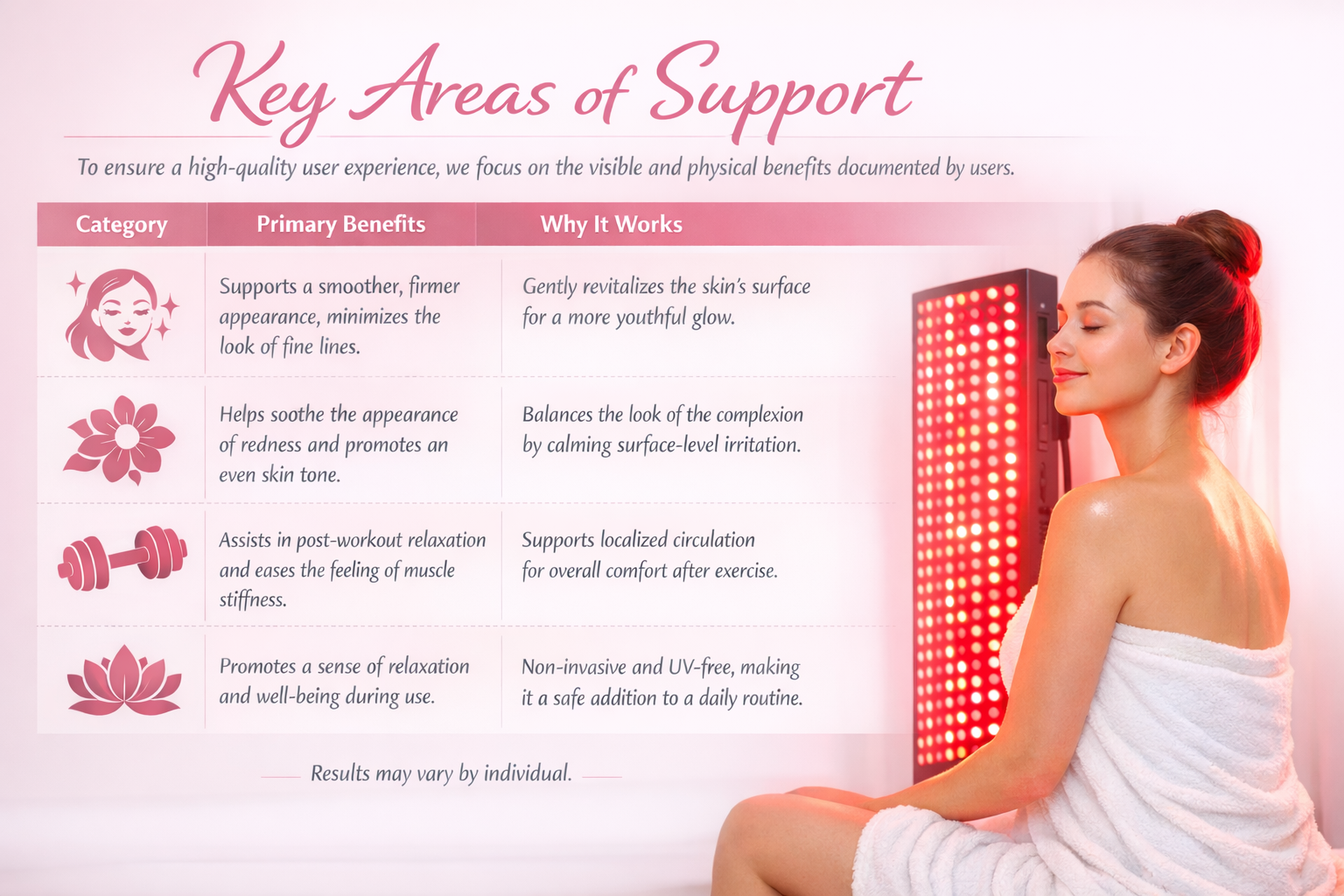
660nm: Surface Vitality
Highly absorbed by the skin’s surface to help:
- Support Skin Texture: Promote a smoother, firmer appearance.
- Enhance Radiance: Assist with a more youthful-looking glow.
- Soothe Redness: Balance the look of the complexion.
850nm: Deep Recovery
Invisible to the eye, this spectrum is ideal for:
- Active Recovery: Assist with post-workout relaxation.
- Joint Comfort: Promote a sense of overall physical comfort.
- Localized Circulation: Support natural recovery cycles.
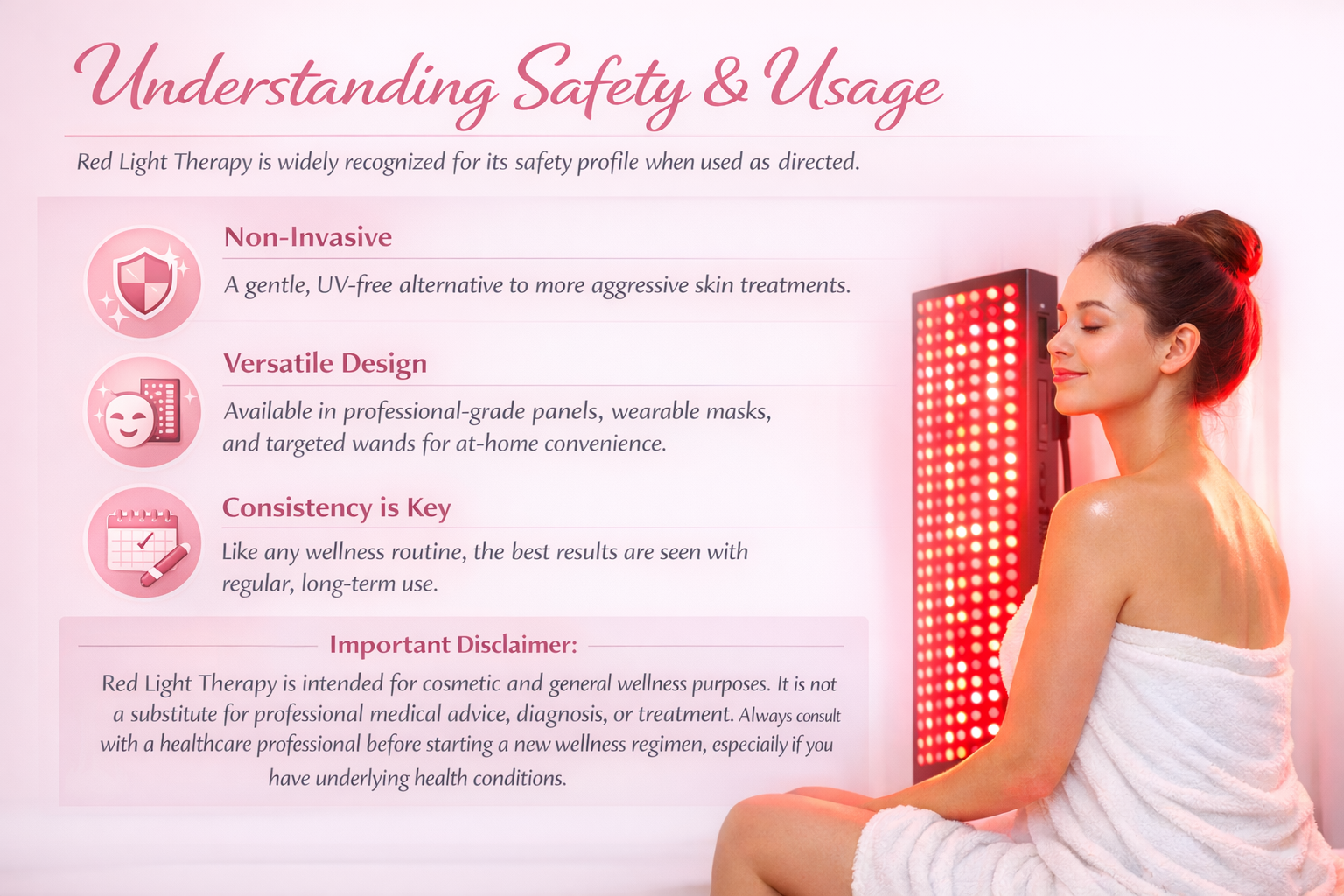
Compliance Note: These devices are intended for cosmetic and general wellness purposes. Wavelength specifications are provided for educational transparency regarding the technology's physical properties. Individual results may vary.
Buyer's guide for choosing red light therapy masks, belts, wraps, and panels based on wellness goals
Frequently Asked Questions
Wellari products are intended for cosmetic and general wellness purposes and are not intended to diagnose, treat, cure, or prevent any disease or medical condition. Our devices are not medical devices. If you have any underlying health conditions, are pregnant, or are taking medications that increase light sensitivity, please consult your physician before use. Individual results may vary.
Red light therapy safety guidelines and contraindications for light sensitivity and pregnancy
Safety & Contraindications
Your safety is our priority. Please review these guidelines for a responsible wellness routine.
Consult a Professional If:
- You are pregnant or nursing.
- You are taking light-sensitizing medications.
- You have a history of skin sensitivity or active medical conditions.
Usage Best Practices:
- Always wear the provided eye protection.
- Maintain a distance of 6-12 inches from the light.
- Keep the device in a dry, cool environment.
Types of Red Light Therapy Devices
Red light therapy systems are available in several formats, each designed for different treatment areas, usage styles, and environments.
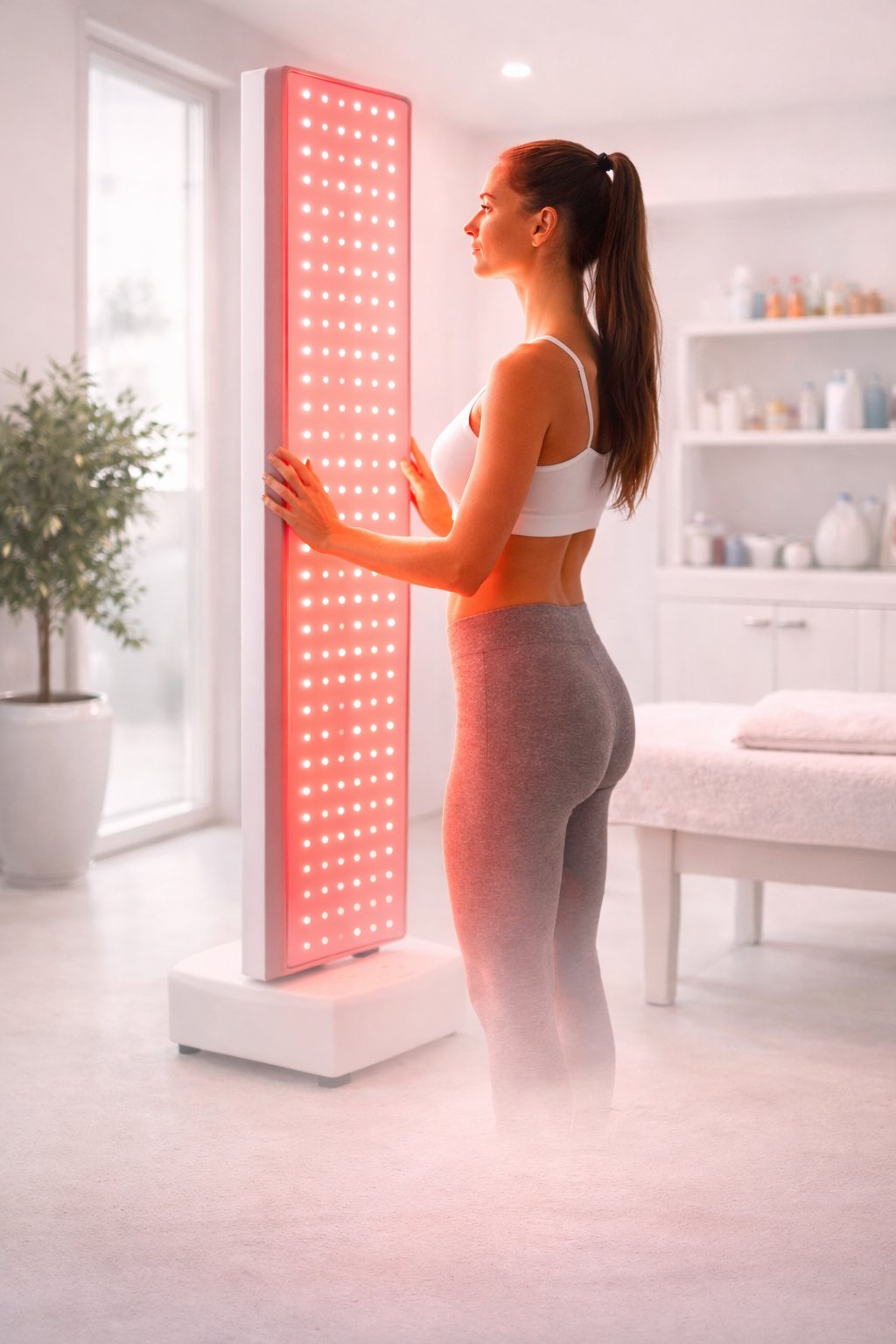
Panels are versatile systems designed for targeted or full-body use depending on size and placement. They are commonly used in home wellness spaces, professional studios, and recovery environments.

Best suited for targeted facial wellness and convenient at-home routines. Designed for portability and easy daily use, making it a seamless addition to your existing skincare ritual.

Red light therapy beds and pods are designed for a comprehensive full-body experience in a single, hands-free session. They are ideal for wellness centers and recovery environments where comfort, consistency, and time-efficiency are the top priorities.
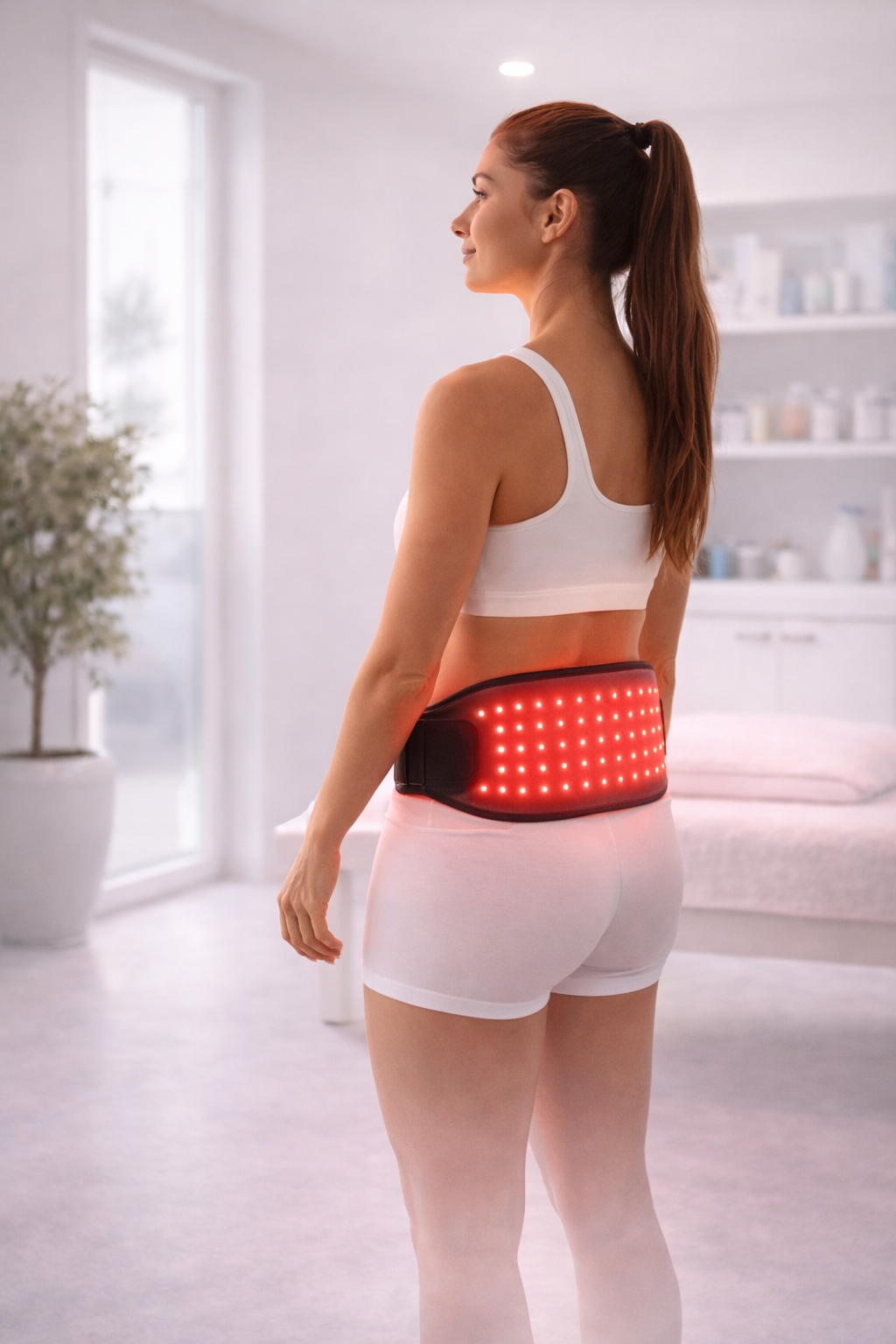
Red light therapy belts and wraps are designed for targeted application on areas like the lower back and midsection. They are the ideal choice for users seeking a flexible, wearable wellness option that integrates seamlessly into daily relaxation or post-activity recovery routines.
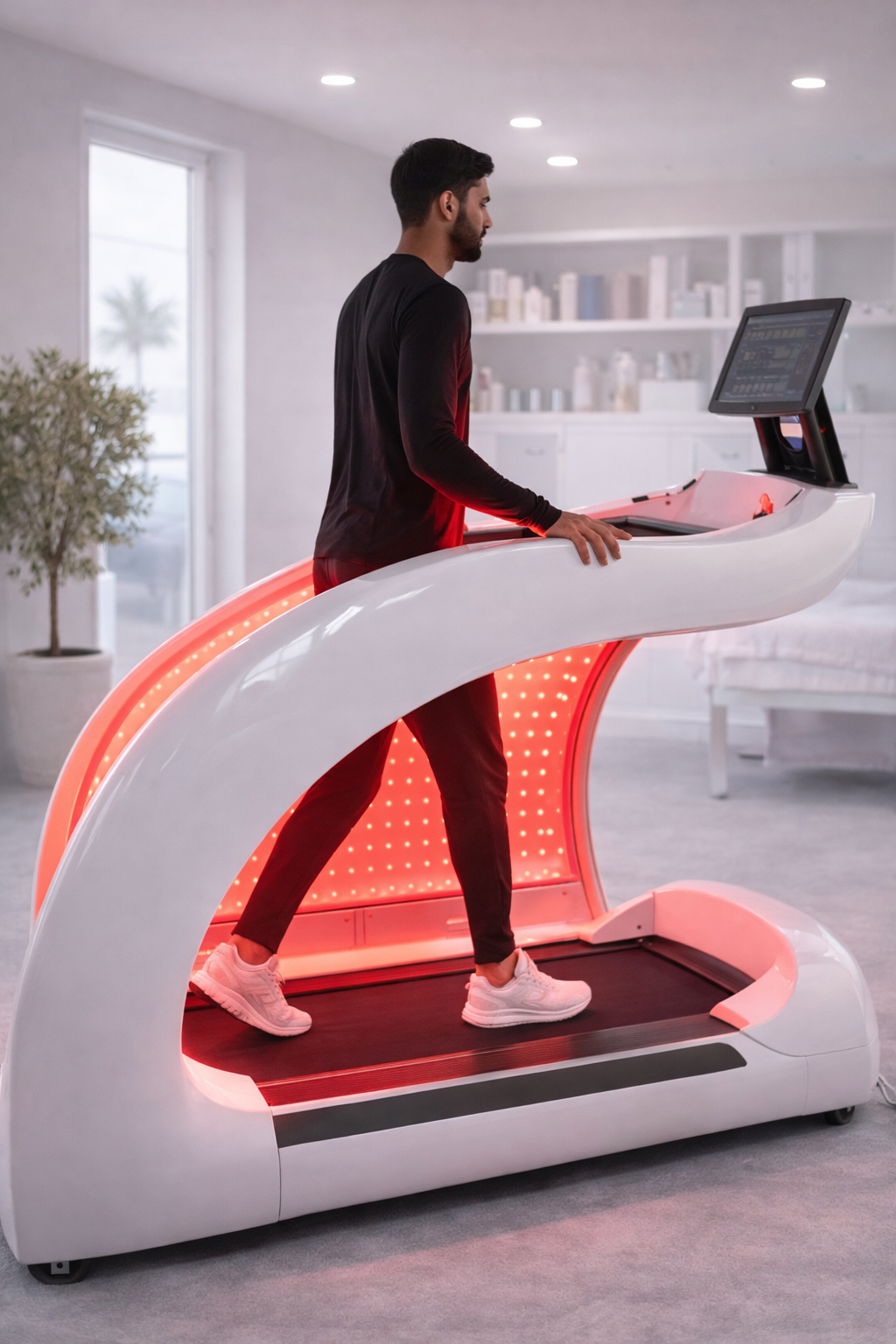
Red light fitness systems integrate red light therapy into active or heat-based workouts, such as walking, cycling, or guided movement sessions. These systems are commonly used by individuals who want to incorporate red light exposure as part of an active wellness or performance routine rather than a passive session.
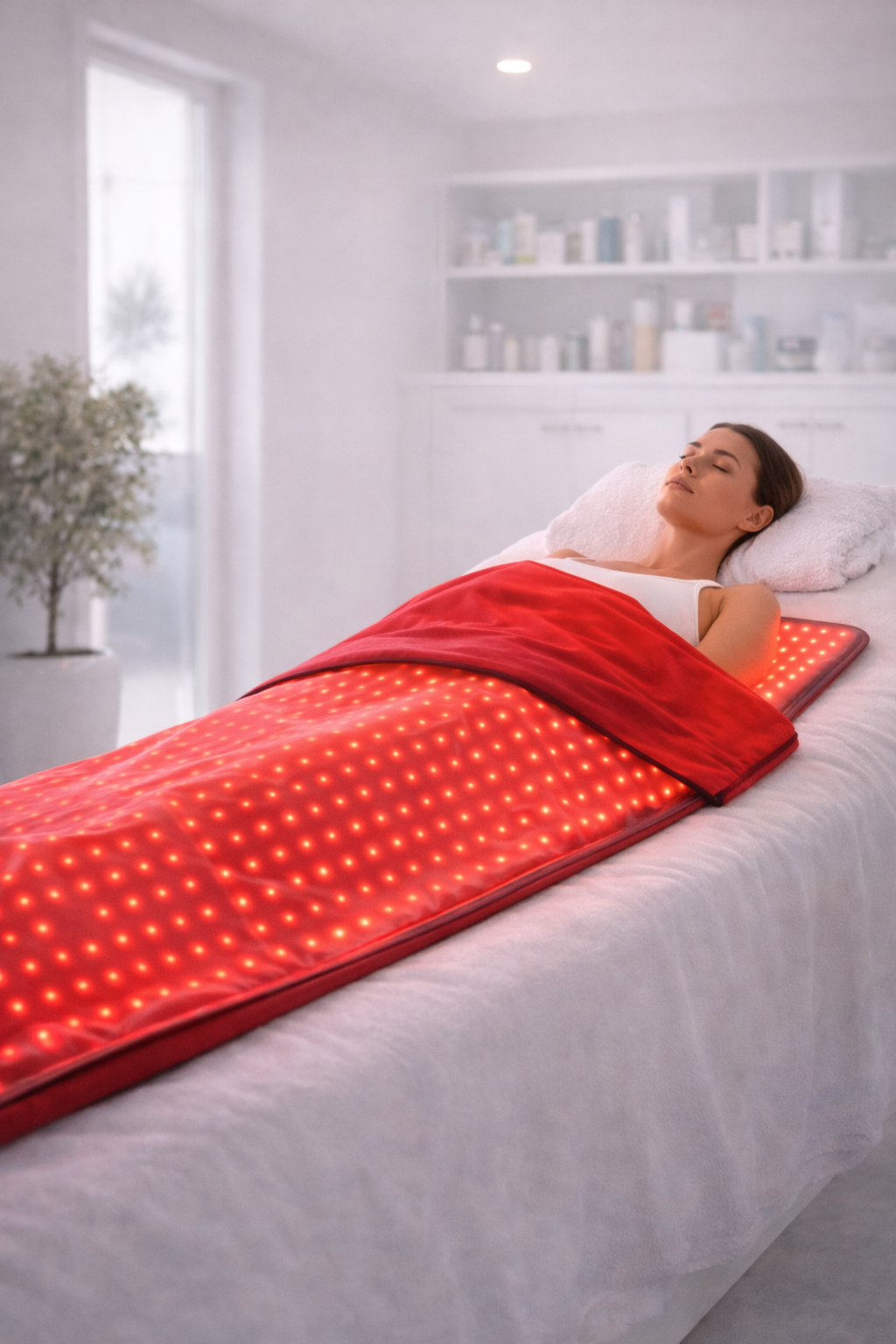
Red light therapy mats and blankets are designed for a flexible, hands-free experience while relaxing or lying down. They are the preferred choice for at-home wellness routines where portability, comfort, and consistent use are the primary focus.