

Infrared & Full-Spectrum Sauna Buyer’s Guide
Last reviewed: 8.14.26 · Written by Karen Ripley, Owner, Wellari Wellness
Infrared & Full-Spectrum Sauna Buyer’s Guide
Infrared saunas heat your body directly with radiant energy rather than heating the air around you. That single difference drives everything else — the temperatures they run at, the electrical service they need, how long a session takes, & whether a given unit belongs in a spare bedroom or a treatment room.
This guide covers what we can verify. Where a specification comes from the manufacturer rather than independent testing, we say so.
Where we don't have a number, we say that too.
Why People Choose Infrared Saunas
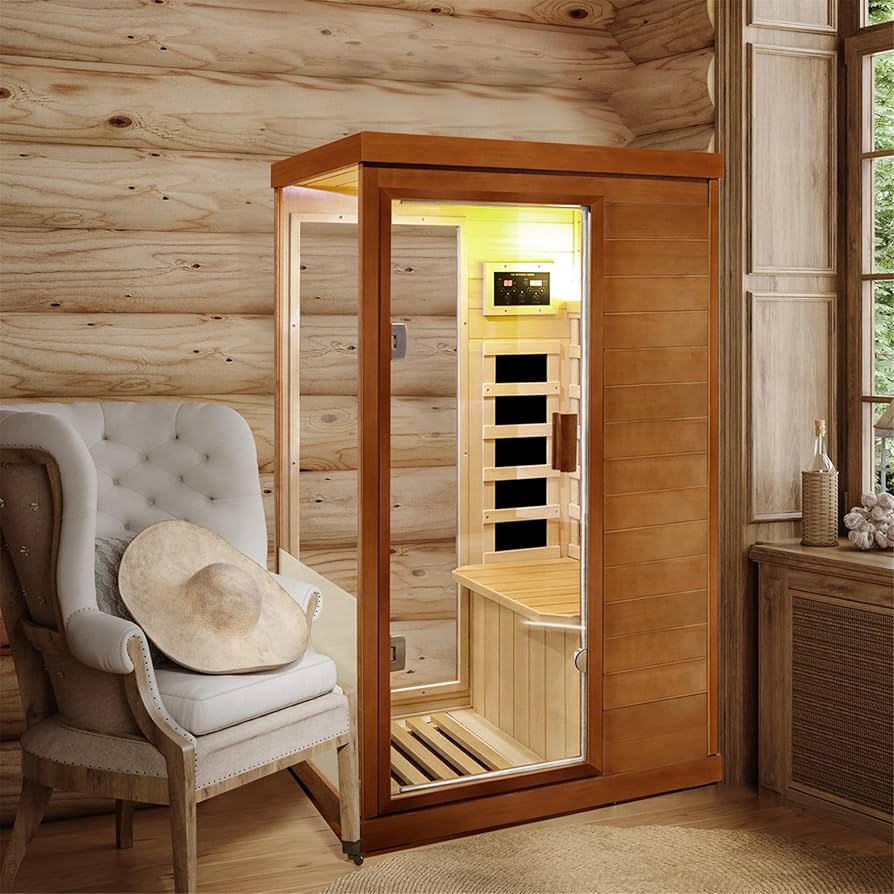
Light-Based Heating
Unlike traditional steam saunas, infrared and full-spectrum saunas use light wavelengths to gently warm the body and surrounding space, creating a more controlled, dry heat environment. Some designs also focus on minimizing electrical exposure through specialized low- or zero-EMF construction.

Comfort & Accessibility
Many users gravitate toward infrared-style saunas for their lower ambient air temperatures and more approachable, comfortable session experience—especially in personal or at-home environments.
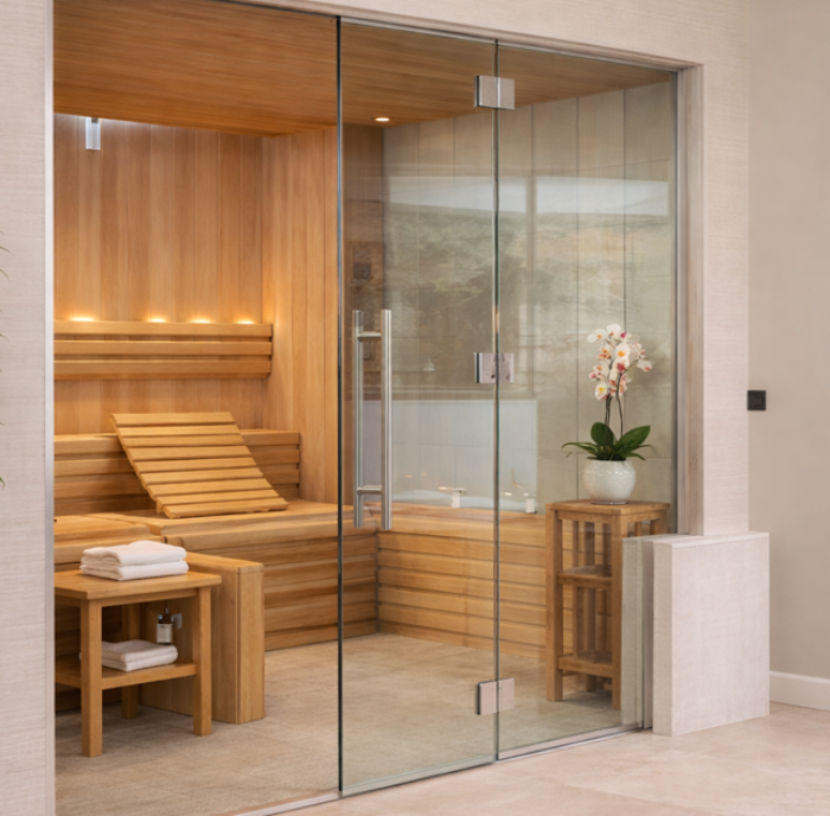
Home vs Professional
Infrared and full-spectrum saunas are commonly used in residential wellness spaces as well as spas, recovery centers, and fitness facilities, depending on size and configuration.
Understanding the basic differences
Near Infrared, Far Infrared and Full-Spectrum Saunas
Near Infrared
Near infrared uses shorter infrared wavelengths and is often incorporated into targeted or full-spectrum sauna systems. It may be selected by users who prefer a more focused infrared experience.
Far Infrared
Far infrared is commonly produced by broad-surface carbon heating panels. These systems are designed to create even, radiant warmth throughout the sauna and are widely used in residential infrared sauna designs.
Full-Spectrum Infrared
Full-spectrum saunas combine multiple infrared wavelength ranges, typically incorporating near, mid, and far infrared. They are designed for users who want a broader infrared experience within a single sauna system.

Understanding EMF in Infrared Saunas
All infrared saunas emit some level of electromagnetic fields. Zero-EMF designs are engineered to minimize EMF exposure through advanced wiring and shielding, making them a preferred choice for users who are EMF-conscious or plan frequent use.
The term ‘Zero-EMF’ is used by some sauna manufacturers to describe models engineered to significantly reduce electromagnetic-field exposure. Because measurement methods and thresholds vary by manufacturer, compare the published EMF testing data for the specific sauna you are considering
UNDERSTANDING INFRARED HEATING TECHNOLOGY
Carbon Heaters
Broad, even radiant heat
• Larger heating surface
• Typically gentler heat distribution
• Common in residential infrared saunas
Ceramic Heaters
More concentrated radiant heat
• Higher surface temperatures
• Faster localized heating
• Often used where focused heat is desired
Full-Spectrum
Multiple infrared wavelengths
• May combine near, mid and far infrared
• Designed for broader wavelength coverage
• Heater construction varies by manufacturer
Which Infrared Sauna Is Right for Me?
Choosing the right sauna often depends on how you plan to use it, where it will be installed, and the type of experience you’re looking for.
How You Plan to Use It
If you’re looking for a consistent, personal sauna routine at home, a compact infrared sauna may be a practical choice. If you’re designing a shared or professional wellness space, larger or full-spectrum systems may offer greater flexibility.
Heating Preferences
Some users prefer a focused, lower-heat infrared session, while others enjoy a broader, more immersive sauna experience. Understanding the type of warmth and session environment you prefer can help narrow your options.

Space, Power & Install
Infrared saunas vary in size, electrical requirements, and installation needs. At-home models are often designed for simple setup, while professional or full-spectrum systems may require additional planning.
CABIN MATERIALS
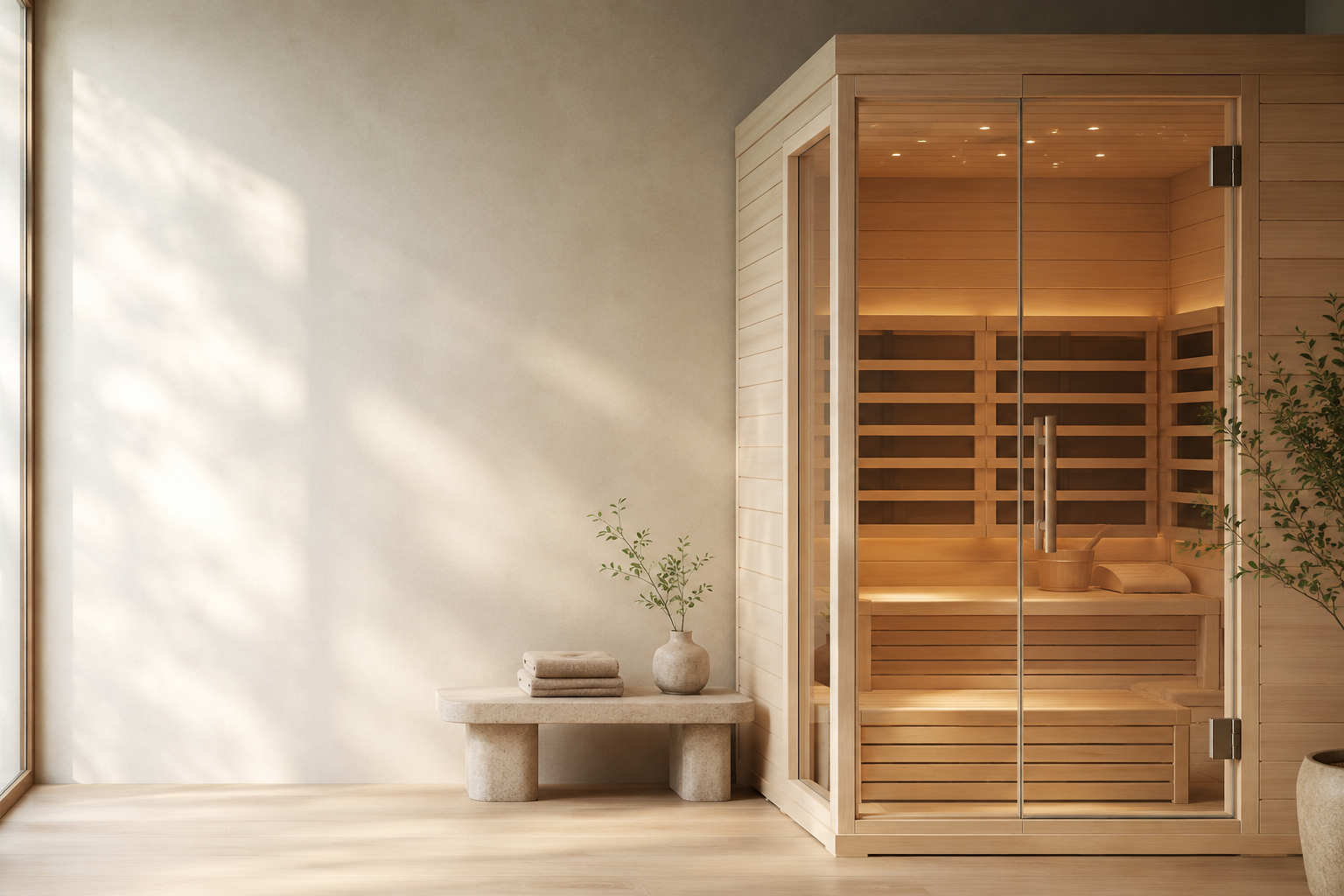
Canadian Hemlock
Light appearance
Mild/low aroma
Often more affordable
Good option for scent-sensitive buyers
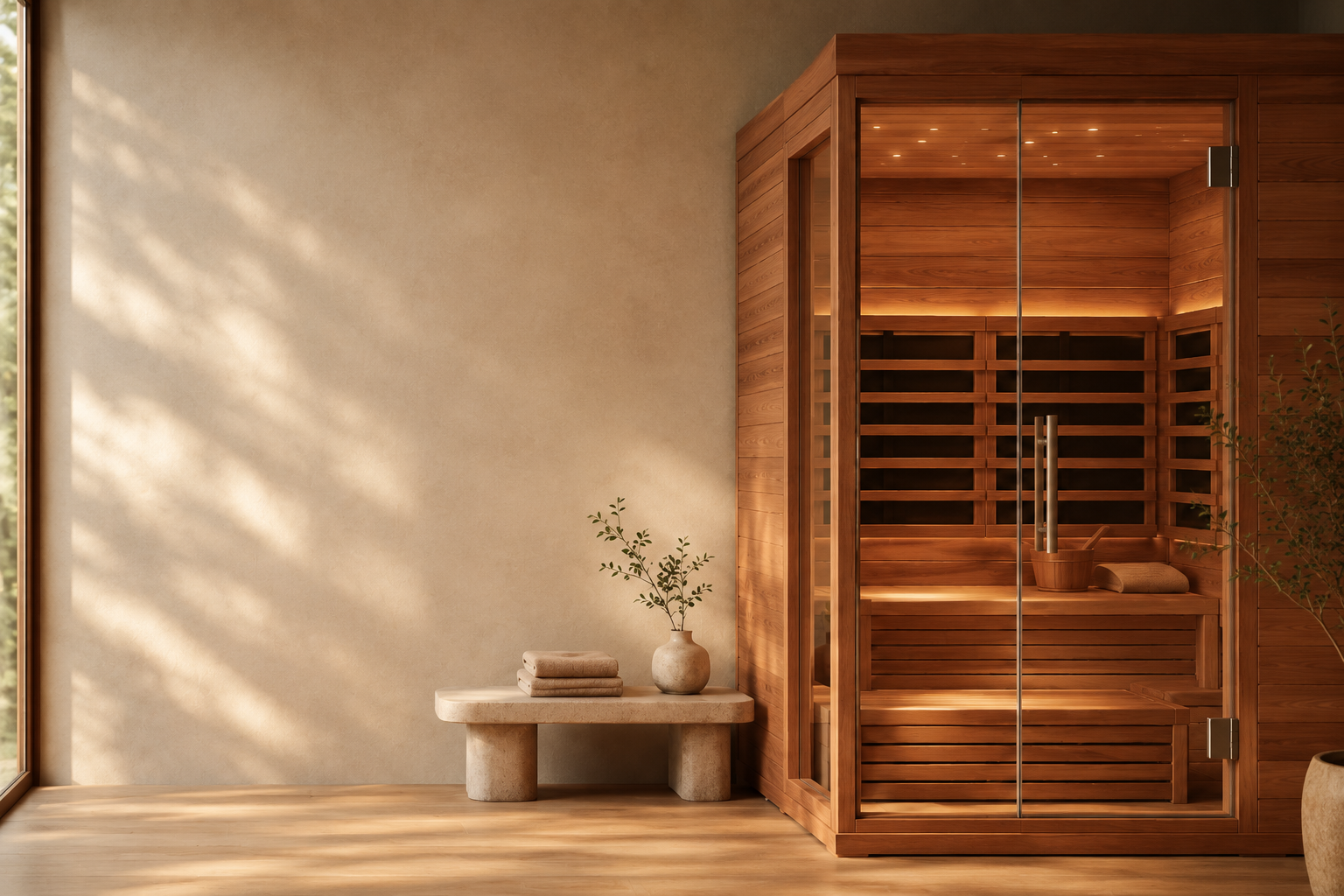
Cedar
Warmer natural appearance
Characteristic cedar aroma
Naturally moisture resistant
Typically positioned at a higher price point
Before You Buy
Important Sauna Planning Details
A few practical specifications can determine whether a sauna is right for your space. Requirements vary by model, so always confirm the specifications for the sauna you are considering.
⚡ POWER
Check the dedicated circuit requirement
Many infrared saunas require their own electrical circuit. Voltage and amperage requirements vary by model.
◷ HEAT-UP TIME
Plan for preheating
Warm-up time depends on the sauna, starting room temperature and your target temperature.
⌂ INSTALLATION
Confirm location and assembly needs
Check indoor-use requirements, dimensions, clearance, electrical access and recommended number of people for assembly.
✓ USE RATING
Residential or commercial?
Confirm that the sauna's intended-use rating and warranty match how and how often you plan to use it.
Model-specific example: Documented Dynamic models reviewed for this guide use a 120V, 15A dedicated circuit, are rated for non-commercial use and specify a 3-hour-on / 1-hour-off duty cycle. These requirements do not apply to every sauna Wellari Wellness carries.
BUYING FOR A BUSINESS?
Before purchasing a sauna for a medspa, longevity clinic, recovery center, fitness facility or other professional setting, confirm that the equipment is designed for the way you plan to use it.
✓ Commercial-use rating
✓ Warranty coverage for commercial use
✓ Manufacturer duty cycle
✓ Electrical requirements
✓ Parts and service availability
✓ Cleaning and client-turnover requirements
Important: Some Dynamic models reviewed for this guide are designated for non-commercial use and specify a 3-hour-on / 1-hour-off duty cycle. Always verify the rating and warranty for the specific model before using a sauna in a business setting.
NEAR, FAR & FULL-SPECTRUM INFRARED SAUNA COMPARISON
A side-by-side overview of common infrared sauna technologies and how they differ.
| Feature | Near Infrared | Far Infrared | Full-Spectrum Infrared |
|---|---|---|---|
| Infrared Coverage | Primarily near-infrared wavelengths | Primarily far-infrared wavelengths | Combines multiple infrared wavelength ranges |
| Typical Experience | More focused infrared exposure | Broad, even radiant warmth | Broader infrared experience across multiple wavelength ranges |
| Common System Design | Often incorporated into targeted or full-spectrum sauna systems | Commonly paired with broad-surface carbon heating panels | May combine near, mid and far infrared emitters depending on the manufacturer |
| Best Suited For | Users who prefer a more focused infrared experience | Users who prefer even radiant warmth throughout the sauna | Users who want broader infrared wavelength coverage in one system |
| EMF Design | Varies by model | Varies by model | Varies by model |
| Installation | Requirements vary by model | Requirements vary by model | Requirements vary by model |
Warranty & Ownership Details
For documented Golden Designs Dynamic models reviewed for this guide:
- 5-year coverage on heating elements and electronics
- 1-year coverage on the wood structure and audio components
- Parts coverage only; labor is not included
- Coverage applies to the original purchaser and original installation location
- Warranty is non-transferable
- Commercial use, outdoor placement, unauthorized modifications and certain other conditions are excluded
Warranty terms vary by manufacturer and model. Always review the warranty documentation supplied with the specific sauna you purchase.
When an Infrared Sauna May Not Be Right for You
WANT HIGH HEAT + STEAM?
If you are looking for the very high temperatures, steam and traditional experience of a Finnish-style sauna, an infrared sauna may not be the right fit.
HIGH-VOLUME COMMERCIAL USE?
Choose equipment specifically rated for your expected schedule and confirm that the warranty allows commercial use.
NO APPROPRIATE ELECTRICAL CIRCUIT?
Confirm voltage, amperage and circuit requirements before ordering. Electrical requirements vary by sauna and installation.
BUYING FOR A MEDICAL CONDITION?
Infrared saunas are wellness products and are not substitutes for diagnosis or medical treatment. Discuss sauna use with a qualified healthcare professional when appropriate.
Sauna Guides & Insights
Explore expert articles covering sauna types, technologies, and how to choose the right system for your wellness routine. Compare infrared and traditional options and make informed decisions with confidence.

Sauna Experience & Relaxation
Read Guide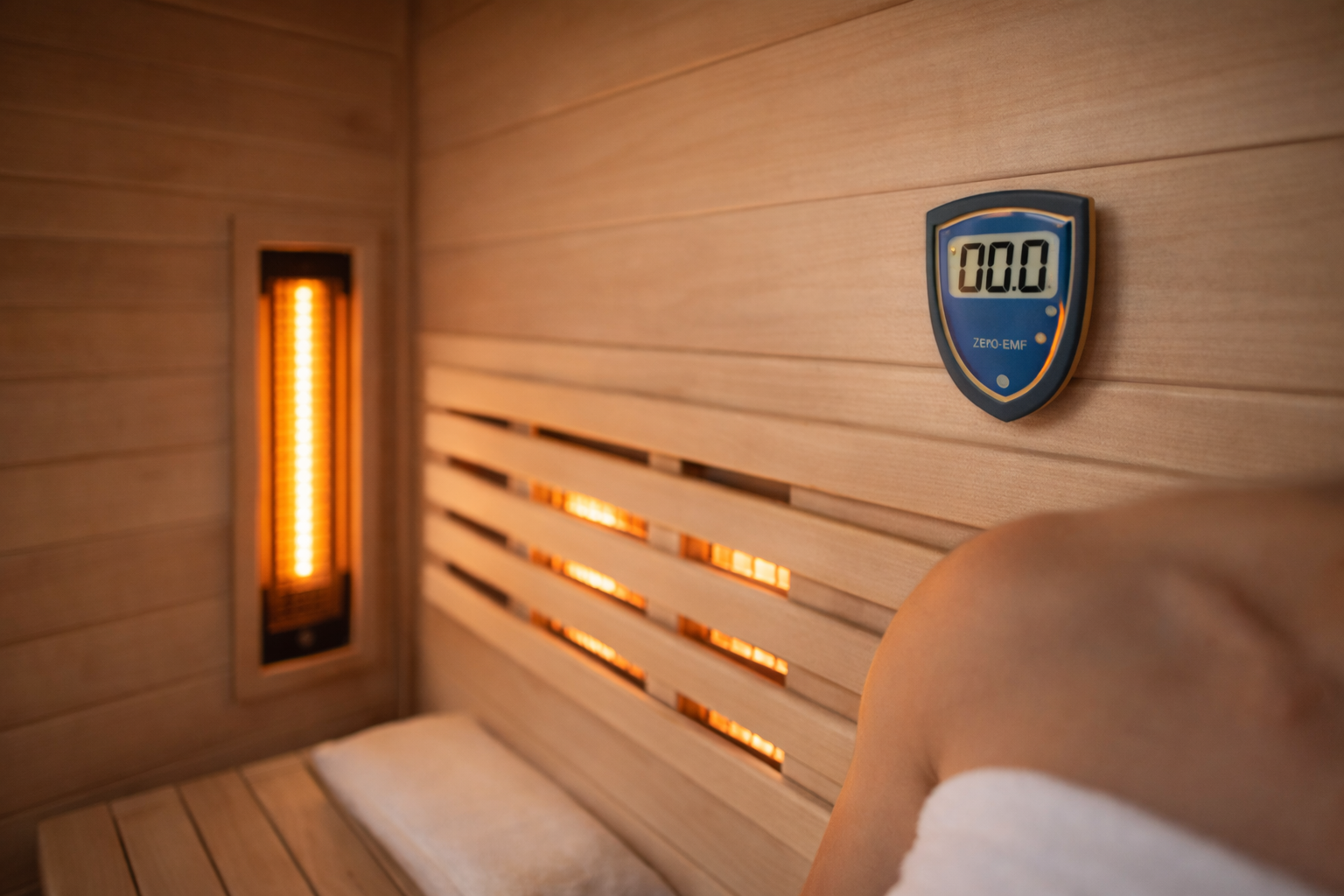
How to Choose the Right Sauna
Read Guide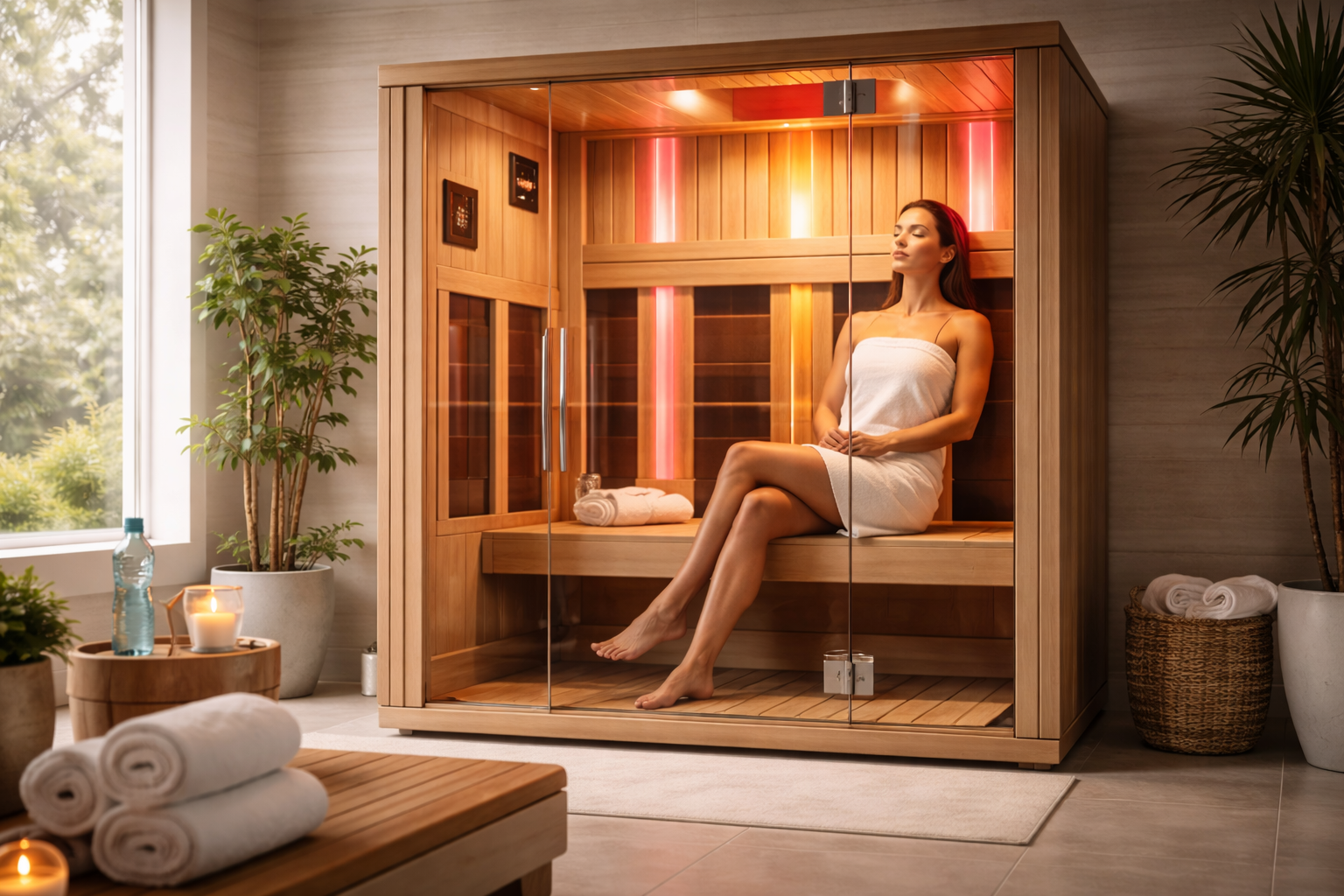
Infrared vs Traditional Saunas
Read Guide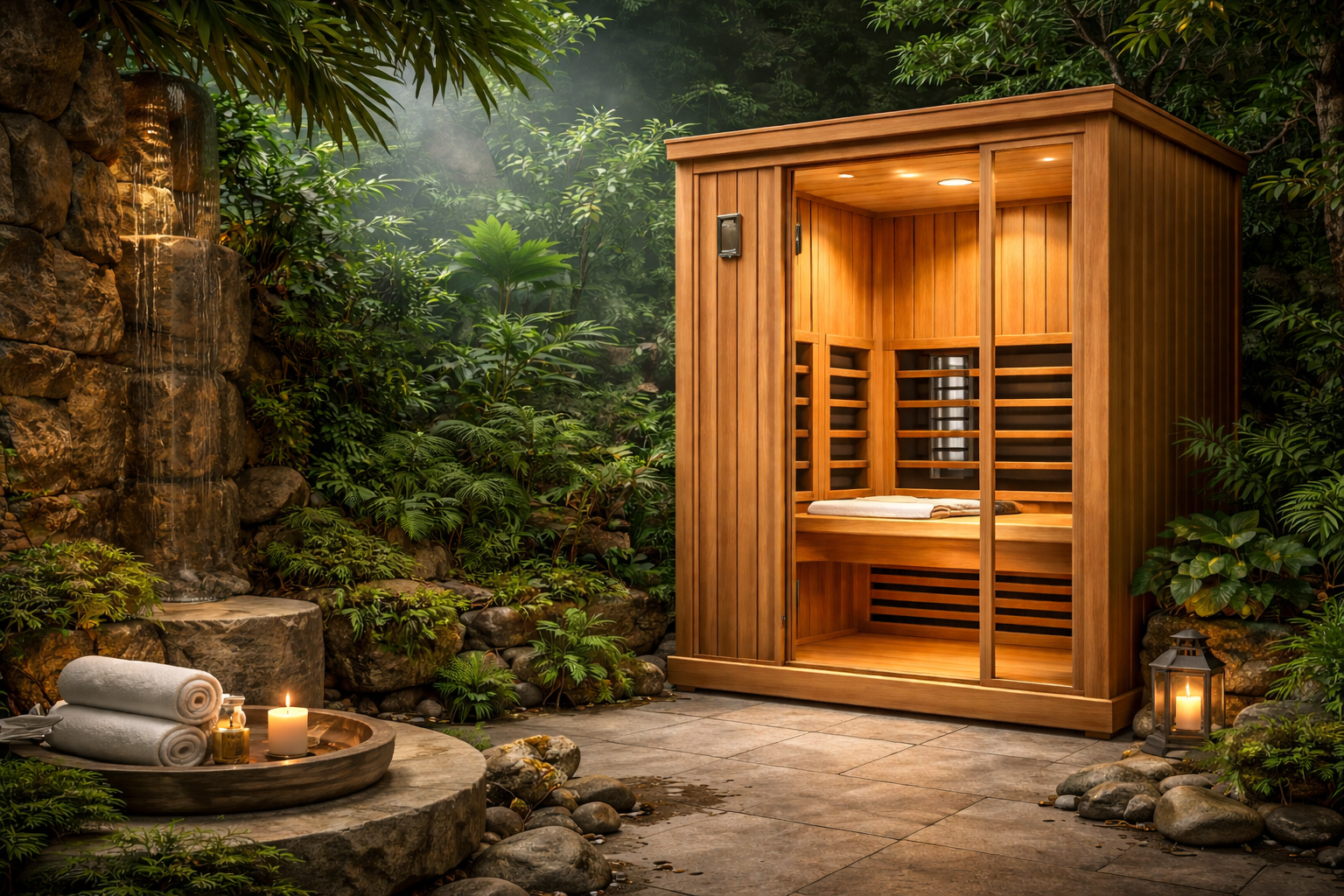
Explore All Sauna Guides
Read GuidesNeed help?
Frequently Asked Questions
Included accessories vary by model. Confirm the product listing or contact Wellari before ordering.
Generally, infrared saunas do not require the same ventilation systems associated with steam-producing equipment, but installation requirements vary. Follow the manufacturer's instructions for the specific model.
It depends on the model. Some saunas are intended for residential or non-commercial use, while others may be appropriate for professional environments. Always verify the manufacturer use rating, duty cycle and warranty before purchasing for a business.
The documented Dynamic models reviewed for this guide are described by the manufacturer as reaching approximately 135°F under typical conditions, with heat-up time depending on starting room temperature and the desired temperature.
For the documented Dynamic models reviewed for this guide, Golden Designs publishes approximately 5–10 mG for Low EMF models and 3–5 mG for Ultra Low EMF models, measured approximately two inches from the heater panel. These are manufacturer-supplied figures and have not been independently verified by Wellari Wellness.
“Zero EMF,” “Low EMF,” and “Ultra Low EMF” are manufacturer terminology rather than standardized regulatory classifications. Compare the actual published measurement and the distance at which it was taken.
Near infrared saunas focus on light-based heat delivered at lower ambient temperatures, while full-spectrum saunas combine multiple infrared wavelengths for a broader, more immersive experience.
Infrared saunas generally operate at lower air temperatures than traditional saunas, while still providing a warming experience through infrared energy.
Many infrared and full-spectrum saunas are designed for residential use and can be installed in a variety of home settings, depending on space and electrical requirements.
Session length varies by preference and comfort, but many users choose shorter, more frequent sessions compared to traditional saunas.
Most infrared saunas do not require external ventilation, though proper room airflow and manufacturer guidelines should always be followed.
That depends on the size and layout of the sauna. Models range from personal units to multi-person configurations.
Neither option is “better” universally — the right choice depends on your space, heat preference, and intended use.
If you have medical concerns or specific health conditions, it’s always recommended to consult a qualified professional before beginning any sauna routine.

Explore Infrared, Zero EMF & Full-Spectrum Sauna Options
Compare home and professional sauna systems designed for comfort, heat preference, and installation flexibility.