
What Does Red Light Therapy Do? An Evidence Review for Skeptics
Short answer: What does red light therapy do? It exposes skin to low-power red and near-infrared light, which research suggests can influence how cells produce energy. The strongest evidence covers some skin conditions, often studied with mixed light colors, and certain joint pain at clinical laser doses. For many other uses evidence is thin, and results depend on dose, wavelength and distance.
Key takeaways
- Red light therapy is real physics and real biology, but it is not a cure-all. The evidence is uneven across uses.
- A 2018 systematic review of LED trials in dermatology gave its highest grade awarded (B; no condition received A) to acne, cold sores and shingles, and acute wound healing, but those trials pooled blue, red, yellow and near-infrared light. Red-only evidence is thinner.
- Pain research that looks positive, such as knee osteoarthritis, mostly used clinical lasers at measured doses per treatment spot, not consumer panels.
- More light is not automatically better. Laboratory research describes a biphasic dose response, where too much energy can cancel the benefit.
- The questions that separate a useful device from a disappointing one are dose, wavelength and treatment distance.
What does red light therapy do, in plain terms?
Red light therapy delivers visible red light and invisible near-infrared light to the body from LEDs or low-power lasers. The research name for it is photobiomodulation, which simply means using light to change how cells behave, without heating or cutting tissue. Older papers call the same thing low-level laser therapy, or LLLT.
The proposed mechanism is fairly specific. A widely cited review from the Wellman Center for Photomedicine at Massachusetts General Hospital explains that an enzyme in the mitochondria, cytochrome c oxidase, was proposed as the primary light absorber for red and near-infrared wavelengths, and that absorbed light is linked to more ATP production, the molecule cells use for energy. Mitochondria are the structures inside cells that produce most of that energy.
That review also notes that light-based therapy in people and animals almost exclusively uses red and near-infrared light in roughly the 600 to 1,100 nanometer range. A nanometer (nm) is the unit used to describe a wavelength of light; shorter numbers are bluer, longer numbers are redder, and wavelengths beyond visible red are called near-infrared.
Does red light therapy work? Where the evidence is strongest
Light therapy has its strongest support in a short list of skin conditions and in some musculoskeletal pain studies using defined clinical doses, but much of that evidence does not come from red light alone. Outside those areas, the quality of evidence drops quickly.
Skin: a modest, honest grade
The most useful single source here is a systematic review of randomized controlled trials of LEDs in dermatology. A systematic review is a study that gathers every qualifying trial on a question and grades the overall evidence, which makes it more reliable than any one study. The 2018 review in Lasers in Surgery and Medicine found that acne, herpes simplex and zoster, and acute wound healing received a grade B recommendation, while skin rejuvenation received a grade C.
Those grades cover LED phototherapy of several colors, not red light alone. Of the review's eight acne trials, two used blue light only, five combined blue and red, and one used red only. The wound-healing trials used yellow, red and near-infrared light, and the cold sore and shingles trials used near-infrared. Evidence for visible red light on its own is thinner than the headline grades suggest.
The same review is candid about weaknesses. It lists small patient samples (fewer than 20 people in some trials), missing blinding, no sham placebo, and varied treatment settings as limitations. It also reported no severe adverse events.
For a skeptic, that is the honest summary: there is enough signal in skin research to take it seriously, and not enough to promise any particular result on your face. If skin is your main reason for looking, our deeper look at red light therapy for skin, collagen and wrinkles covers that research in more detail.
Joint pain: positive results, specific conditions
The pain research is more encouraging than many skeptics expect, but it comes with an important condition attached. A 2019 meta-analysis in BMJ Open pooled 22 placebo-controlled trials with 1,063 people with knee osteoarthritis. It concluded that low-level laser therapy reduced pain and disability at 4 to 8 joules per treatment spot with 785 to 860 nm wavelengths, and at 1 to 3 joules per spot with 904 nm.
Two details matter. First, those trials used lasers applied to specific points on the knee at measured doses, which is not the same as standing in front of a consumer LED panel. Second, the authors open by noting that low-level laser therapy is not recommended in major osteoarthritis treatment guidelines. Positive meta-analysis results and guideline recommendations are not the same thing, and both are worth knowing.
Is red light therapy legit, or is it a hoax?
Red light therapy is legitimate as a field of research, and it is not a hoax, but plenty of individual claims made for it go well beyond the evidence. Both statements can be true at once.
The research base is decades old and published in mainstream journals. At the same time, the Massachusetts General Hospital review states plainly that the therapy remains controversial in mainstream medicine. Its explanation is useful: the mechanisms are incompletely understood, and the large number of settings involved (wavelength, energy, power density, pulsing and timing) has produced negative studies as well as positive ones.
In other words, "red light therapy" is not one treatment. It is a family of very different exposures that share a color. A trial that used one wavelength and dose tells you little about a device that uses a different wavelength at a different dose. That is the main reason the field looks contradictory from the outside.
Where the evidence is thin
Red light therapy is marketed for a long list of goals beyond skin and joint pain. For many of them, the published evidence is smaller, less consistent, or not yet summarized in a systematic review. Treat any claim without a systematic review behind it as unproven, however confident the marketing sounds.
Hair is a good example of nuance. A 2021 systematic review of home-based dermatology devices did recommend laser diodes for androgenic alopecia, but that is a specific device type for a specific kind of hair loss. Our science-based review of red light therapy for hair growth walks through what that research does and does not cover.
Does red light therapy really work at home?
Home red light therapy has a thinner evidence base than clinic treatment, mainly because fewer rigorous trials have tested consumer devices. That does not mean home devices are useless; it means the burden is on the specific device and how you use it.
The 2021 home-device review in Archives of Dermatological Research recommended light-emitting diodes for acne vulgaris among home treatments, a recommendation covering blue and red LEDs. The only wrinkle devices it reviewed and recommended were low-power radiofrequency; it did not assess LEDs for wrinkles. The authors name their main limitation directly: a lack of double-blinded randomized trials of home devices, and uncertain long-term efficacy.
Why so many red light devices underdeliver
Most disappointment with red light therapy traces back to dose, wavelength and distance rather than to the idea itself. These three variables decide whether a session resembles anything studied in a trial.
Dose
Dose in light therapy means the energy delivered to tissue, usually stated in joules per square centimeter (J/cm²) or, in the knee research above, joules per treatment spot. Dose depends on the light's power at the skin and the length of the session. A device with low output at your treatment distance may never reach the energy levels used in studies, however long the marketing says to use it.
The opposite mistake is also real. Laboratory research describes a biphasic dose response, meaning a moderate dose stimulates cells but a much larger dose can lose the effect. The Massachusetts General Hospital review puts it simply: when too much energy is applied, stimulation can disappear and be replaced by inhibition. Longer sessions are not a shortcut.
Wavelength
The positive knee-pain results came from specific near-infrared wavelengths (785 to 860 nm and 904 nm). Skin trials used their own wavelengths, which may differ again. A device's listed wavelengths tell you which research is even relevant to it, so check that they are stated clearly by the manufacturer.
Distance
Irradiance is the light power reaching a given area of skin, usually given in milliwatts per square centimeter (mW/cm²). It changes with distance from the device, so a figure measured right at the lens does not describe what reaches you from a meter away. Ask for irradiance at the distance you will actually use. Our guide to red light therapy dosage, distance, time and wavelength shows how these figures fit together.
| What research specifies | What a device listing often shows | What to ask before buying |
|---|---|---|
| Exact wavelength(s) in nm | "Red and near-infrared" with no numbers | Which wavelengths, stated by the manufacturer? |
| Energy per area or per spot (J/cm² or J) | Total wattage of the device | What dose reaches the skin in a standard session? |
| Irradiance at a stated distance | A single peak irradiance figure | Irradiance at the distance I will use, and how it was measured? |
| Session length and frequency in a protocol | "Use daily for best results" | What session time does the manufacturer specify for my goal? |
How to read red light therapy claims as a skeptic
A few habits will filter out most of the overselling you will meet in this category.
- Ask for the systematic review, not the single study. One small trial can point either way; a graded review of many trials is far harder to cherry-pick.
- Check the device type. Laser research does not automatically transfer to LED panels, and clinic protocols do not automatically transfer to home use.
- Match the wavelength and dose. If a claim cites research, check that the wavelengths and doses resemble the device being sold.
- Be wary of outcome promises. Credible sources say research "suggests" or "has been studied for." Guarantees are a red flag.
- Expect gradual change, if any. Our article on the red light therapy timeline and what influences results explains why studies involve repeated sessions over weeks or months, not days.
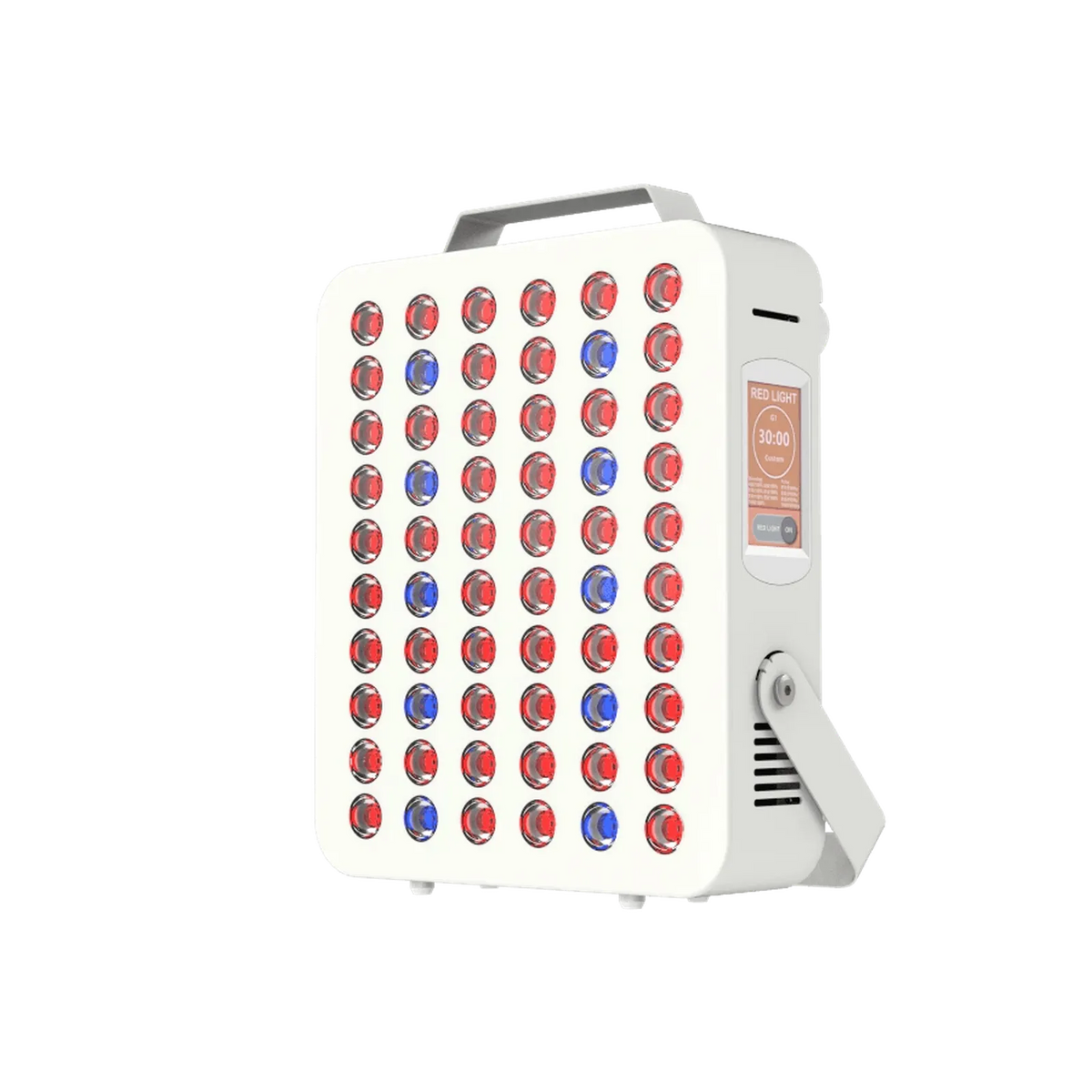
If you are comparing hardware, start with the red light therapy panels Wellari sells and check each product page for stated wavelengths and output; the LED face masks are a separate category built for facial use. Read each listing against the questions in the table above.
Talk to your doctor before starting red light therapy if you have a medical condition, are pregnant, take medication that makes you sensitive to light, or are hoping to address a specific health problem.
Frequently asked questions
What does red light therapy do to your body?
Red light therapy exposes skin to low-power red and near-infrared light. Research suggests this light is absorbed by an enzyme in mitochondria, the parts of cells that make energy, and may influence how cells produce energy and respond to stress. Systematic reviews show the most support for some skin conditions, often studied with blue or mixed LED light, and certain joint pain at specific clinical laser doses. Evidence for many other uses is limited.
Does red light therapy work for wrinkles?
The evidence is modest. A 2018 systematic review of LED trials in dermatology gave skin rejuvenation a grade C recommendation, below the grade B given to acne and wound healing, which were studied largely with other light colors or combinations. A 2021 review of home devices did not assess LEDs for wrinkles. Red light therapy for skin has been studied seriously, but results vary and no outcome is guaranteed.
Is red light therapy a hoax?
No. Red light therapy, also called photobiomodulation, has decades of published research and a plausible biological mechanism. It is still considered controversial because studies use very different wavelengths, doses and devices, which produces mixed results. The fair position is that some uses have reasonable support, many marketed uses do not, and any specific claim should be checked against a systematic review.
Why doesn't red light therapy work for some people?
Often the session never matches what was studied. Too little light at the skin, the wrong wavelength for the goal, or sitting too far from the device can all mean a low dose. Too much can also backfire, because research describes a biphasic dose response where very high doses lose the effect. Individual conditions also respond differently, and some uses simply lack strong evidence.
How long does red light therapy take to show results?
Clinical studies of red light therapy typically involve repeated sessions over weeks or months rather than days, so any change is usually gradual. How quickly anything changes depends on the goal, the device's output, the dose per session and consistency of use. Follow the session schedule your device's manufacturer specifies, and be cautious of any product promising fast or guaranteed results.
Talk to us before you buy
Red light therapy rewards careful device choice more than enthusiasm. If you want help comparing wavelengths, output and treatment area across models, browse our full red light therapy collection and talk to us before you buy. We are happy to walk through specifications with you so you can make a decision you are comfortable with.