

Is Red Light Therapy Safe? Cancer, Eyes, Daily Use and Who Should Be Careful
Short answer: Is red light therapy safe? A 2023 systematic review of skin-rejuvenation trials found few side effects, mostly mild, temporary skin redness. Red and near-infrared light are non-ionizing and are not known to damage DNA directly. Sensible precautions are following the manufacturer's directions, protecting your eyes, avoiding overuse, and checking with a doctor if you have a medical condition.
Key takeaways
- Red and near-infrared light are non-ionizing radiation, a different category from x-rays, and the National Cancer Institute describes this group as not known to damage DNA or cells directly.
- A 2023 systematic review found no clinical trial data linking photobiomodulation for skin rejuvenation with significant adverse events, including new or recurrent cancer, while noting the evidence has quality limits.
- The most commonly reported side effect in skin rejuvenation trials was mild, temporary redness.
- More is not better. Research describes a biphasic dose response, so longer or more frequent sessions can reduce the effect rather than increase it.
- There is no single proven schedule. Follow your device manufacturer's instructions, and talk to a doctor first if you are pregnant, take light-sensitizing medication, or have a history of cancer or eye disease.
Safety questions about red light therapy tend to cluster around four worries: cancer, eyes, side effects, and whether daily use is too much. This guide takes each one in turn, separates what the research shows from what is simply assumed, and points out where the honest answer is "follow the manufacturer's instructions and ask your doctor."
Is red light therapy safe for most people?
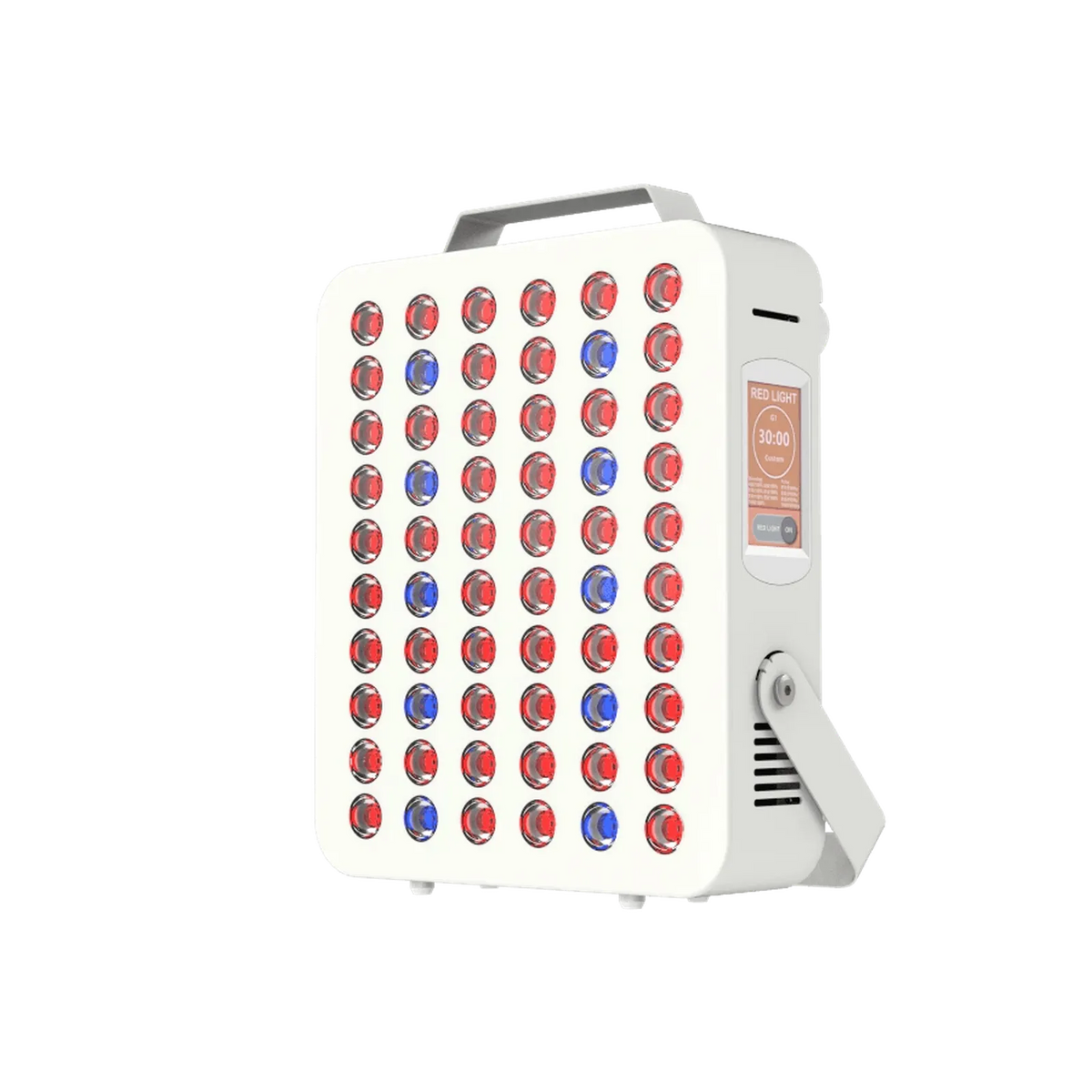
Red light therapy appears to be low-risk for most healthy adults when used as directed, though the strongest safety review so far covers skin-rejuvenation use specifically. Red light therapy, also called photobiomodulation, uses low-power red and near-infrared light from LEDs or lasers to influence how cells behave, without heating or cutting tissue.
The best recent summary of safety comes from a 2023 systematic review in Aesthetic Surgery Journal that examined photobiomodulation for skin rejuvenation. A systematic review collects all qualifying studies on a question and assesses them together, which is more reliable than any single study. Its author found no relevant clinical trial data linking photobiomodulation with any significant adverse events.
That conclusion comes with fair caveats. The same review describes much of the clinical evidence as coming from methodologically flawed, single-center trials and case series. Low risk in published studies is reassuring, but it is not a guarantee for every person, every device or every way of using one.
Can red light therapy cause cancer?
A 2023 systematic review of skin-rejuvenation use found no clinical trial data linking red light therapy with new or recurrent cancer, and the type of light it uses is not the type associated with direct DNA damage. The difference comes down to where red light sits on the electromagnetic spectrum.
Non-ionizing light versus UV
Ionizing radiation, such as x-rays and gamma rays, carries enough energy to damage DNA directly. Non-ionizing radiation sits at lower frequencies on the spectrum. The National Cancer Institute places infrared radiation and visible light in the non-ionizing group, which is not known to damage DNA or cells directly. Red light therapy uses visible red and near-infrared light.
Ultraviolet (UV) light is the part of sunlight people usually have in mind when they worry about light and cancer. The U.S. Environmental Protection Agency notes that too much UV exposure or frequent sunburns can make developing skin cancer more likely. Red light therapy devices are designed around red and near-infrared wavelengths, not UV, so the sunburn-and-tanning risk model does not carry over. If a device's listing does not state its wavelengths clearly, ask the manufacturer before buying.
What the research says about people with a cancer history
The 2023 systematic review looked specifically at oncologic safety, meaning whether light exposure could encourage cancer. It concluded that current clinical and preclinical evidence suggests photobiomodulation is oncologically safe for skin rejuvenation, and found no evidence that people previously treated for cancer should avoid it.
The same author warns against reading too much into laboratory and animal studies, where results varied. If you have had cancer, or are being treated for it, that is a conversation for your oncologist before you start, not a decision to make from an article.
Red light therapy side effects
Red light therapy side effects reported in trials are mostly mild and short-lived. In the seven skin rejuvenation trials covered by the 2023 review, mild, temporary skin redness (erythema) was reported in four patients, and no other adverse events were reported in those trials. Erythema is the medical term for reddening of the skin.
Clinical trial data does not capture every way a home device can be misused, though. The practical risks at home are mostly about the eyes, about combining light with things that increase sensitivity, and about overdoing session length.
Eye safety
Treat your eyes with caution. The safety review above covers skin treatments, not eye exposure, so it does not tell you how much light your eyes can safely take.
Use the eye protection your device's manufacturer specifies, keep your eyes closed or shielded during facial treatments unless the manual says otherwise, and do not look directly into the LEDs. Our guide to red light therapy eye safety and eyewear covers the options in more detail. Anyone with an existing eye condition should ask an eye doctor before using a device near the face.
Photosensitizing medications and skincare
Some medications and skincare ingredients carry warnings about increased sensitivity to light. Whether such a warning applies to red and near-infrared light at home-device doses is a question for a professional who knows your full medication list. If anything you take or apply carries a light-sensitivity warning, ask your pharmacist or doctor before starting. For one common question, see our article on using retinol and red light therapy together.
Can you do red light therapy every day?
Whether you can do red light therapy every day depends on the device and the dose per session, and there is no single research-backed answer for everyone. Each manufacturer sets its own session schedule, and those instructions are the right starting point because they are written for that device's output.
The bigger risk is assuming that more is always better. A review from the Wellman Center for Photomedicine at Massachusetts General Hospital describes a biphasic dose response in light therapy: when too much energy is applied, the stimulation can disappear and be replaced by inhibition. In plain terms, a dose that is too large may undo the effect you were looking for. Doubling session length to "speed things up" is a poor bet.
How often should you do red light therapy?
How often you should do red light therapy is set by your device's dose, your goal and your manufacturer's protocol, not by a universal rule. Dose depends on the light's power at your skin and the length of the session, so two devices can need very different schedules for a similar result.
Distance matters too. Irradiance is the light power reaching your skin. It drops as you move farther from a panel, and since dose is irradiance multiplied by time, the same timed session delivers less at a greater distance. Our guide to red light therapy dosage, distance and time explains how these figures relate, and our comparison of continuous-wave and pulsed red light therapy covers another setting that changes how a session is delivered.
| Question | Where the answer should come from | Why |
|---|---|---|
| How long should each session be? | Your device manufacturer's instructions | Session time is tied to that device's output at a stated distance |
| How many sessions per week? | Your device manufacturer's instructions | There is no single protocol that fits every device and goal |
| Is it safe with my medical condition or medication? | Your doctor or pharmacist | It depends on your health history, which a general guide cannot assess |
| Is it safe after cancer treatment? | Your oncologist | Published evidence is reassuring but has quality limits |
| What eye protection do I need? | Your device manufacturer, and your eye doctor if you have an eye condition | Protection should match the device and your eyes |
Who should check with a doctor before using red light therapy?
Anyone with a medical condition, a light-sensitivity concern or an ongoing treatment should check with a doctor before starting red light therapy. That includes, in particular, people who:
- Are pregnant or trying to become pregnant
- Have a current or past cancer diagnosis
- Take medication or use skincare with a light-sensitivity warning
- Have a condition that makes skin or eyes sensitive to light
- Have an existing eye disease or are planning facial treatment near the eyes
- Have a history of seizures triggered by flashing light, if considering a pulsed device
- Want to use red light therapy to address a specific health problem rather than general wellness
Talk to your doctor before starting red light therapy if any of these apply to you, or if you notice any reaction you did not expect.
If you are comparing devices, the red light therapy panels and LED face masks Wellari sells differ in size, coverage and how close they sit to the face, which affects both comfort and eye protection. Check each product's manual for its eyewear and session guidance before you buy.
Frequently asked questions
Is red light therapy safe to use at home?
For most healthy adults using a device exactly as its manufacturer directs, red light therapy appears to be low-risk. A 2023 systematic review of skin-rejuvenation trials found no clinical trial data linking it with significant adverse events, though that review did not cover eye exposure. Protect your eyes, avoid overly long sessions, and check with a doctor first if you are pregnant, take light-sensitizing medication, or have a medical condition.
Can red light therapy cause cancer?
A 2023 systematic review of skin-rejuvenation use found no clinical trial data linking it to new or recurrent cancer. Red and near-infrared light are non-ionizing, and the National Cancer Institute describes this category as not known to damage DNA or cells directly. The same review concluded photobiomodulation appears oncologically safe for skin rejuvenation. Red light is also different from ultraviolet light, the part of sunlight linked to skin cancer risk.
What are the side effects of red light therapy?
Reported side effects are mostly mild and temporary. In skin rejuvenation trials reviewed in 2023, the only adverse event reported was mild, short-lived skin redness in a small number of patients. At home, the main avoidable risks are looking directly into bright LEDs without the eye protection the maker specifies, overly long sessions, and combining light with medications or skincare that carry light-sensitivity warnings.
Can you do red light therapy every day?
It depends on the device and the dose each session delivers. Each manufacturer sets its own schedule, so follow the instructions written for your device rather than a general rule. Research describes a biphasic dose response, meaning too much light can reduce the effect rather than increase it, so longer or extra sessions are not a shortcut to better results.
How often should you do red light therapy?
There is no universal schedule. The right frequency depends on your device's output at your treatment distance, the session length, and your goal. Your device manufacturer's protocol is the best starting point because it is written for that device. If you are using red light therapy alongside medical treatment or for a specific health concern, ask your doctor to help set expectations.
Talk to us before you buy
A safe experience with red light therapy starts with choosing a device whose output, coverage and eyewear guidance are clearly documented. Browse our full red light therapy collection, and talk to us before you buy if you want help comparing specifications or understanding a manufacturer's instructions.