
Are Infrared Saunas Safe? EMF, Cancer Myths and Who Should Avoid Them
Short answer: Are infrared saunas safe? For most healthy adults, yes. Infrared is non-ionizing radiation, which the National Cancer Institute says is not known to damage DNA or cells directly, and Mayo Clinic notes no harmful effects have been reported. The real risks come from heat: dehydration, overheating and fainting, especially with pregnancy, certain medications or heart conditions.
Key takeaways
- Infrared radiation sits in the non-ionizing part of the electromagnetic spectrum, alongside visible light and radio waves, not with x-rays.
- The National Cancer Institute reports no consistent evidence linking non-ionizing EMF to childhood cancer, and few adult studies report increased risk.
- The practical dangers of an infrared sauna are heat dangers: fluid loss, overheating, and feeling faint.
- Pregnancy, heart conditions and several common medications are reasons to talk to a doctor first.
- An EMF claim on a spec sheet only means something if you know the unit, the distance and how it was measured.
Infrared saunas attract more safety questions than almost any other piece of home wellness equipment, largely because the word "radiation" sounds alarming. This guide explains what infrared actually is, what the evidence says about cancer and EMF, which risks are real, who should be cautious, and how to read the EMF claims you will see when shopping.
Are infrared saunas safe? What infrared actually is
Infrared saunas are considered safe for most healthy adults, and understanding the physics removes most of the fear. Infrared radiation is a form of electromagnetic energy, on the same spectrum as visible light, that you feel as warmth. An infrared sauna uses heaters that emit this energy to warm your body directly, rather than heating the air first the way a traditional sauna does.
"Radiation" simply means energy travelling as waves. The distinction that matters for health is ionizing versus non-ionizing. Ionizing radiation, such as x-rays and gamma rays, carries enough energy to damage DNA or cells directly. Non-ionizing radiation carries less energy, and the National Cancer Institute places infrared radiation in the non-ionizing group, which is not known to damage DNA or cells directly.
Mayo Clinic's overview of infrared saunas reaches a reassuring bottom line: no harmful effects have been reported with infrared saunas, and they produce sweating and a higher heart rate at lower temperatures than a regular sauna. For a fuller explanation of radiant heat, see what 20 minutes a day in an infrared sauna does and does not do.
Can infrared saunas cause cancer?
There is no established evidence that infrared saunas cause cancer. The infrared energy itself is non-ionizing, and NCI states that no mechanism by which extremely low frequency fields or radiofrequency radiation could cause cancer has been identified. In studies of cancer in children, NCI reports that no consistent evidence for an association between any source of non-ionizing EMF and cancer has been found, and it notes that few studies in adults have reported evidence of increased risk.
No study we reviewed tested infrared saunas and cancer directly, so the honest framing is this: the energy an infrared sauna is built to emit belongs to a category that is not known to damage DNA, and the broader research on everyday electromagnetic fields has not shown a consistent cancer link.
Where the cancer worry comes from
Much of the concern traces to electromagnetic fields from wiring, not to infrared heat. An electromagnetic field (EMF) is the combination of electric and magnetic fields produced wherever electricity flows. Like any electrical appliance, a sauna's heaters and wiring produce extremely low frequency (ELF) fields.
In 2002, the International Agency for Research on Cancer classified ELF magnetic fields as "possibly carcinogenic to humans," based on limited evidence from studies of childhood leukemia. NCI reports that pooled analyses found childhood leukemia risk about 1.4 to 2 times higher among children with exposures of 0.3 to 0.4 μT or more, a level that, depending on the analysis, fewer than 1% to a little more than 3% of the children studied experienced, and that the interpretation of this finding is unclear. It also notes that studies of household electrical appliances have not found consistent evidence of a link with childhood leukemia.
What about EMF from the heaters and wiring?
EMF from a sauna's electrical components is real, measurable and, like other appliances, strongest close to the source. NCI explains that magnetic fields from household appliances are highest near the device and drop precipitously at a distance of about 1 foot from most appliances. That is why distance from the heaters matters whenever you compare EMF claims.
Many buyers still prefer to minimize exposure, and that is a reasonable preference. Wellari groups cabins marketed with reduced-EMF designs in its low, ultra-low and near-zero EMF sauna collection. For the differences between those labels, read low EMF vs. ultra-low EMF saunas.
How to read an EMF spec
An EMF figure on its own tells you very little. Before you compare two saunas on EMF, ask for these details:
- Which field. Magnetic fields, electric fields and radiofrequency (from Wi-Fi or Bluetooth modules) are different measurements. A low magnetic reading says nothing about the other two.
- The unit. NCI measures magnetic fields in microteslas (μT) and electric fields in volts per meter (V/m). Some sauna listings give magnetic fields in milligauss (mG) instead. Make sure you compare like with like.
- The distance. Because fields fall off quickly with distance, a reading taken a foot from the heater is not comparable to one taken against the panel. Ask where the meter was placed relative to the seated user.
- Who measured it and how. Ask whether the figure comes from a manufacturer test report or third-party testing, and whether you can see the document.
We do not publish EMF numbers for individual models unless they come from the manufacturer's own documentation. If a figure matters to your decision, ask us for the source before you buy.
Infrared sauna side effects
The side effects people actually experience in an infrared sauna come from heat, not from radiation. Your heart rate rises and you sweat heavily, so the most common problems are fluid loss and feeling lightheaded, particularly when standing up after a session. Overstaying, using very high settings or skipping water makes all of these more likely.
- Dehydration. Sweating removes water and salts. Drink before and after a session.
- Overheating. Nausea, a pounding or racing heart, confusion or feeling unwell are signals to get out and cool down.
- Dizziness or fainting. Heat lowers blood pressure in some people. Sit up slowly and stand up carefully.
- Skin discomfort. Keep skin away from hot surfaces and heater guards, and follow the manufacturer's clearance guidance.
Infrared sauna dangers: who should avoid them or ask a doctor first
Infrared sauna dangers concentrate in a few groups of people whose bodies handle heat less predictably. If any of these apply, talk to your doctor before using one.
Pregnancy
Raising core body temperature in early pregnancy is the main concern. A 2005 systematic review and meta-analysis of 15 studies found maternal hyperthermia (a raised core body temperature; the review pooled heat exposure from different causes) in early pregnancy was associated with roughly double the odds of neural tube defects (odds ratio 1.92). If you are pregnant or trying to conceive, ask your obstetrician before any sauna use.
Heart and blood pressure conditions
Heat increases heart rate, which is part of why saunas are compared with moderate exercise. If you have heart disease, a history of heart rhythm problems, or blood pressure that runs high or low, get your cardiologist's guidance on whether and how to use a sauna.
Medications and alcohol
Some common medications change how the body handles heat. CDC's clinician guidance on heat and medications lists diuretics, beta blockers, several psychiatric medications and anticholinergic antihistamines among drugs that can cause dehydration, reduce sweating, lower blood pressure or raise the risk of fainting in heat. That guidance is written for hot weather and CDC does not address sauna use specifically, so we apply it here by analogy. The same guidance lists alcohol as increasing sweating and urination and impairing heat perception, so skip the sauna after drinking.
Anyone who cannot respond to overheating
Children, people who have trouble sensing heat, and anyone likely to fall asleep or be unable to get out on their own need supervision or should not use a sauna at all.
Is sauna good for you?
Sauna use has been studied in relation to several long-term health conditions, and the evidence is not settled. Mayo Clinic says larger and more exact studies are needed. If you have a health condition, talk to your doctor before relying on a sauna for anything beyond relaxation.
For a home buyer, that translates into a sensible expectation: an infrared sauna is a relaxing heat routine with a reassuring safety profile for healthy adults, not a treatment. Buy one because you will enjoy using it.
Safe-use rules for a home infrared sauna
- Start short and low. Begin with brief sessions at a lower setting, and follow the manufacturer's time and temperature limits.
- Hydrate before and after. Replace what you sweat out.
- No alcohol. Use the sauna sober.
- Leave at the first warning sign. Dizziness, nausea or a racing heart means the session is over.
- Cool down gradually. Sit for a few minutes before standing and moving on.
- Install it properly. Use the circuit the manufacturer specifies and a licensed electrician. Our home sauna electrical guide explains 110V vs. 220V and breaker sizing.
- Maintain it. Inspect heaters, wiring and wood surfaces on a schedule. See what infrared sauna ownership actually requires.
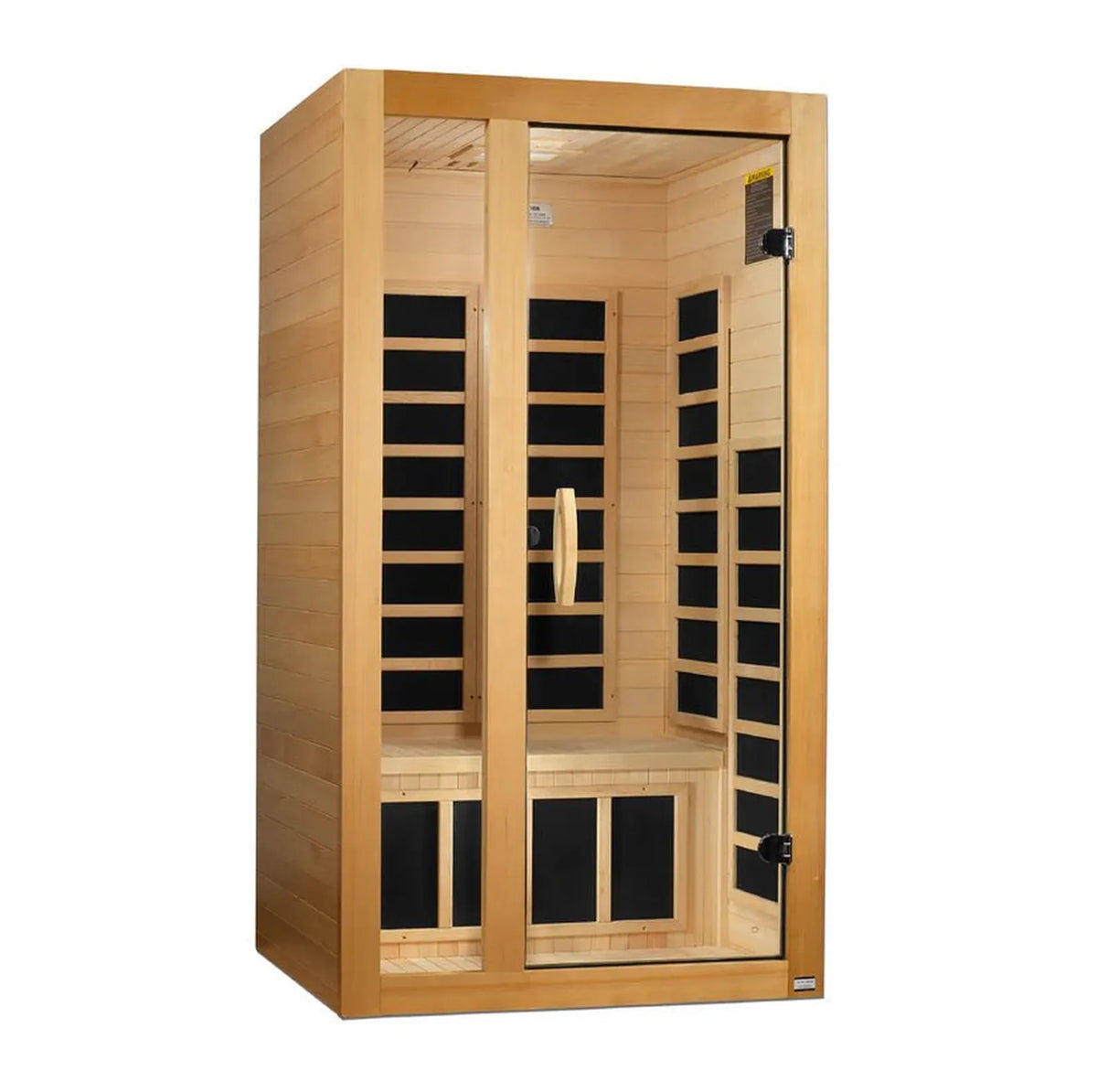
If you are comparing compact cabins for one or two people, a model such as the Gracia 1–2 Person Full Spectrum Sauna is a useful starting point for questions about heater layout and EMF documentation.
If you have a medical condition, are pregnant, or take regular medication, talk to your doctor before using an infrared sauna.
Frequently asked questions
Are infrared saunas safe?
For most healthy adults, yes. Infrared is non-ionizing radiation, which the National Cancer Institute says is not known to damage DNA or cells directly, and Mayo Clinic notes no harmful effects have been reported with infrared saunas. The real risks are heat-related: dehydration, overheating and fainting. Pregnancy, heart conditions and some medications call for a doctor's advice first.
Can infrared saunas cause cancer?
There is no established evidence that they do. Infrared energy is non-ionizing, and the National Cancer Institute reports no consistent evidence linking non-ionizing electromagnetic fields to childhood cancer, with few adult studies showing increased risk. ELF magnetic fields from wiring are classified as "possibly carcinogenic" based on limited childhood leukemia data, and those fields drop sharply within about a foot of most appliances.
What are the side effects of an infrared sauna?
The common side effects come from heat. Heavy sweating can lead to dehydration, and some people feel dizzy or lightheaded, especially when standing up afterward. Overheating can cause nausea, a racing heart or confusion, which are signs to leave and cool down. Drinking water, keeping sessions short and avoiding alcohol reduce these risks.
Do I need a low-EMF infrared sauna?
It is a preference rather than a proven safety requirement. Research has not shown a consistent cancer link for everyday electromagnetic fields, but many buyers still choose to reduce exposure. If EMF matters to you, compare models on the same field type, unit and measuring distance, and ask for the manufacturer's test documentation rather than relying on a label.
Can you use an infrared sauna while pregnant?
Ask your obstetrician first. A 2005 meta-analysis of 15 studies found that hyperthermia (a raised core body temperature; the review pooled heat exposure from different causes) in early pregnancy was associated with about double the odds of neural tube defects. Because a sauna is designed to raise body temperature, pregnancy is a situation where medical guidance should come before any sauna use.
Talk to us before you buy
Choosing an infrared sauna means weighing heater type, EMF documentation, space and electrical supply. Browse our infrared sauna collection, and if you want help reading a spec sheet or checking whether a model fits your home, talk to us before you buy.