
Red Light Sauna: What a Combined Infrared + Red Light Cabin Actually Does
Short answer: A red light sauna is an infrared sauna cabin that adds visible red lighting to its infrared heaters. The heaters warm your body; the red light is a separate feature whose dose may not be published at all. If photobiomodulation is the goal, a dedicated panel with published wavelengths and irradiance is the measurable option.
Key takeaways
- Infrared heat and red light do different jobs. One is heat; the other is light that cells absorb, a process called photobiomodulation.
- "Full spectrum" in sauna listings describes the range of the infrared heaters, not a red light therapy dose.
- A sauna specification can list a "red light feature" with no wavelength or irradiance figure; the cabin example below does exactly that. The dedicated panel compared below publishes both.
- Before you buy, ask for wavelengths, irradiance at a stated distance, and an EMF figure with the distance it was measured at.
What is a red light sauna?
A red light sauna is an infrared sauna that also has red lighting inside the cabin. You will see the same idea sold as a red light therapy sauna or an infrared sauna with red light. The name describes a product category, not a technical specification, so the details matter more than the label.
In practice, the cabins in this category pair infrared heaters with a chromotherapy system that includes a red setting. Chromotherapy simply means coloured interior lighting. It is a lighting feature, and on its own it tells you nothing about how much light reaches your skin.
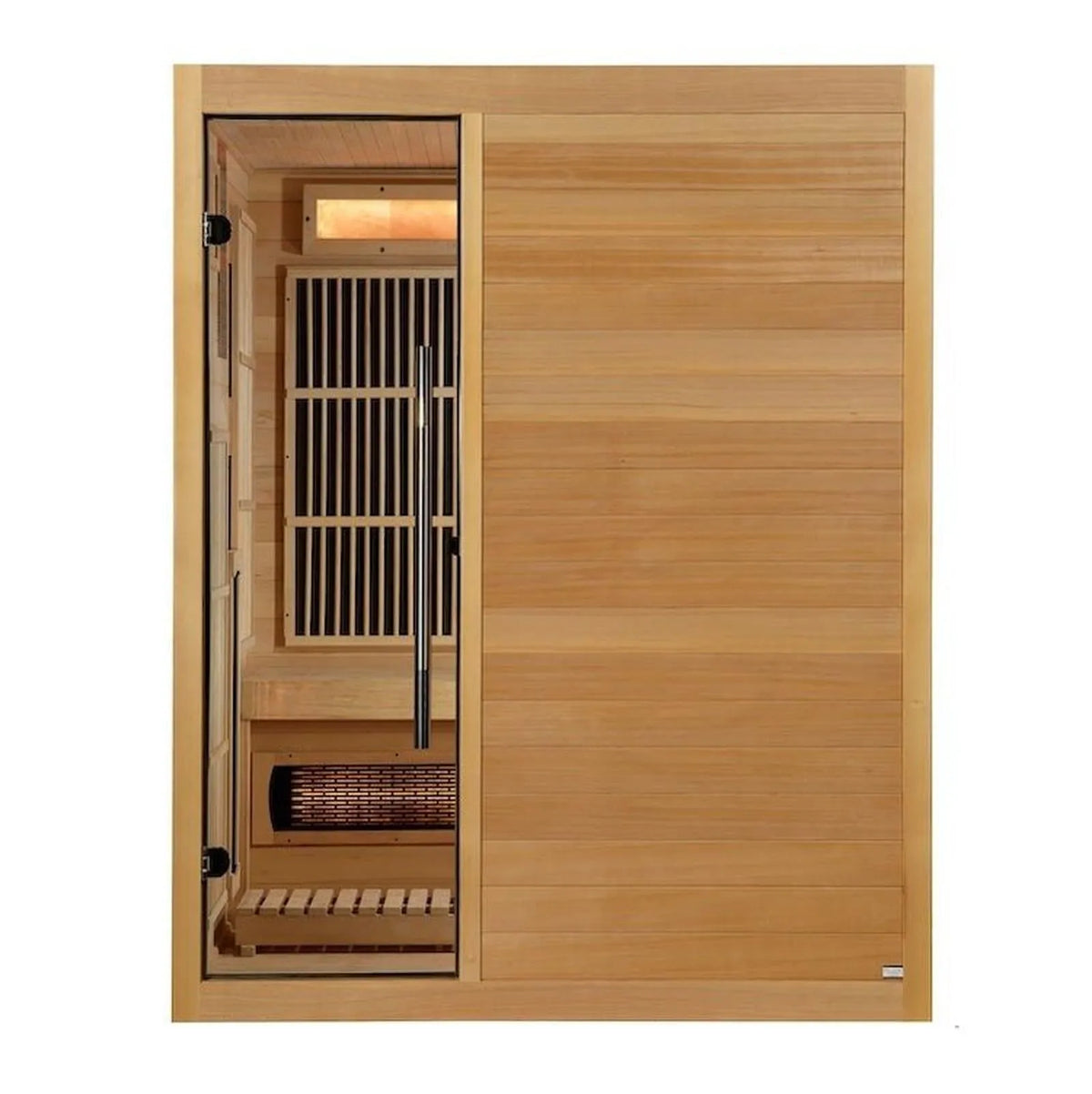
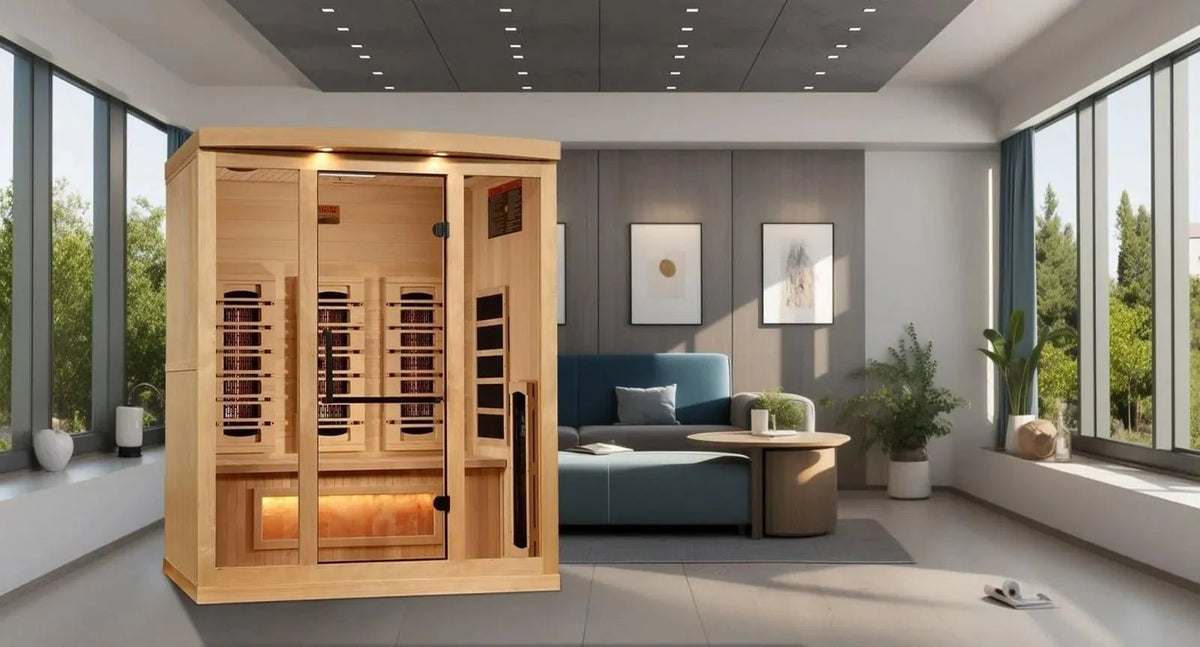
A concrete example: the Golden Designs Reserve Edition GDI-8030-03, which Wellari sells as the Golden Designs Reserve Edition 3-person full spectrum infrared sauna, lists eight heaters and an "oversize interior chromotherapy color lighting system + red light feature" on the manufacturer's specification page. That page gives no wavelength or irradiance for the red light feature.
Infrared heat vs red light: what is the difference?
Infrared heat works by warming you, while red and near-infrared light work by being absorbed by cells without needing to heat them. Both sit next to each other on the light spectrum, which is why the two get blurred together in marketing. They are still two different mechanisms, and they are measured in different ways.
Infrared is light with a wavelength longer than visible red light, which you feel as warmth rather than see. A wavelength is the distance between peaks of a light wave, measured in nanometres (nm). A 2024 review in the Journal of the American Academy of Dermatology places red light at 620–700 nm and near-infrared at 700–1440 nm.
What infrared heat does
An infrared sauna raises the temperature of the cabin and of the person sitting in it. The effect you are buying is a heat session. Operating temperatures vary by model, so confirm the range for the exact cabin with the manufacturer.
The research on sauna use is real but uneven. A 2018 systematic review of regular dry sauna bathing found 40 clinical studies with 3,855 participants, but only 13 were randomized controlled trials and most were small. The authors concluded that regular sauna bathing has potential health benefits, and that more higher-quality data are needed, particularly on the frequency and extent of adverse side effects. That review was about sauna bathing in general, not about red light saunas specifically.
What red and near-infrared light does
Photobiomodulation (PBM) is the use of red and near-infrared light to trigger a biological response in cells rather than to heat them. It was previously known as low-level laser therapy. The JAAD review describes light in these ranges being absorbed by cytochrome c oxidase, an enzyme in the mitochondria, the parts of a cell that produce energy.
The same review states that effective PBM depends on treatment parameters, naming fluence, treatment duration and output power. Fluence is the light energy delivered to each square centimetre of skin. That is the key point for anyone shopping: PBM is a dose-based modality, and a dose cannot be worked out from a colour setting.
For a fuller comparison of the two wavelength families, see our guide to red light vs infrared therapy and their wavelength differences.
What does a full spectrum infrared sauna actually include?
A full spectrum infrared sauna is a cabin whose heaters are designed to cover a wider part of the infrared range than far infrared alone. Golden Designs, for example, describes its full spectrum line as combining near, mid and far infrared wavelengths. Which heater produces which band is a model-level detail a manufacturer may not publish, so ask if it matters to you.
The GDI-8030-03 has eight heaters in total. If the split between near- and far-infrared heaters matters to you, confirm it with the manufacturer for the exact model before you buy.
So "full spectrum" refers to the infrared heating range. It does not mean the cabin covers the visible red range, and it does not mean the cabin delivers a defined photobiomodulation dose. Those are separate questions with separate answers.
How the heaters differ, and why some buyers prefer carbon panels while others want near-infrared elements added, is covered in our explainer on sauna heater types: carbon, ceramic and full spectrum.
Is an infrared sauna with red light the same as a red light therapy panel?
No. An infrared sauna with red light is a heat device with a lighting feature, while a red light therapy panel is a light device built and specified around dose. You can see the difference in what each manufacturer chooses to publish.
The Reddot RDPro300-FS7, sold by Wellari as the RDPro300-FS7 7-wavelength red light therapy panel, lists seven wavelengths (480, 630, 660, 810, 830, 850 and 1060 nm) on its manufacturer specification page, with irradiance stated as more than 118 mW/cm² at 6 inches. Irradiance is the light power landing on each square centimetre of skin, and it is what lets you estimate a dose for a given distance and time.
| Full spectrum sauna with red light feature | Dedicated red light panel | Sauna plus a separate panel | |
|---|---|---|---|
| Primary job | Heat session | Measured light exposure | Both, used separately |
| Example specs published | Heater count, EMF classification, electrical requirement (GDI-8030-03: eight heaters) | Wavelengths and irradiance at a stated distance (RDPro300-FS7: more than 118 mW/cm² at 6 in) | Each device's own specs |
| Red light wavelength published? | Not on the GDI-8030-03 page | Yes: 630 and 660 nm red, plus near-infrared | Yes, for the panel |
| Dose control | Not specified | Distance, 1–30 minute timer, 0–100% dimming | Panel controls the light dose; sauna controls heat |
| Power | Dedicated 120V/20A circuit (GDI-8030-03) | 99 W ±5% rated consumption, AC 100–240V input | Plan for both |
| Best fit | Buyers who want sauna sessions and like the lighting | Buyers whose priority is photobiomodulation | Buyers who want both and have the space |
Panels come in several formats, from compact units to full-body arrays, and our comparison of red light panels vs beds vs wearables covers which suits which room.
Who benefits from a red light therapy sauna combo?
A red light therapy sauna combo suits buyers whose main purchase is a sauna and who want the cabin's lighting as part of the experience. It is a weaker fit for buyers whose real goal is photobiomodulation, because the light dose may not be documented. Matching the purchase to the goal avoids paying for the wrong thing.
- Sauna-first buyers. If regular heat sessions are the point, a full spectrum cabin with a red light feature is a sensible single purchase. Treat the red light as ambience unless the maker publishes its specs.
- Light-first buyers. If you specifically want red and near-infrared light, a panel gives you a known wavelength, a known irradiance and a timer. You can also use it on days you skip the sauna.
- Buyers who want both. A cabin for heat and a separate panel for light is the clearest way to get each one properly. It needs floor space, two power plans and a little more budget.
- Small facility owners. A multi-person cabin and a separate panel can serve different clients at the same time. Describe each device by what its specification sheet supports, not by what the category name implies.
If you have a heart condition, are pregnant, take medication that affects heat tolerance or light sensitivity, or have any medical condition, talk to your doctor before using a sauna or light therapy device.
What should you look for in a red light sauna?
Look for published numbers: wavelengths for the light, irradiance at a stated distance, an EMF figure with its measuring distance, and the electrical requirement. Where a number is missing, ask the manufacturer for it in writing rather than assuming. A missing figure is not evidence of a problem, but it is a gap in what you know.
Wavelengths
Ask which wavelengths the red light emits, in nanometres. The JAAD review puts red light at 620–700 nm and near-infrared at 700–1440 nm. A "red" setting on a colour lighting system does not, by itself, tell you where in that range the light falls.
Irradiance
Ask for irradiance in mW/cm², together with the distance it was measured at. If a manufacturer does not publish irradiance, ask for it rather than estimating one. Without it there is no way to work out the dose you would receive in a session.
EMF
EMF (electric and magnetic fields) is produced by anything that carries electrical current, including sauna heaters. Sauna makers may give a magnetic field figure in milligauss (mG) or only a classification such as low or near-zero EMF. If a figure matters to you, ask the manufacturer for it in writing, together with the distance it was measured at, and compare claims only when you know that distance and method. Our guide to low EMF vs ultra-low EMF saunas explains how those labels are used.
Electrical and space
The GDI-8030-03 requires a dedicated 120V/20A non-GFCI receptacle and breaker, is rated for indoor use only, and the manufacturer advises consulting a certified electrician. Confirm the circuit before you order, not after delivery. Other models in our infrared sauna collection have different requirements, so check each one.
Frequently asked questions
Does a red light sauna give you red light therapy?
It gives you red light, but not necessarily a measurable red light therapy dose. Photobiomodulation research describes effects that depend on fluence, treatment duration and output power. The GDI-8030-03 specification, for example, names a red light feature without publishing its wavelength or irradiance, so the dose is unknown. If dose matters to you, ask the manufacturer for both figures or use a dedicated panel.
Is a full spectrum infrared sauna better than far infrared only?
Neither is better in general; they are different heating designs. A full spectrum infrared sauna uses heaters meant to cover more of the infrared range than the far-infrared panels of a standard infrared cabin. The right choice depends on the heat you prefer, the electrical service you have and the cabin size you need. Full spectrum describes the heaters, not a light therapy feature.
Should I buy a red light panel or a red light sauna?
Buy for your main goal. If you mainly want regular sauna sessions, the cabin is the purchase and its red light feature is a bonus. If photobiomodulation is the goal, a panel with published wavelengths and irradiance gives you a known dose at a known distance. Some buyers choose both: a sauna for heat and a separate panel for light sessions.
What EMF level should an infrared sauna have?
Compare EMF figures only when you know how they were measured, meaning the distance from the heater and the meter used. A classification such as low or near-zero EMF is a starting point, not a measurement. Ask each manufacturer for its figure in writing, with the measuring distance, because a number without a distance cannot be compared fairly with another brand's number.
How hot does a red light sauna get?
It depends on the model, so confirm the operating range for the exact cabin with the manufacturer before you buy. The red light feature is a lighting system, and the cabin temperature comes from the infrared heaters. If you are comparing models, ask each maker for its stated operating range and maximum temperature in writing so the figures are comparable.
Talk to us before you buy
You can compare cabins with red lighting in our red light sauna collection. If you are weighing a cabin against a separate panel, or want to check a model's electrical needs against your home, talk to us before you buy and we will walk through the specifications with you.