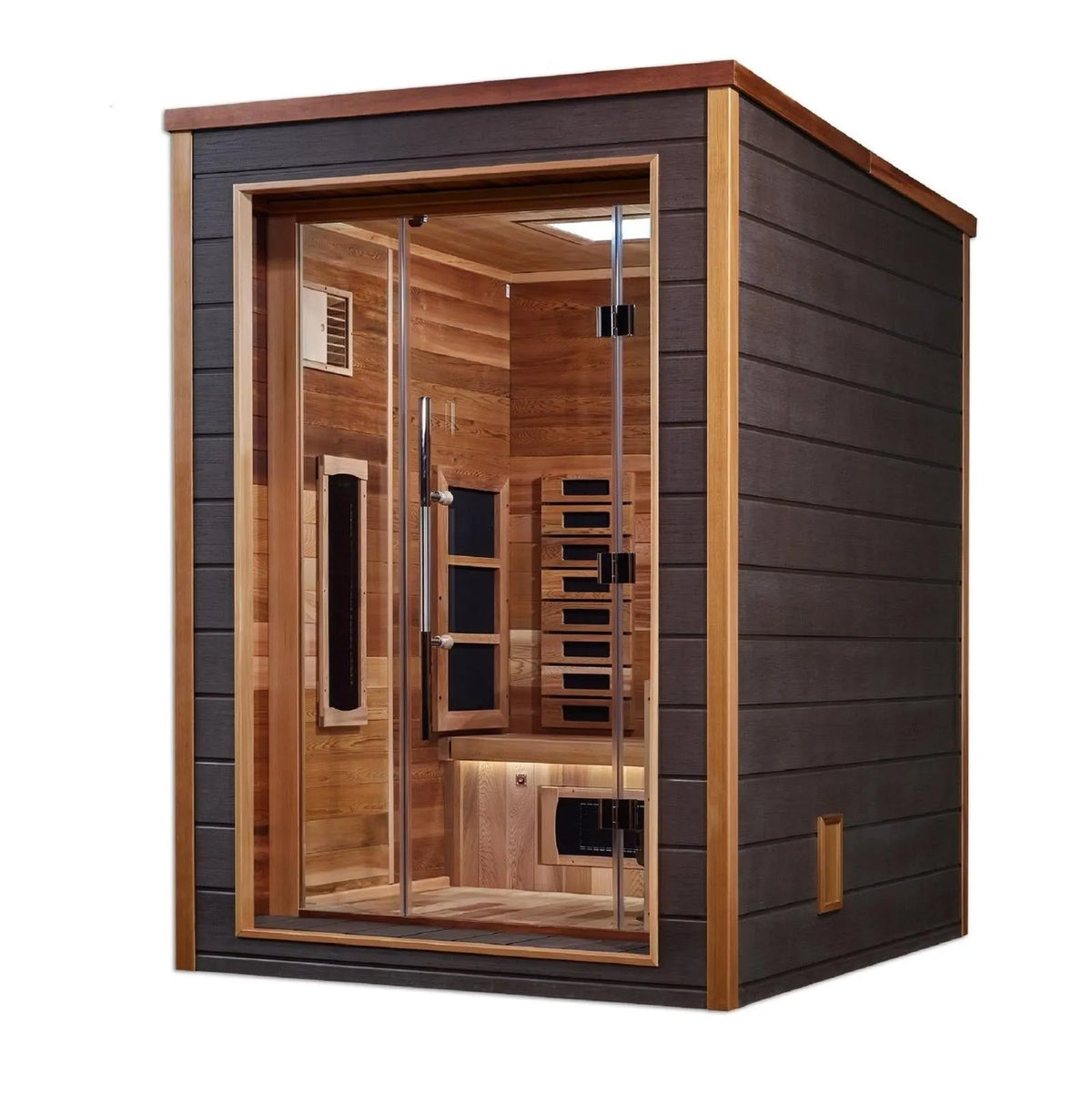

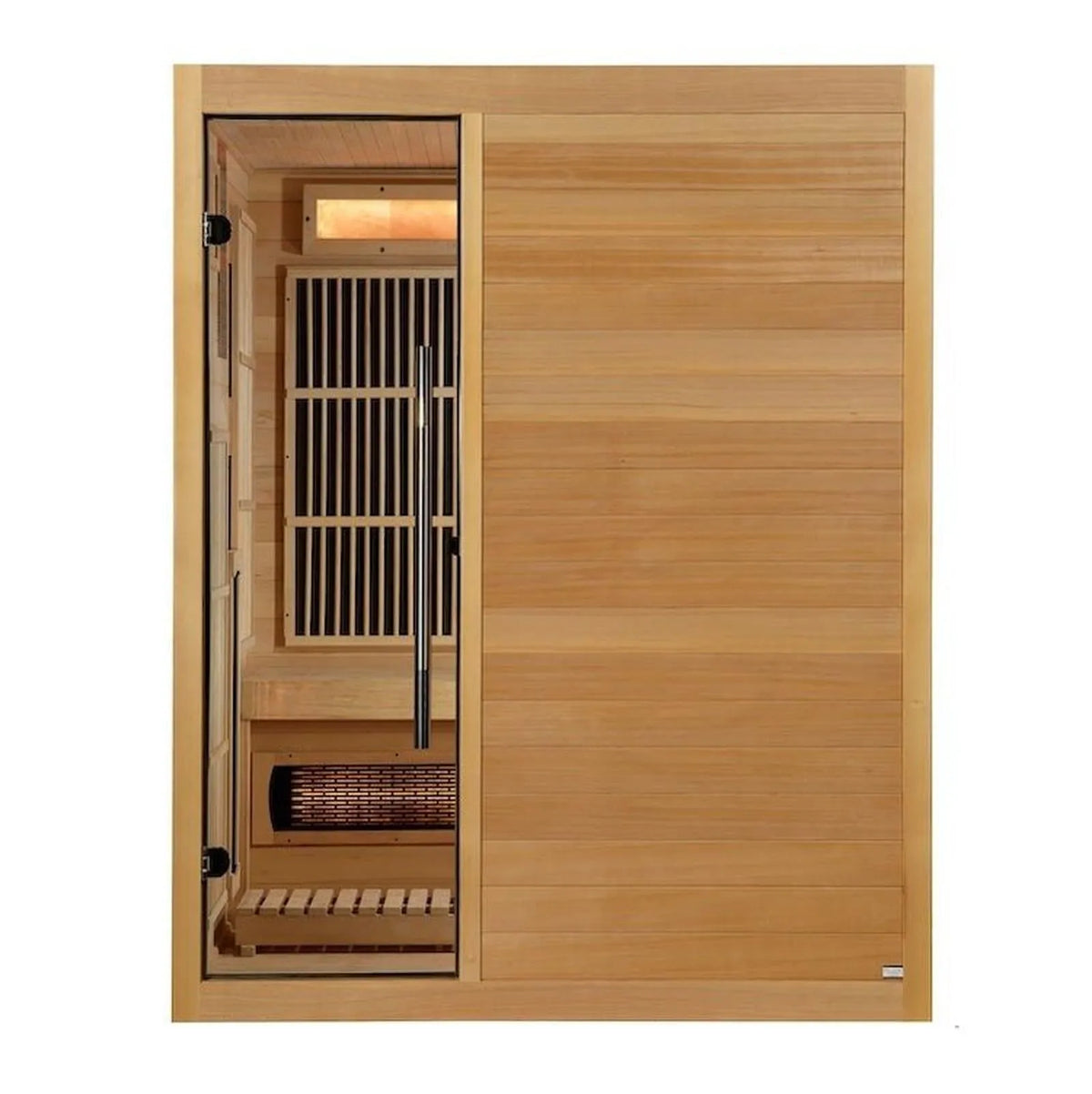
Do Saunas Help You Lose Weight? Calories, Water Weight and What the Research Shows
Short answer: Do saunas help you lose weight? On the scale, yes, but most of that loss is water you sweat out and regain when you drink. A session raises your heart rate and burns some extra calories, yet research so far measures single sessions, not lasting fat loss. Treat a sauna as a complement to diet and training.
Key takeaways
- The weight you lose in a sauna session is mainly body water, and it returns once you rehydrate.
- One study estimated roughly 73 to 131 calories per 10-minute round in a hot Finnish sauna, measured with heart-rate monitors rather than lab equipment.
- Heat pushes heart rate and blood pressure up to levels researchers compare with moderate exercise, but that is cardiac load, not a workout.
- Infrared and traditional saunas both make you sweat; infrared does it at lower air temperatures, which some people find easier to tolerate.
- Fat loss still comes from eating patterns and physical activity. A sauna fits beside those habits, not in place of them.
If you are weighing a home sauna partly because you hope it will help with weight, this guide separates what the scale shows from what your body is actually doing. We cover water weight, calorie burn, heart rate, the difference between infrared and traditional heat, and where a sauna realistically fits in a weight-management routine.
Sauna weight loss: water weight vs. fat loss
Sauna weight loss is real on the scale, but it is mostly fluid. Water weight is the share of your body weight that comes from the water in your blood, tissues and cells, and it shifts quickly with sweating, drinking and salt intake. Fat loss is a reduction in stored body fat, which happens slowly when your body uses more energy than it takes in over weeks and months.
A sauna mostly moves the first number. In a 2019 study of 45 young, overweight, sedentary men, four 10-minute rounds in a 90°C (194°F) dry sauna, with cool-down breaks, produced an average body-mass loss of 0.65 kg, or about 1.4 lb. The authors attribute weight lost after a sauna mainly to the loss of body water, and they note that about 1 liter of sweat corresponds to about 1 kg of body mass.
That is why the number on the scale after a sauna is not a useful progress marker. The same study advises matching fluid intake to sweat loss to avoid dehydration. Once you do, most of that drop disappears.
Why the scale can mislead you
Weighing yourself straight after a session will almost always show a lower number than before. It feels like progress, but it reflects fluid you need to replace. If you track weight, weigh at the same time of day under the same conditions, and keep sauna days and non-sauna days in mind when you read the trend.
Does a sauna burn calories?
Yes, a sauna burns some calories, because your body works to shed heat. Heart rate climbs, blood flow shifts toward the skin and you sweat heavily. That work has an energy cost, but it is modest and it stops when you step out.
Researchers have compared the cardiovascular strain of a sauna with exercise. In a study of 19 healthy adults in a 25-minute, 93°C sauna session, blood pressure and heart rate rose steadily, and the authors concluded the cardiac load corresponded to a moderate physical load of about 60 to 100 watts on an exercise test. Note what that compares: how hard the heart is working, not how many calories you spend or how much fitness you build.
Mayo Clinic describes the same idea in plain terms: people like saunas because they cause reactions like those of moderate exercise, such as vigorous sweating and an increased heart rate. Sitting in heat is still not training. Your muscles are not doing the work that builds strength or endurance.
How many calories do you burn in a sauna?
One study, using heart-rate monitors, estimated roughly 70 to 130 calories per 10-minute round in a very hot sauna, rising the longer participants stayed. In the 2019 study above, participants burned an estimated 73 kcal in the first 10-minute round, then about 94, 115 and 131 kcal in the second, third and fourth rounds. Average heart rate rose from about 98 beats per minute in the first round to about 133 in the fourth.
Three caveats matter before you use those numbers:
- They are estimates. Calories were calculated by wrist and chest heart-rate monitors, not measured with laboratory gas analysis, and the authors list the monitors as a limitation of the study.
- Body size changes the result. The authors found that participants with higher body mass and body surface area expended relatively more energy.
- The protocol was demanding. Four rounds at 90°C is a long, hot session. The authors cautioned that sauna sessions lasting 40 minutes could be excessive and dangerous for considerably overweight men.
We have not found comparable published calorie estimates for infrared sessions, so we do not offer a number for them. Any infrared-specific calorie figure you see should come with a named study behind it.
Can a sauna help you lose weight long term?
A sauna can be part of a routine that supports a healthy weight, but it is not a fat-loss method on its own. The studies discussed here measured what happens during one session. They show water loss and a temporary rise in heart rate and energy use, not a reduction in body fat over time.
The fundamentals have not changed. The CDC's guidance on steps for losing weight describes healthy weight loss as a lifestyle with healthy eating patterns, regular physical activity, enough sleep and stress management. A sauna does not replace any of those four.
Where it can help is indirect. If a relaxing evening session makes it easier to wind down, or if having heat at home keeps you consistent with a recovery routine around your training, that consistency is worth something. Those are reasons to own a sauna. They are not a promise of weight loss.
Where a sauna fits beside diet and training
- After training, not instead of it. Keep your planned workouts. If you are curious how heat sessions sit alongside steady aerobic work, our piece on combining Zone 2 cardio, red light and infrared sauna walks through one way people structure the week.
- Hydrate deliberately. Drink before and after. The scale drop you see is fluid your body needs back.
- Keep sessions sensible. Longer and hotter is not better for weight goals, and it adds strain. Follow your sauna manufacturer's guidance on time and temperature.
- Ignore "detox" weight promises. Sweat is mostly water. For a measured look at what a regular session does and does not do, see what to expect from 20 minutes a day in an infrared sauna.
Infrared vs. traditional sauna for weight goals
For weight goals, neither type has been shown to cause fat loss, so the better choice is the one you will use comfortably and consistently. An infrared sauna uses infrared heaters to warm your body directly, while a traditional sauna heats the air, which then warms you. Mayo Clinic notes that infrared saunas produce sweating and a higher heart rate at lower temperatures than a regular sauna, which can suit people who find traditional heat hard to tolerate.
| Factor | Infrared sauna | Traditional sauna |
|---|---|---|
| How it heats you | Infrared heaters warm the body directly without heating the surrounding air as much | A heater warms the air, and the hot air warms you |
| Air temperature | Lower than a traditional sauna | Higher; the studies cited here ran at about 90 to 93°C |
| Sweating and heart rate | Yes, at lower temperatures | Yes; heart rate rose to levels compared with moderate exercise |
| Published calorie estimates | None found in the sources reviewed for this article | Roughly 73 to 131 kcal per 10-minute round in one study (heart-rate-monitor estimates) |
| Effect on scale weight | Mostly water, regained after rehydration | Mostly water, regained after rehydration |
| Who it tends to suit | People who want heat but dislike very hot air | People who enjoy high heat and, with steam, humidity |
If you want a deeper explanation of radiant heat, read infrared saunas explained. If you are still deciding on a format, our home sauna buyer's guide to infrared, traditional and hybrid models covers format, space and electrical considerations.
Wellari sells both styles. You can compare cabins in our infrared sauna collection. If you are weighing radiant heat against steam, you can also look at hybrid models such as the Soria 3-Person Hybrid Infrared & Steam Sauna.
So, do saunas help you lose weight?
Saunas help you lose water weight quickly and burn a modest number of extra calories while you sit in the heat, but they do not, on current evidence, melt fat. The honest way to think about a home sauna is as a heat and relaxation habit that can sit alongside the work that actually changes body composition: what you eat, how you move, how you sleep and how you manage stress.
If you have a heart condition, high or low blood pressure, are pregnant, or take medication, talk to your doctor before starting sauna sessions.
Frequently asked questions
Do saunas help you lose weight?
Saunas lower your scale weight in the short term, mostly through sweat. In one study, four 10-minute rounds in a 90°C sauna reduced body mass by about 0.65 kg, which the researchers attributed mainly to water loss. That water returns when you rehydrate. Lasting fat loss still depends on eating patterns, physical activity, sleep and stress management.
Does a sauna burn calories?
Yes, but modestly. Your body spends energy pumping blood to the skin and sweating to cool itself, and your heart rate rises. One study estimated about 73 calories in a first 10-minute round in a very hot sauna, climbing in later rounds. These were heart-rate-monitor estimates, not laboratory measurements, so treat them as approximate.
How many calories do you burn in a sauna?
One study of young, overweight men in a 90°C dry sauna estimated about 73, 94, 115 and 131 calories across four successive 10-minute rounds. Larger bodies tended to burn more. No comparable published estimates were found for infrared saunas. The authors also warned that 40 minutes of sauna time could be excessive for considerably overweight men.
Can a sauna help you lose weight if you don't exercise?
Not in any lasting way. A sauna raises heart rate and causes sweating, and researchers compare its cardiac load with moderate exercise, but your muscles are not training. The weight you lose in the session is mostly water. Healthy weight loss still rests on eating patterns, regular physical activity, enough sleep and stress management.
Is an infrared or traditional sauna better for weight loss?
Neither has been shown to cause fat loss, so choose the one you will use comfortably and consistently. Infrared saunas warm the body directly and produce sweating at lower air temperatures, which suits people who dislike intense heat. Traditional saunas heat the air to higher temperatures. Both lead to temporary water-weight loss.
Talk to us before you buy
A home sauna is a long-term purchase, and the right choice depends on your space, your electrical supply and how you actually like to use heat. Browse our full sauna collection, and if you would like a straight answer on fit, power or format, talk to us before you buy.