
Red Light Therapy Showdown: Panels vs. Beds vs. Wearables - Which Device is Best for Your Home?
Red light therapy devices now come in several distinct formats, and the best choice depends on how you plan to use the technology at home. Some users want a panel for flexible, high-output sessions. Others want a full-body bed for immersive coverage. And many home buyers prefer wearables for convenience, portability, and targeted use.
In this guide, we compare red light panels, beds, and wearables so you can choose the best device for your goals, space, and budget. You can browse Wellari’s Red Light Therapy page, compare Red Light Beds & Pods, explore Red Light Panels, or shop targeted options like Red Light Belts & Wraps, Red Light Facial Masks, and Red Light Mats & Blankets.
What Is Red Light Therapy?
Red light therapy, often called photobiomodulation, uses specific wavelengths of red and near-infrared light to support normal cellular function. At home, these devices are commonly used in general wellness routines focused on skin appearance, relaxation, workout recovery, and targeted comfort support.
If you want a broader science primer first, read Unlocking Red Light Therapy: Wavelength Science and Buying Guide.
Panels vs. Beds vs. Wearables: The Quick Answer
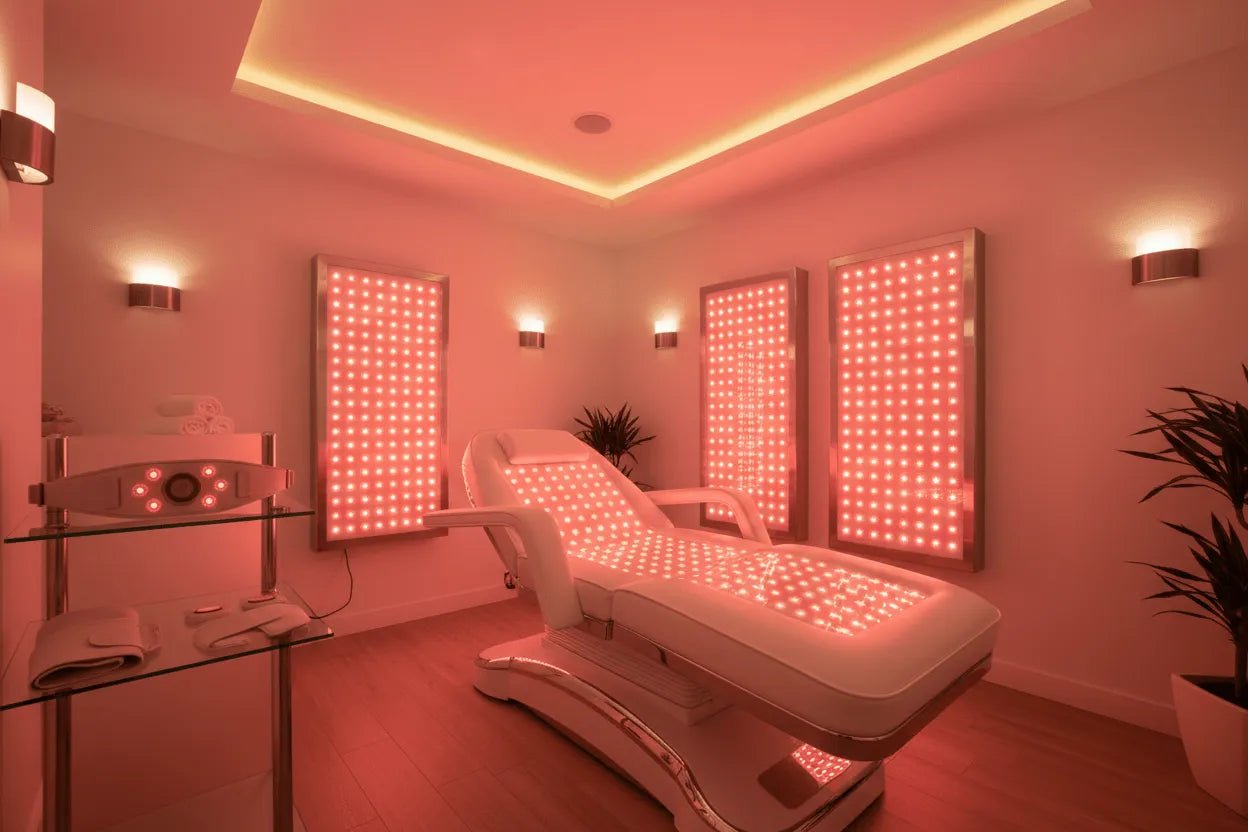
Panels are best for buyers who want flexibility, strong output, and the ability to treat either a small area or a larger section of the body depending on the panel size.
Beds are best for users who want immersive, full-body sessions and have the budget and space for a premium setup.
Wearables are best for targeted, convenient use—especially for facial routines, scalp care, wraps, pads, and other localized applications.
At-a-Glance Comparison
| Format | Coverage | Best for | Space & setup | Relative cost |
|---|---|---|---|---|
| Panels | Targeted through broad, depending on panel size | One device used across several purposes | Wall position or stand; moderate footprint | Mid-range |
| Beds & Loungers | Full body within a single session | Immersive, studio-style sessions | Dedicated floor space, kept in place | Highest |
| Wearables | Localized to the area the device covers | Face, scalp, joints, and portability | Minimal; stores easily | Most accessible |
Cost positioning above is relative between formats only. Compare the specifications and price of the specific model you are considering.
Red Light Therapy Panels: Flexible and High-Output
Panels are one of the most versatile at-home red light therapy formats. Depending on the model size, they can be used for face treatments, localized muscle areas, or broader full-body sessions with proper setup. Many users choose panels because they offer strong performance without requiring the large footprint of a full-body bed.
Best for:
- Buyers who want one device for multiple use cases
- Users who want stronger output than many small wearables
- Home setups where a stand-mounted or wall-positioned device makes sense
Things to consider:
- Full-body treatment may require a larger panel or repositioning during sessions
- Some models need a stand or dedicated setup area
- Panel size and irradiance matter more than generic “red light” marketing language
Wellari offers panel accessories and panel-compatible support options through its red light catalog and vendor listings, including adjustable stands and multiple panel formats. Start here: Red Light Panels.
Full-Body Red Light Beds: Maximum Coverage and Convenience
Full-body beds are designed for immersive sessions that expose much more of the body at once. These systems are generally the most premium option and are often chosen by buyers who want a more complete, studio-style experience at home or for professional wellness spaces.
Best for:
- Users who want head-to-toe coverage in a single session
- High-end home wellness rooms
- Studios and premium recovery-focused environments
Things to consider:
- Higher cost than most panels or wearables
- Requires meaningful floor space
- Best suited to buyers committed to full-body sessions
Examples from Wellari include the M7 Series Red Light Therapy Bed and the EnergyLounger Full-Body Red Light Therapy Lounger. You can browse the broader category here: Red Light Beds & Pods.
Wearables: Targeted, Portable, and Practical
Wearables are ideal when convenience and targeted application matter more than maximum coverage. This category includes facial masks, flexible wraps, therapy pads, mats, and scalp-focused devices. They are often the easiest entry point for users who want a simpler, more focused red light routine.
Best for:
- Facial routines and appearance-focused use
- Localized areas such as knees, shoulders, back, scalp, or smaller muscle groups
- Travel, portability, or easier storage
Things to consider:
- Less total-body coverage than beds or large panels
- Often better for targeted routines than full-body use
- Device fit and coverage area matter a lot
Examples at Wellari include the CS-001 Phototherapy 3D Mask, the RLH180 5-Wavelength LED Scalp Vitality Cap, the YD002 Versatile Fabric Red & Infrared LED Therapy Pad, and the YD004 Advanced Red & Infrared Light Therapy Pad.
You can compare categories here:
How to Choose the Right Device for Your Home
Choose a Panel if…
- You want more versatility from one device
- You have room for a stand or dedicated setup
- You want stronger coverage than many small wearables offer
Choose a Bed if…
- You want a premium, immersive experience
- You have the space and budget for a large-format device
- You want full-body exposure in one session
Choose a Wearable if…
- You are focused on the face, scalp, joints, or other localized areas
- You want portability and easy storage
- You prefer a lower-cost or more targeted entry point
How Red Light Therapy Fits Into a Larger Home Wellness Routine
Many buyers do not use red light therapy in isolation. It is often part of a broader at-home wellness setup that may also include infrared sauna, cold therapy, compression, or hyperbaric support. If you are building a broader system, these guides can help:
- Red Light vs. Infrared Therapy
- Red Light Therapy Timeline
- Wellari Wellness Guide to Hyperbaric, Red Light, Cryo & Recovery
- Red Light Therapy Before or After Workout?
FAQ: Panels vs. Beds vs. Wearables
What is the best red light therapy device for home use?
The best device depends on your goals. Panels are often best for versatility, beds for full-body immersion, and wearables for targeted convenience.
Are red light panels better than wearable devices?
Not always. Panels usually provide broader coverage and more setup flexibility, while wearables can be better for localized routines, portability, and ease of use.
Are red light beds worth it?
They can be worth it for buyers who want premium full-body sessions and have the space and budget to support that format.
What is the best red light device for facial use?
Facial masks and face-focused wearables are often the most practical choice for users prioritizing facial routines and cosmetic wellness goals.
What is the difference between red light and near-infrared light?
Red light is often used for more surface-level applications, while near-infrared penetrates deeper into tissue. Many devices combine both.
How much space does each format actually need?
Wearables need almost no dedicated space and store easily. Panels typically need wall space or room for a stand, plus clearance to sit or stand at the distance the manufacturer specifies. Beds and loungers need dedicated floor space that stays available, since they are not usually moved between sessions.
Can a red light panel cover the whole body?
Larger panels can cover much of the body, though full coverage often means repositioning during a session or using a full-body panel on a stand. If head-to-toe exposure in a single session matters to you, a bed or lounger is the more direct fit.
What is the difference between a red light therapy bed and a lounger?
Both are full-body formats. Beds are typically horizontal, enclosure-style systems built for studio-style sessions, while loungers use a reclined position and can suit rooms where a full bed footprint is impractical. Compare the stated dimensions and installation requirements of the specific model before deciding.
Should I buy one device or more than one format?
Many buyers start with a single device matched to their main use case, then add a second format only if a practical gap remains — for example, a full-body system for general sessions plus a wearable for travel or one specific area. Adding formats is a coverage and convenience decision, not a requirement.
Which specifications matter most when comparing devices?
Look at the wavelengths offered, the stated irradiance and the distance at which it was measured, the actual coverage area, and the warranty. Published figures are only comparable when measured the same way, so check how each manufacturer states them rather than comparing headline numbers directly.
Trusted Outside Sources
- Cleveland Clinic: Red Light Therapy
- Memorial Sloan Kettering: About Your Photobiomodulation Therapy
- NIH / PMC: Photobiomodulation and Cellular Effects
- NIH / PMC: Mechanisms and Applications of Photobiomodulation
- NCCIH: Complementary Health Approaches for Chronic Pain
Ready to compare devices? Start with Wellari’s Red Light Therapy page or shop by category: Beds & Pods, Panels, and Facial Masks.