
Advanced Recovery & Thermal Science
Infrared therapy has evolved from a niche spa amenity into a cornerstone technology for systemic recovery, thermal conditioning, and autonomic nervous system balance. Unlike traditional heat modalities that warm the air, infrared light penetrates biological tissues directly to drive cellular energy and cardiovascular conditioning.
Reviewed and updated: July 2026 | Reading time: Approximately 10 minutes
Quick Take: How Infrared Therapy Works
Infrared therapy utilizes light waves (Near, Mid, and Far Infrared) to warm the body's core directly rather than heating ambient air. This deeper penetration stimulates cellular ATP production, triggers Heat Shock Protein (HSP) synthesis, releases nitric oxide for enhanced circulation, and activates parasympathetic down-regulation—all at comfortable temperatures (110°F–140°F) compared to traditional saunas (170°F–200°F).
Infrared vs. Traditional Heat: The Wavelength Difference
Conventional Finnish saunas rely on convection and conduction—heating stones to warm the ambient air up to 200°F, which in turn heats your skin from the outside in. Infrared saunas operate via radiant heat transfer, emitting specific wavelengths within the electromagnetic spectrum that travel directly into human tissue up to 1.5 inches deep.
Because infrared radiation directly excites molecules within body tissue, users experience profound thermal sweating and cardiovascular conditioning at significantly lower ambient temperatures (typically 120°F to 135°F). This lower heat threshold reduces upper respiratory strain, making sessions longer, safer, and far more comfortable for consistent daily use.
The Biological Science: Mitochondria, HSPs & Nitric Oxide
The therapeutic power of infrared therapy relies on three distinct physiological mechanisms triggered across the infrared spectrum:
1. Near-Infrared (700nm – 1400nm) & Mitochondrial Activation
Near-Infrared (NIR) light directly targets cytochrome c oxidase within cellular mitochondria. This photobiomodulation effect accelerates adenosine triphosphate (ATP) production, providing cells with the energy necessary for rapid tissue repair and collagen synthesis. For peer-reviewed data on mitochondrial light absorption, review the National Institutes of Health (NIH) muscle temperature study.
2. Far-Infrared (3,000nm – 100,000nm) & Heat Shock Proteins
Far-Infrared (FIR) wavelengths resonate with water molecules in human tissue. As core body temperature rises by 1 to 2 degrees, cells synthesize Heat Shock Proteins (specifically HSP70). These molecular chaperones refold damaged proteins, combat cellular oxidative stress, and protect against muscle wasting. Read the underlying cellular mechanics in the PMC Review on Heat Therapy & Vascular Adaptation.
3. Vasodilation & Nitric Oxide Release
Radiant heat exposure triggers the endothelial release of Nitric Oxide (NO), causing blood vessels to dilate. This systemic vasodilation increases cardiac output and stroke volume—mimicking the cardiovascular benefits of moderate Zone 2 aerobic exercise while lowering resting blood pressure.
Nervous System Regulation
By warming tissues without hyper-stressing the cardiovascular system, infrared therapy gently stimulates the vagus nerve, shifting the autonomic nervous system from sympathetic ("fight-or-flight") to parasympathetic ("rest-and-digest") dominance.
👉 Learn more in our full guide: Environmental Conditioning: The Science of Cold, Light, and Heat Routines
Clinical Evidence & The Kuopio Study Data
The clinical case for long-term thermal therapy is anchored by landmark longitudinal research. The 20-year Kuopio Ischemic Heart Disease (KIHD) Risk Factor Study, published in JAMA Internal Medicine, tracked 2,315 middle-aged men to evaluate the dose-dependent response of regular thermal exposure:
- 50% Lower Cardiovascular Mortality: Participants utilizing thermal therapy 4 to 7 times per week demonstrated a 50% reduction in fatal cardiovascular events compared to single-session weekly users.
- 47% Reduced Hypertension Risk: Frequent users experienced a 47% relative reduction in the risk of developing clinical hypertension.
- All-Cause Mortality Impact: High-frequency thermal conditioning was inversely associated with all-cause mortality, independent of age, BMI, smoking status, or activity level.
Additionally, clinical trials from the Mayo Clinic Proceedings confirmed that regular passive heating yields physiological changes corresponding to moderate-to-high intensity physical exercise, significantly improving arterial compliance and lowering systolic blood pressure.
Thermic Modality Comparison Matrix
| Feature | Full-Spectrum Infrared | Traditional Steam Sauna | Red Light Therapy (Panels) |
|---|---|---|---|
| Primary Mechanism | Radiant light energy warming deep tissue. | Convective hot air heating the skin surface. | Non-thermal photo-biomodulation. |
| Operating Temp Range | 110°F – 140°F (Mild, tolerable) | 170°F – 200°F (Intense, heavy steam) | Ambient room temperature (No heat) |
| Tissue Penetration | Deep (Up to 1.5 inches into muscle) | Superficial (Skin surface layer) | Surface to shallow (Skin & sub-Q) |
| Primary Wellness Goal | Cardiovascular, deep recovery, sleep support. | Heavy thermal sweat, high heat tolerance. | Collagen, skin health, targeted joint repair. |
| Electrical Requirement | 110V/15A or 220V/20A dedicated circuit. | 220V / 30A – 40A heavy power line. | Standard 110V wall outlet. |
Optimizing Muscle Recovery, Inflammation & Deep Sleep
Integrating infrared sauna sessions into a weekly routine supports both physical recovery and sleep architecture:
- Delayed-Onset Muscle Soreness (DOMS): Deep tissue warming increases blood flow, helping flush metabolic waste (lactic acid) while delivering oxygenated blood to micro-torn muscle fibers.
- Circadian Rhythm Alignment: Using an infrared sauna 90 to 120 minutes before sleep raises core body temperature. The subsequent rapid cooling phase signals the pineal gland to release endogenous melatonin, deepening slow-wave (deep) sleep.
To refine your nocturnal routine, read: How to Optimize Deep Sleep: Leveraging Wellness Tech for Enhanced Rest.
The Longevity Stack: Combining Infrared with Cold & HBOT
Advanced bio-stacking combines modalities to create compounding physiological benefits:
1. The Nordic Contrast Stack (Infrared + Cold Plunge)
Alternating 20 minutes in an infrared sauna with 2 to 3 minutes in a cold plunge tub causes powerful vascular pumping (vasodilation followed immediately by vasoconstriction). This flushes the lymphatic system and dramatically boosts mood via norepinephrine release.
👉 Read our protocol: Daily Contrast Therapy: Unleashing Cold Plunge Benefits
2. The Cellular Oxygenation Stack (Infrared + HBOT)
Utilizing an infrared sauna prior to a session in a hyperbaric oxygen chamber maximizes micro-circulation, priming tissues to absorb hyper-oxygenated plasma more efficiently once inside the pressurized chamber.
👉 Explore the science: Hyperbaric Oxygen Therapy (HBOT) Explained
Home Infrastructure: EMF Shielding, Electrical & Regional Setup
When selecting an infrared sauna for home installation, look beyond wood types and focus on health-first engineering:
- Ultra-Low EMF/ELF Emissions: Ensure heater panels feature double-shielded wiring rated below 3mG (milligauss) at point-of-contact to avoid electromagnetic interference. For details, read our Low EMF vs. Ultra-Low EMF Sauna Guide.
- Non-Toxic Wood Craftsmanship: Opt for hypoallergenic, kiln-dried woods like Canadian Hemlock or Western Red Cedar that resist mold without requiring toxic glues or synthetic sealants. Read Hemlock vs. Cedar Sauna Wood Guide.
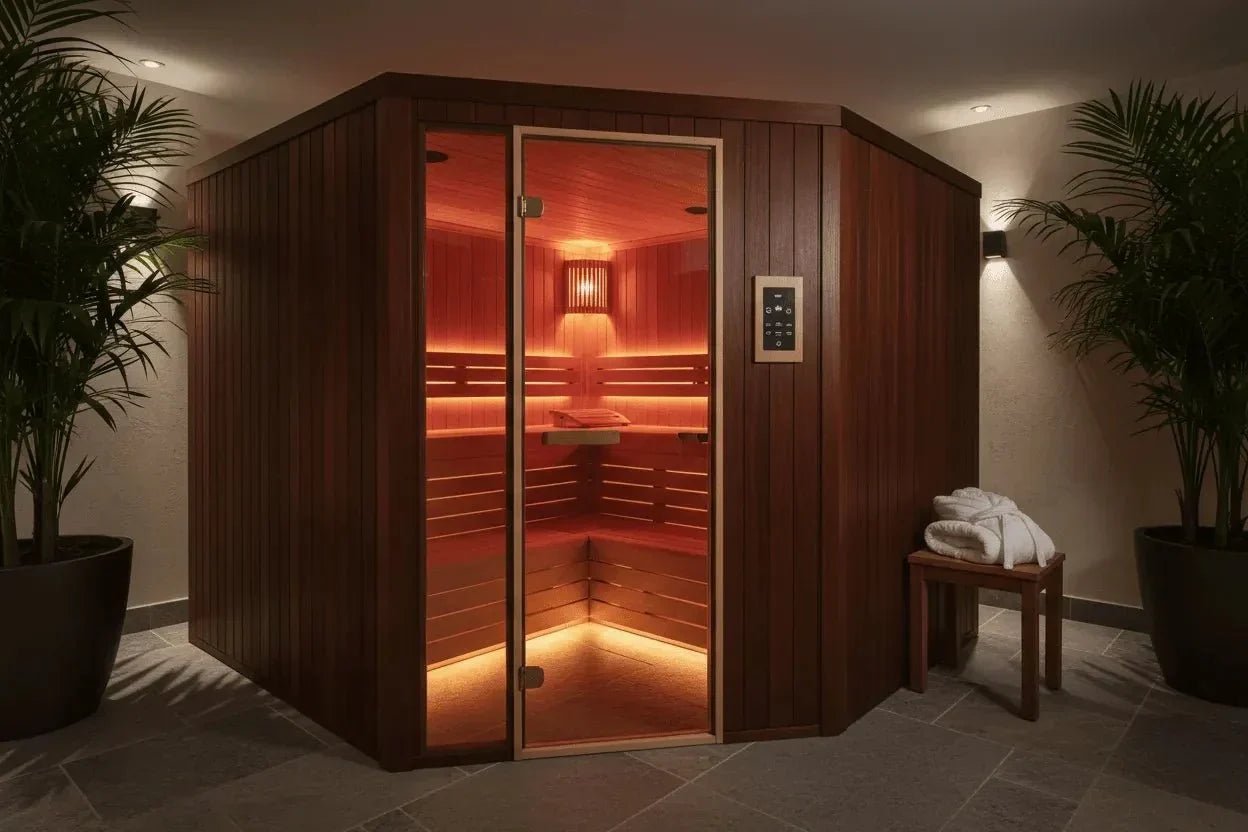
- Electrical Planning: Smaller 1-to-2 person infrared units run on standard 110V/15A household outlets, while larger 3-to-4 person full-spectrum models require a dedicated 220V line. Review our Home Sauna Electrical Planning Guide.
Climatic & Regional Installation Note: If you plan to install an infrared cabin in an unheated garage or basement in cold-weather regions (such as the Midwest or Northeast US), select a dual-wall tongue-and-groove construction (e.g., Grade-A Canadian Cedar). Cold ambient temperatures below 50°F force infrared heaters to work significantly harder, extending pre-heat times from 15 minutes to over 40 minutes unless the cabin features insulated walls and tight door seals.
Frequently Asked Questions
What is the optimal temperature for an infrared sauna?
Most therapeutic research supports operating temperatures between 120°F and 135°F for 20 to 30 minutes per session.
How often should I use an infrared sauna for maximum benefits?
For cardiovascular conditioning, muscle recovery, and stress reduction, clinical evidence recommends 3 to 5 sessions per week.
Is an infrared sauna better than a traditional sauna?
Neither is inherently "better"—they suit different needs. Infrared offers deeper tissue warmth at lower, comfortable temperatures, whereas traditional saunas provide intense, high-heat ambient humidity.
Does infrared therapy help with detoxing?
While heavy sweating excretes trace metals and environmental compounds, the primary detox benefit comes from increased blood flow to the liver and kidneys, supporting the body's primary filtration systems.
Ready to Build Your Personal Recovery Sanctuary?
Explore Wellari Wellness's curated collection of ultra-low EMF infrared saunas, cold plunges, and clinical-grade hyperbaric chambers.
Shop Infrared Saunas Explore Cold Plunges