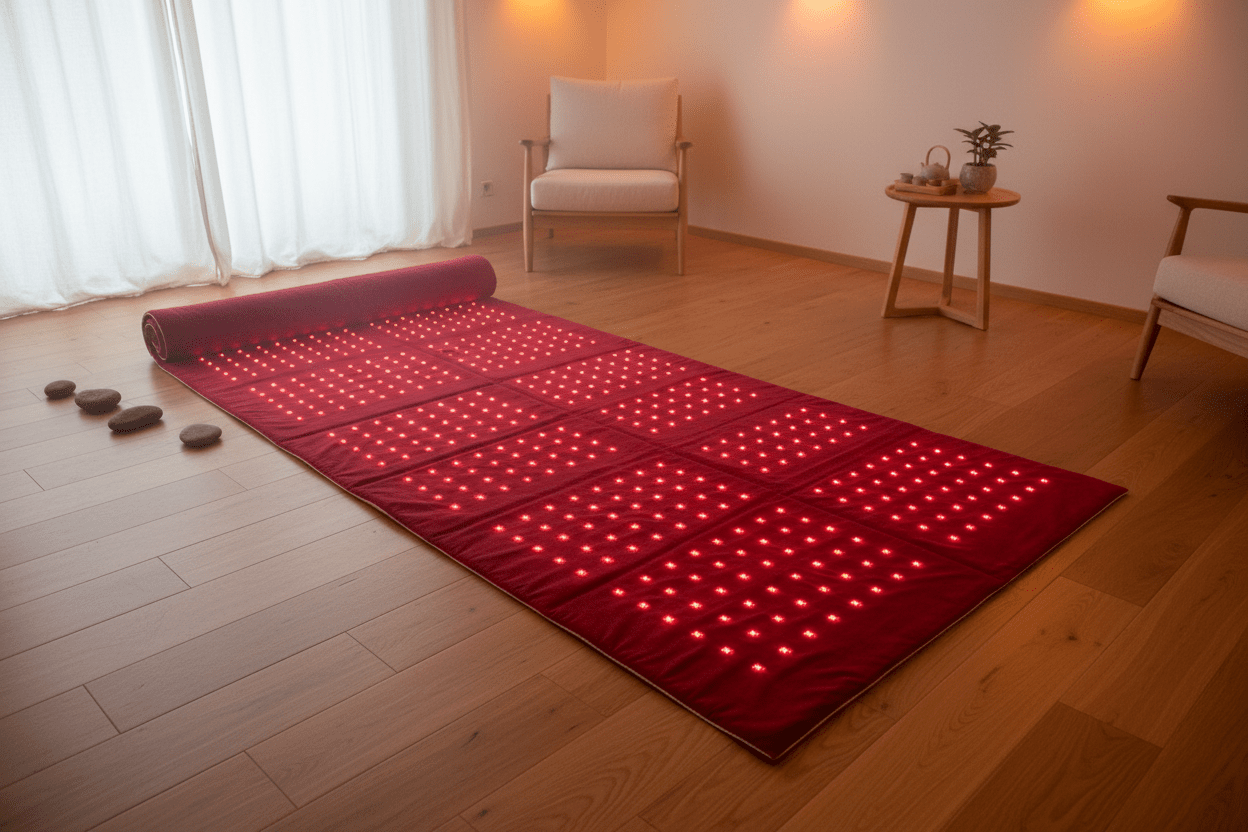


Skin Wellness & Technology Guide
Skin longevity is less about “reversing age” and more about protecting barrier function, minimizing preventable damage, and supporting healthy skin appearance over time. This guide examines the real evidence behind red light therapy, peptide skincare, exosome products, sunscreen, retinoids, and procedure-based care—while separating useful technology from exaggerated regenerative claims.
Reviewed and updated: July 17, 2026 | Reading time: Approximately 18 minutes
Quick Answer
A credible skin-longevity routine starts with daily UV protection, gentle cleansing, moisturizer, and proven topical ingredients selected for the individual. Red and near-infrared photobiomodulation may support skin appearance and collagen-related outcomes when the device, wavelength, dose, and schedule are appropriate.
Peptides can be useful formulation components, but results depend on the specific peptide, concentration, stability, and delivery system. Exosome-based skincare is an emerging field with limited clinical standardization, unresolved sourcing and safety questions, and no FDA-approved exosome products for treating disease or medical conditions.
There is currently no strong evidence that red light “opens cellular channels,” guarantees greater exosome absorption, or makes exosome and peptide products work synergistically.
What Is Skin Longevity?
Skin longevity is a consumer-wellness term rather than a medical specialty. It generally describes a long-term strategy for maintaining skin barrier integrity, even tone, elasticity, hydration, comfort, and resilience while reducing preventable environmental damage.
The concept is useful when it shifts attention away from dramatic “age reversal” promises and toward consistent risk reduction. It becomes misleading when marketers claim that a serum, light panel, or biologic product can reprogram skin age, regenerate tissue on demand, or permanently reverse cellular aging.
Skin Aging Is Multifactorial
Skin appearance changes through a combination of intrinsic biology and external exposure. Important influences include:
- Ultraviolet radiation
- Genetics and hormone changes
- Smoking and air pollution
- Sleep and stress
- Nutrition and hydration
- Skin disease and inflammation
- Medication and medical conditions
- Repeated irritation from aggressive skincare
- Loss of collagen, elastin, fat, and bone structure over time
No single technology addresses every layer.
The Skin-Longevity Foundation: Protection Before Technology
The highest-value skin-longevity intervention is not an exosome serum or LED panel. It is reducing cumulative ultraviolet exposure while maintaining a healthy barrier.
Morning Foundation
- Gentle cleanse or rinse
- Condition-appropriate active ingredients
- Moisturizer as needed
- Broad-spectrum sunscreen
- Protective clothing, shade, and behavior
Evening Foundation
- Remove sunscreen and makeup
- Gentle cleansing
- Evidence-based treatment ingredient when appropriate
- Barrier-supporting moisturizer
- Avoid unnecessary layering and irritation
Sunscreen reduces UV exposure, but it should be combined with shade, clothing, hats, and avoidance of intense sun. The FDA recommends using sunscreen according to its label and protecting the product container from excessive heat and direct sun.
Technology Cannot Outperform Daily UV Damage
Red light, peptides, procedures, and premium skincare cannot compensate for repeated unprotected UV exposure.
Red Light Therapy for Skin: What Photobiomodulation Can and Cannot Do
Red light therapy, also called photobiomodulation or low-level light therapy, uses non-ionizing red or near-infrared wavelengths. Studies have explored its effects on skin appearance, wound healing, inflammation, collagen-related pathways, acne, scarring, and hair growth.
Clinical reviews describe a reasonable body of evidence for selected aesthetic uses, but they also identify limitations including small study groups, inconsistent devices, variable dose reporting, industry funding, and uncertain long-term protocols.
Commonly Used Wavelength Ranges
- Visible red light: often approximately 630–670 nm
- Near-infrared light: often approximately 810–850 nm, although devices may use other wavelengths
Wavelength alone does not define a good treatment. Irradiance, fluence, distance, beam uniformity, pulsing, skin area, session duration, frequency, and total treatment period all affect dose.
How Photobiomodulation May Work
Photobiomodulation is frequently explained through interactions between light and mitochondrial chromophores, including cytochrome c oxidase. Proposed downstream effects include changes in cellular signaling, oxidative balance, inflammation, and energy metabolism. Exact pathways remain under investigation.
It is more accurate to say that red light may influence cellular signaling than to claim it simply “charges ATP” like a battery.
What Red Light May Support
- Improved appearance of fine lines in some protocols
- Changes in skin texture and elasticity
- Support for collagen- and elastin-related processes
- Selected acne or post-procedure protocols under guidance
- General skin-radiance routines
What It Has Not Proven
- Permanent reversal of skin aging
- Guaranteed wrinkle reduction from any 660/850 nm device
- Automatic enhancement of serum absorption
- Guaranteed synergy with exosomes or peptides
- Equivalent performance across masks, panels, beds, and handheld devices
Explore the Wellari red light therapy collection, the Red Light & Near-Infrared Buyer’s Guide, and Wellari’s article on how to use red light therapy panels.
Peptide Skincare and Copper Peptides
Peptides are short chains of amino acids. In skincare, they may be included to support hydration, barrier function, signaling pathways, or the appearance of firmness and fine lines. “Peptide” is a broad category; one ingredient cannot validate every peptide product.
GHK-Cu and Copper Peptides
GHK-Cu is a naturally occurring copper-binding peptide studied for wound-related, tissue-remodeling, antioxidant, and skin-aging applications. Laboratory and review literature is biologically interesting, but product performance still depends on formulation stability, concentration, delivery, packaging, and tolerability.
It is not appropriate to infer cosmetic effectiveness from the global peptide-therapeutics market. Injectable or pharmaceutical peptide drugs are not equivalent to topical cosmetic peptides.
Matrixyl and Other Cosmetic Peptides
Commercial peptide complexes may use proprietary sequences and formulations. Some have manufacturer-supported or small clinical studies, but product-to-product comparisons are difficult because concentrations and testing methods may not be public.
| Peptide Question | What to Look For |
|---|---|
| Is the peptide named? | Look for a specific INCI ingredient rather than vague “peptide technology.” |
| Is the formula stable? | Packaging, pH, air exposure, and compatibility affect stability. |
| Is the claim cosmetic or medical? | Appearance support is different from treating wounds or disease. |
| Is more always better? | No. Higher concentration can increase cost or irritation without proving better results. |
| Can it replace sunscreen or retinoids? | No. Peptides are usually adjuncts, not replacements for foundational care. |
Exosome Skincare: Emerging Science, Major Uncertainties
Exosomes are small extracellular vesicles released by cells. They can carry proteins, lipids, and nucleic acids that participate in cell-to-cell communication. That biology has generated interest in wound healing, hair restoration, regenerative medicine, and aesthetic dermatology.
However, the word “exosome” on a skincare label does not tell a consumer:
- The source material
- Whether the product contains true, purified exosomes
- Particle concentration or size distribution
- Whether biologic cargo remains intact
- How the product was tested for sterility and contamination
- Whether it can penetrate intact skin
- Whether it was evaluated after microneedling or laser treatment
- Whether the claimed outcomes came from the same formula
FDA Status Matters
The FDA states that there are currently no FDA-approved exosome products. Exosome products marketed to treat diseases or conditions generally require FDA approval. FDA warnings have also addressed unapproved and unlicensed biologic products.
Cosmetic marketing may use terms such as exosome-inspired, plant-derived vesicles, conditioned media, growth-factor serum, or extracellular-vesicle technology. These terms are not interchangeable.
Procedures Change the Risk Profile
Applying a biologic or poorly characterized product to freshly microneedled, lasered, injected, or otherwise disrupted skin is not the same as applying a cosmetic to intact skin. Infection, inflammation, contamination, and regulatory concerns require professional review.
Exosomes vs. Peptides for Skin
| Decision Factor | Peptides | Exosome-Based Products |
|---|---|---|
| What they are | Short amino-acid chains or peptide complexes | Extracellular vesicles or products marketed around vesicle-derived technology |
| Standardization | Still variable, but named cosmetic ingredients are easier to identify | Highly variable sourcing, isolation, characterization, and labeling |
| Topical evidence | Ingredient-specific; generally modest and formulation-dependent | Emerging, with limited standardized clinical evidence |
| Regulatory concern | Usually cosmetic unless medical claims are made | Greater concern when products claim to treat, regenerate, or are used invasively |
| Best role | Optional daily adjunct in a tolerable routine | Investigational or carefully evaluated professional context |
| Main risk | Irritation, incompatibility, inflated marketing | Identity, purity, contamination, biologic activity, unsupported claims |
Neither category is automatically superior. For most consumers, a transparent peptide formula is easier to evaluate than an exosome product with unclear sourcing or testing.
Can You Use Red Light Therapy With Peptides or Exosome Skincare?
Many people use topical products and red light in the same routine. That does not prove biological synergy.
Red Light and Peptides
Using a peptide product after a light session may be reasonable if the device manual permits clean, dry skin during treatment and the topical is well tolerated afterward. There is no universal rule that red light makes peptide absorption better.
Red Light and Exosome Products
There is insufficient evidence to claim that pairing an exosome serum with home red light therapy produces greater wrinkle reduction, faster healing, or superior collagen remodeling than either alone.
Why Clean, Dry Skin Is Often Recommended
Some device manufacturers recommend clean, dry skin because cosmetics can reflect or absorb light, alter heat, contaminate the device, or contain photosensitizing ingredients. Always follow the exact device instructions.
“Prime Before You Penetrate” Is Not an Established Rule
Red light has not been proven to open cellular channels or create a predictable post-treatment absorption window for exosomes or peptides.
A Practical Skin-Longevity Routine
The best routine is the simplest one that addresses the user’s actual skin type and goals without causing chronic irritation.
Illustrative Morning Routine
- Gentle cleanser or water rinse
- Optional antioxidant or targeted treatment
- Optional peptide serum
- Moisturizer
- Broad-spectrum sunscreen applied according to label
Illustrative Evening Routine
- Remove sunscreen and makeup
- Gentle cleanse
- Use red light on clean, dry skin if instructed by the device manufacturer
- Apply a tolerated treatment ingredient
- Moisturize
Where Retinoids Fit
Topical retinoids and retinol products have a more established role in photoaging care than most regenerative-sounding cosmetic technologies. They can also cause dryness and irritation and may not be appropriate for everyone. A dermatologist can help select the right form and schedule.
Do Not Introduce Everything at Once
Add one new product or device at a time, allow an observation period, and stop if significant irritation develops. This is especially important for sensitive skin, rosacea, eczema, melasma, or recent procedures.
How to Choose a Red Light Therapy Device for Skin
- Clear wavelength specifications
- Transparent irradiance or dose information
- Recommended treatment distance
- Session duration and weekly schedule
- Coverage area and fit
- Eye-safety instructions
- Heat management
- Electrical certification and manufacturer documentation
- Warranty and service support
- Realistic cosmetic claims
Mask vs. Panel vs. Bed
| Device Type | Strengths | Limitations |
|---|---|---|
| Face mask | Convenient, consistent distance, facial focus | Fit, heat, eye comfort, and dose vary |
| Panel | Flexible coverage, face or body use | Distance and positioning must be consistent |
| Handheld device | Targeted application | Small area and operator variability |
| Full-body bed | Large, uniform treatment area and professional workflow | Cost, space, electrical, heat, and maintenance requirements |
Wellari lists the first two of those formats as separate collections, which is the easiest way to compare them side by side: red light face masks and red light panels.
Read Wellari’s comparison of red light panels, belts, and masks and the guide to red light vs. infrared therapy.
Professional Procedures, Exosomes, and Post-Treatment Care
Microneedling, lasers, radiofrequency, chemical peels, and injectable treatments produce controlled effects at different skin depths. Adding an exosome or growth-factor product after a procedure is not automatically proven to improve outcomes.
Before a procedure, ask:
- What exact product is being used?
- Is it a cosmetic, drug, biologic, tissue product, or compounded preparation?
- What is the source?
- How is sterility documented?
- Is it FDA approved for the claimed use?
- What evidence studied this exact procedure-product combination?
- What adverse events have been reported?
- Who is responsible for follow-up?
What Results Are Realistic?
Skin results depend on baseline condition, age, pigmentation, sun exposure, device dose, product adherence, procedures, and measurement method.
A 2023 trial of a specific 630 nm LED facial mask used two sessions per week for three months. That result cannot be transferred to every mask or home panel. It also does not validate a red-light-plus-exosome stack.
A More Realistic Timeline
- Days to weeks: changes in hydration, comfort, or temporary radiance
- Six to twelve weeks: possible changes in texture or fine-line appearance with consistent evidence-based care
- Several months: more meaningful assessment of pigmentation, collagen-related appearance, and routine tolerability
- Long term: maintenance depends heavily on UV protection and continued adherence
Avoid universal claims such as “23–36% wrinkle reduction” unless the exact product, treatment, population, measurement method, and source study are identified.
Safety, Contraindications, and When to Ask a Dermatologist
Ask a Clinician Before Red Light Therapy If You Have:
- A history of skin cancer or suspicious lesions
- A photosensitive disorder
- Medication that increases photosensitivity
- Active severe dermatitis, infection, or unexplained rash
- A recent procedure with specific aftercare restrictions
- Eye disease or concerns about ocular exposure
- Pregnancy or another situation where the device maker advises consultation
Stop and Seek Advice for:
- Persistent redness, burning, swelling, or blistering
- New pigment changes
- Eye pain, visual symptoms, or headache related to exposure
- Worsening melasma or rosacea
- Signs of infection after a procedure
Do Not Use Light to Self-Treat Suspicious Lesions
A changing mole, non-healing sore, bleeding lesion, or new unexplained growth needs medical evaluation—not a cosmetic technology stack.
Illustrative Case Study: Building a Skin-Longevity Routine
This is a planning example, not a customer result or medical recommendation.
A healthy adult wants to improve dullness and fine-line appearance but has sensitive skin and a history of buying too many actives.
Poor Plan
- Begins retinol, acids, copper peptides, exosome serum, and daily red light at once
- Assumes tingling means the products are working
- Skips sunscreen because most time is spent indoors
- Chooses devices by wavelength alone
Stronger Plan
- Establishes gentle cleansing, moisturizer, and sunscreen.
- Adds one proven active at a low frequency.
- Selects a red light device with documented dose instructions.
- Uses it according to manufacturer guidance on clean skin.
- Adds a peptide only after the routine is stable.
- Avoids poorly characterized exosome products and invasive use.
- Tracks irritation and photos under consistent lighting.
Conclusion: A stable routine usually creates more value than a complicated stack.
Common Skin-Longevity Myths and Marketing Mistakes
- Claiming red light is non-negotiable for healthy skin
- Treating ATP as a simple battery that can be “charged” on demand
- Assuming 660 nm and 850 nm are always the ideal combination
- Claiming red light opens skin channels or increases exosome uptake
- Presenting exosome serums as FDA-approved regenerative treatments
- Using pharmaceutical peptide market size to validate cosmetic serums
- Claiming all exosomes contain the same growth factors and RNA
- Quoting wrinkle percentages without identifying the exact study
- Assuming more light or longer sessions produce better results
- Ignoring sunscreen, retinoids, and barrier care
- Applying biologic products to disrupted skin without clinical oversight
- Calling a cosmetic routine a cellular age-reversal protocol
2026 Skin-Longevity Buying Checklist
Before Buying a Device
- Is the wavelength disclosed?
- Is dose information understandable?
- Are distance and treatment time provided?
- Are eye-safety instructions clear?
- Are claims cosmetic and realistic?
- Is there a warranty and support pathway?
Before Buying a Peptide Product
- Is the peptide identified?
- Is the ingredient list complete?
- Is the packaging appropriate?
- Can it fit the routine without duplication?
- Is the claim based on the finished formula?
Before Buying an Exosome Product
- What is the source and manufacturing process?
- Is the product truly exosome-based or “exosome-inspired”?
- How are identity, purity, sterility, and concentration verified?
- Is it intended for intact skin or post-procedure use?
- Does the seller make disease or regeneration claims?
- Has the exact product been tested in humans?
Related Wellari Wellness Resources
Frequently Asked Questions
What is skin longevity?
Skin longevity is a long-term approach to preserving barrier function, comfort, even appearance, and resilience while reducing preventable damage.
Does red light therapy reverse skin aging?
No. Some protocols may improve selected appearance measures, but red light does not permanently reverse aging.
What wavelength is best for facial skin?
Many studies use visible red light in the 630–670 nm range. The correct dose and device design matter as much as wavelength.
Is 850 nm near-infrared good for skin?
Near-infrared wavelengths are used in many devices, but deeper penetration does not automatically mean better facial outcomes.
Does red light increase ATP?
Photobiomodulation may influence mitochondrial and cellular signaling, but “charging ATP” is an oversimplification.
Can red light increase collagen?
Some laboratory and clinical studies report collagen-related changes, but results depend on the protocol.
Can red light make serums absorb better?
There is no universal evidence that home red light creates a predictable absorption window.
Should skincare be applied before red light?
Follow the device instructions. Many manufacturers recommend clean, dry skin during exposure.
Can I use peptides after red light therapy?
Often yes, if the product is tolerated and the device maker does not advise otherwise.
Can I use copper peptides with red light therapy?
They may be used in the same routine, but there is not strong evidence of guaranteed synergy.
What is GHK-Cu?
GHK-Cu is a copper-binding peptide studied for tissue-remodeling and skin-related applications.
Are peptides better than retinol?
They serve different roles. Retinoids have a more established evidence base for photoaging, while peptides may be optional adjuncts.
What are exosomes?
Exosomes are extracellular vesicles that carry biologically active molecules between cells.
Are exosome skincare products FDA approved?
The FDA states that there are currently no FDA-approved exosome products.
Do topical exosomes penetrate intact skin?
Penetration and biological activity depend on the product and delivery method and are not well standardized.
Are plant exosomes the same as human exosomes?
No. Source, cargo, isolation, and biologic relevance differ.
Can exosomes be applied after microneedling?
This raises sterility, safety, and regulatory concerns and should be evaluated by a qualified clinician using a clearly characterized product.
Do red light and exosomes work better together?
High-quality evidence proving a unique synergy is currently insufficient.
How often should I use red light therapy?
Use the schedule specified for the exact device. More frequent or longer exposure is not always better.
How long before red light results appear?
Many studies assess outcomes after several weeks to three months of consistent use.
Can red light worsen melasma?
Responses can vary. People with melasma or heat-sensitive pigmentation should seek dermatologic guidance.
Do I need sunscreen if I use red light therapy?
Yes. Red light does not replace broad-spectrum UV protection.
Research, Regulatory Guidance, and Further Reading
- The Clinical Applications of Low-Level Light Therapy
- Reverse Skin Aging Signs by Red Light Photobiomodulation
- Red Plus Near-Infrared Light and Collagen/Elastin Production
- Oncologic Safety Review of Low-Level Light Therapy for Aesthetic Skin Rejuvenation
- Biological and Therapeutic Responses of Human Skin to Different Light Wavelengths
- Exploring the Reality of Exosomes in Dermatology
- FDA Consumer Alert on Regenerative Medicine Products, Including Exosomes
- FDA Public Safety Notification on Exosome Products
- FDA Sunscreen Guidance
Build a Better Red Light Therapy Routine
Wellari Wellness helps home users and professional facilities compare red and near-infrared light systems by wavelength, coverage, use case, installation needs, and long-term support—without relying on exaggerated anti-aging claims.
Explore Red Light Systems Read the Buyer’s GuideWellari Wellness Editorial and Medical Disclaimer
Wellari Wellness provides wellness equipment and educational information. This article does not diagnose, treat, cure, or prevent disease and is not a substitute for dermatologic or medical care. Product specifications, FDA status, research findings, and manufacturer instructions may change. Follow the exact device instructions and consult a qualified clinician when you have a skin condition, use photosensitizing medication, recently had a procedure, or are unsure whether a product or light-based routine is appropriate.