Photobiomodulation & Light Therapy
Red Light Therapy (RLT)—clinically known as photobiomodulation (PBM)—has transitioned from specialized medical clinics into a staple technology for home wellness, athletic recovery, and skincare routines. However, choosing between a high-output LED panel, a flexible wearable belt, or a face-contoured mask depends on understanding light irradiance, tissue penetration depths, and dosing mathematics.
Reviewed and updated: July 2026 | Reading time: Approximately 12 minutes
Quick Take: Which Red Light Format Do You Need?
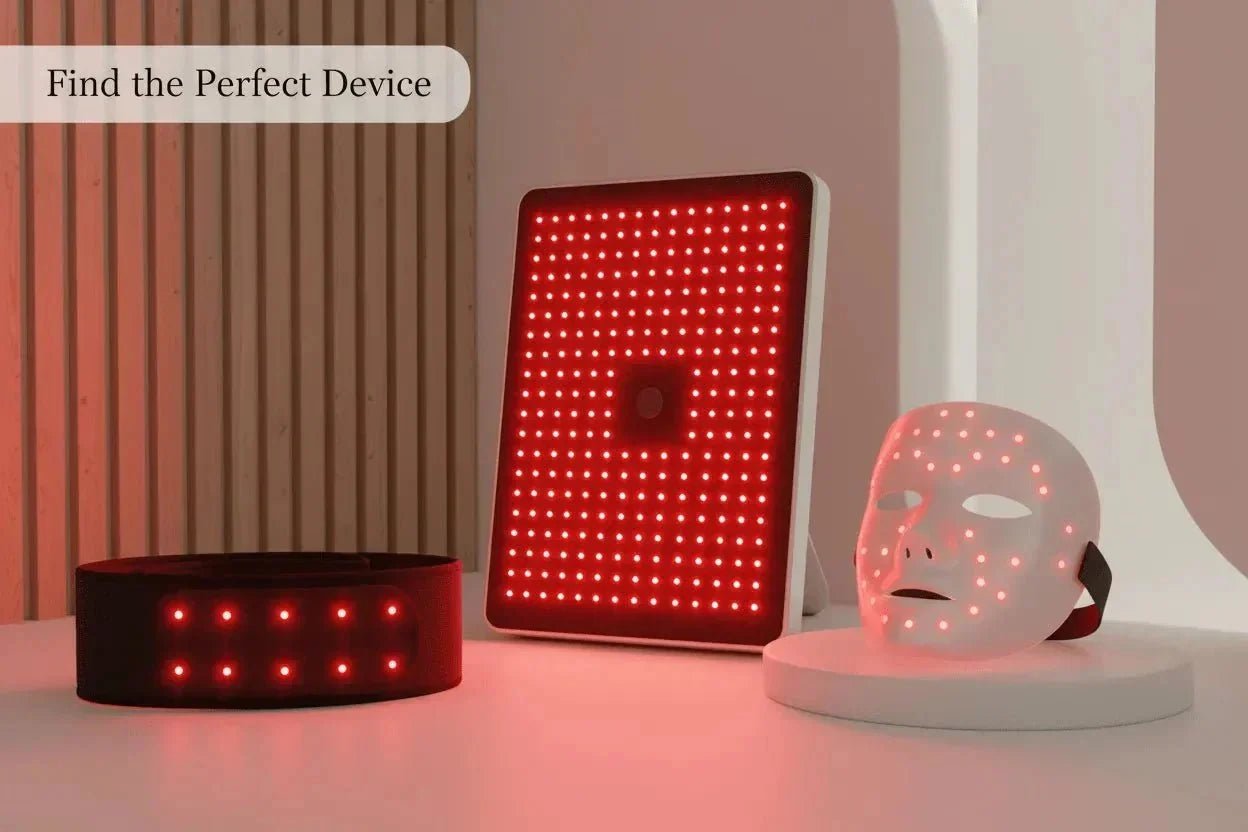
High-output LED Panels offer the highest irradiance (100+ mW/cm²) and full-body coverage, making them the most versatile choice for systemic muscle recovery, joint care, and energy routines. Flexible Belts & Wraps provide direct-contact, targeted relief (25–45 mW/cm²) for localized lower back, knee, or shoulder discomfort while multi-tasking or traveling. Silicone Facial Masks deliver precise surface-level skin conditioning (630–660nm) for facial collagen support with zero effort.
The Cellular Science: Mitochondria, ATP & Wavelengths
Photobiomodulation works by emitting specific light photons that penetrate dermal and subdermal tissues. These photons are absorbed by Cytochrome c Oxidase, an essential photoacceptor enzyme inside cellular mitochondria. This interaction stimulates the electron transport chain, boosting the production of Adenosine Triphosphate (ATP)—providing cells with the energy required for rapid tissue repair and collagen synthesis.
The Dual-Wavelength Gold Standard:
- Visible Red Light (630nm – 660nm): Highly absorbed by the superficial layers of the skin (dermis and epidermis). Ideal for supporting skin texture, balancing complexion, and promoting collagen density.
- Near-Infrared Light (810nm – 850nm): Invisible to the human eye, these longer wavelengths penetrate up to 2 inches deep into soft tissue, reaching muscles, tendons, joint capsules, and bone to support localized circulation and post-activity recovery.
👉 For a complete breakdown of light physics, read Red Light Therapy: Unpacking Wavelengths & Device Selection.
Device Form Factor Comparison Matrix
| Device Format | Irradiance at Target Area | Primary Wavelengths Included | Primary Target Goal | Best Fit User |
|---|---|---|---|---|
| Full-Body & Half-Body LED Panels | High (100+ mW/cm² at 6 inches) | 660nm Red + 850nm NIR (Multi-Wavelength Smart Arrays) | Systemic muscle recovery, full-body skin conditioning, energy boost. | Athletes, home wellness lounges, multi-user households. |
| Flexible Belts & Body Wraps | Moderate (25 – 45 mW/cm² direct contact) | 660nm Red + 850nm Near-Infrared | Targeted lower back, knee, shoulder, or midsection comfort. | Active individuals needing portable, hands-free relief while working or relaxing. |
| Contoured Silicone Facial Masks | Gentle (15 – 30 mW/cm² direct contact) | 630nm / 660nm Red + Optional Blue / 850nm NIR | Facial skin tone, collagen support, redness balancing. | Skincare enthusiasts seeking a dedicated, effortless morning routine. |
1) High-Output Red Light Panels: Systemic Power & Full-Body Use
High-output LED panels (ranging from tabletop units to massive full-body towers) represent the most versatile form factor in light therapy. Because panels house high-wattage dual-chip LEDs with focused optical lenses (typically 30° or 60° beam angles), they cast a high density of light energy over large surface areas simultaneously.
Key Advantages of LED Panels:
- Time Efficiency: High irradiance allows you to achieve a therapeutic dose (10 to 20 Joules) in a short 10-minute standing or sitting session.
- Dual-Spectrum Customization: Advanced smart panels allow you to toggle Red (660nm) and Near-Infrared (850nm) modes independently or run both simultaneously.
- Hands-Free Versatility: Mountable on doors, mobile floor stands, or motorized lift stands for easy positioning.
👉 Explore panel systems: Wellari High-Output Red Light LED Panels Collection.
2) Red Light Belts & Wraps: Targeted Joint & Muscle Recovery
Red light therapy belts and flexible neoprene wraps are engineered for localized application. By placing flexible surface-mount LEDs (SMD technology) directly against the skin, light reflection loss into ambient air is minimized.
Key Advantages of Belts & Wraps:
- Targeted Placement: Strap directly around specific trouble zones—such as the lumbar spine, knees, hamstrings, or shoulders.
- Portability & Mobility: Battery-pack compatible setups allow you to move around your home, work at a desk, or travel without being tethered to a wall outlet.
👉 Explore wearable options: Wellari Red Light Belts & Wraps Collection.
3) Flexible Red Light Facial Masks: Skincare & Collagen Support
Facial masks are specialized phototherapy devices contoured specifically for the face and neck. Modern medical-grade silicone masks sit directly against the skin, delivering consistent, uniform light coverage across the forehead, cheeks, and jawline without shadows.
Key Advantages of Facial Masks:
- Zero Setup Friction: Simply strap on the lightweight mask, press power, and relax for 10 minutes while reading or resting.
- Dedicated Skincare Wavelengths: Combines 630nm/660nm red light for collagen stimulation with optional blue light (415nm) to target surface bacteria and balance oil production.
👉 Explore facial devices: Wellari Red Light Facial Masks Collection.
Irradiance, Distance & Calculating Your Session Dosage (Joules)
The effectiveness of red light therapy relies on applying an adequate energy dose, measured in Joules per square centimeter (J/cm²).
Dosage is calculated using the following formula:
Energy Dose (J/cm²) = [Irradiance (mW/cm²) × Time (Seconds)] ÷ 1000
- Superficial Skin Goals: Requires a lower dose of 4 to 10 J/cm² (achieved in 5–10 minutes using 660nm red light).
- Deep Tissue & Muscle Goals: Requires a higher dose of 20 to 40 J/cm² (achieved in 10–15 minutes using 850nm near-infrared light at 6 inches from a panel).
Safety Standards: Always ensure your device utilizes zero-flicker constant current LED drivers and emits Ultra-Low Electromagnetic Fields (EMF) at point-of-use distance.
Bio-Stacking Protocols: Combining Red Light with Cold Plunges
Pairing red light therapy with cold water immersion creates a synergistic recovery protocol.
Recommended Sequence: Complete your cold plunge session first, allow your body 15 to 20 minutes to re-warm naturally, and then undergo a 10-to-15 minute red light session. Cold immersion causes initial vasoconstriction, while subsequent red light exposure supports localized circulation and accelerates ATP production in recovering muscle tissue.
👉 Read the complete sequencing science: Red Light Therapy Before or After Cold Plunge? The Science of Sequencing.
Planning Case Study: Skincare Specialist vs. Triathlete Setup
Scenario A (Skincare & Anti-Aging Focus): A user wanting an easy, daily 10-minute facial routine to balance skin tone and boost collagen production.
Ideal Selection: A medical-grade flexible silicone mask (such as the Phototherapy 3D Mask or Face/Neck Wrap) combining 630nm red light and gentle 850nm NIR.
Scenario B (Triathlete & Systemic Recovery Focus): An athlete managing leg soreness, lower back tightness, and daily post-workout fatigue.
Ideal Selection: A high-output full-body panel (such as the RDPro-FS7 Series Smart Panel) mounted on a mobile floor stand, paired with a flexible wearable belt for targeted lumbar support on travel days.
Frequently Asked Questions
Can I use Red Light Therapy every day?
Yes. Clinical research supports daily or 3-to-5-times-per-week usage. Consistent light exposure yields better long-term cellular energy and skin radiance than sporadic longer sessions.
Is Red Light Therapy the same as a tanning bed or UV light?
No. Tanning beds emit ultraviolet (UV) radiation which can damage skin cells. Red Light Therapy uses specific red (660nm) and near-infrared (850nm) wavelengths that are completely UV-free and do not burn or tan the skin.
Do I need to wear eye protection during Red Light Therapy sessions?
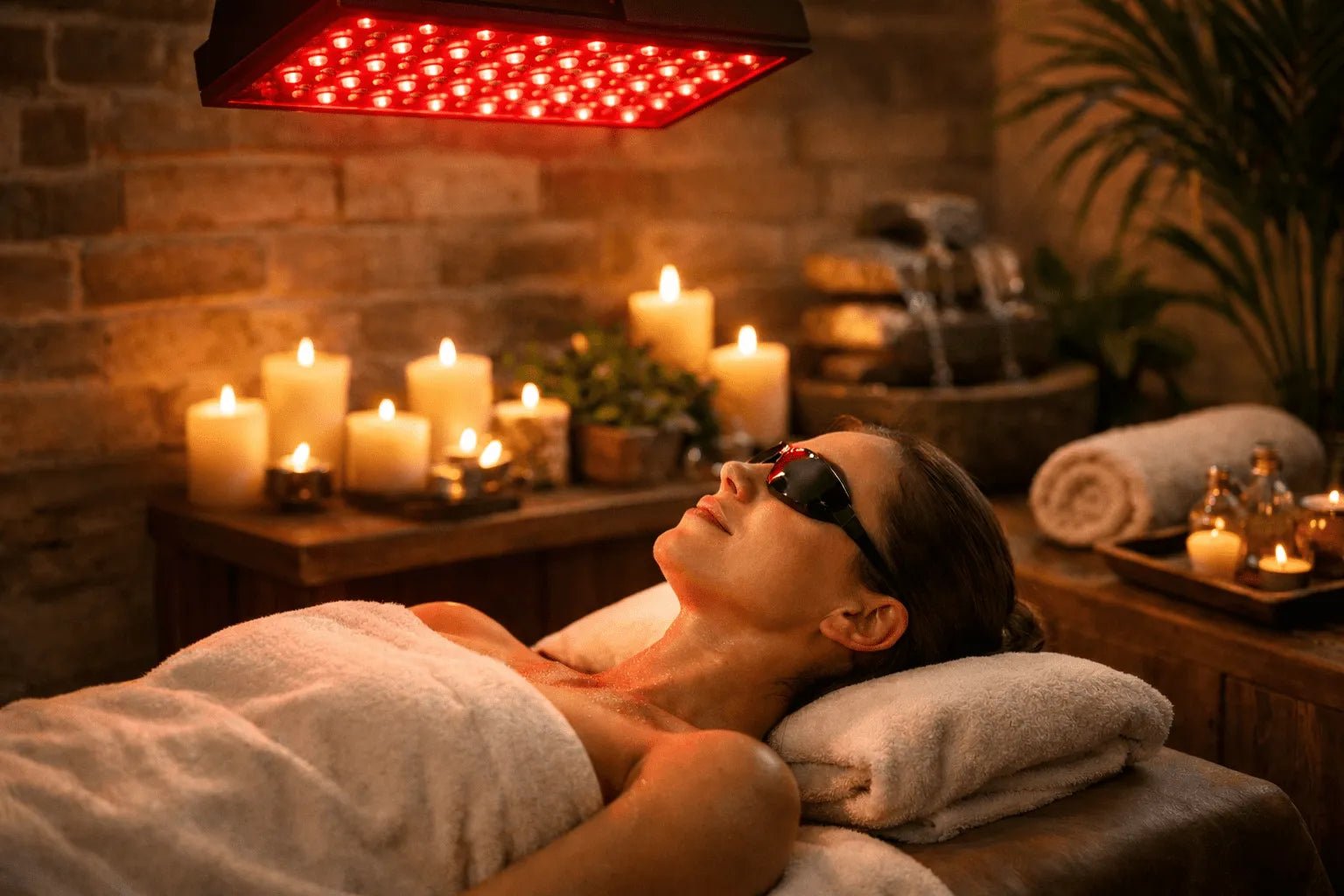
Eye protection (goggles or blackout eye patches) is recommended during sessions with high-output panels, especially when utilizing invisible Near-Infrared (NIR) wavelengths at close range.
What is the main difference between red light and near-infrared (NIR) light?
Red light (630–660nm) is visible to the eye and targets superficial skin layers for radiance and collagen support. Near-infrared light (810–850nm) is invisible and penetrates deeper into soft tissue, joints, and muscles to aid physical recovery.
Explore Wellari's Curated Photobiomodulation Systems
Discover high-output panels, flexible wearable belts, contoured facial masks, and mobile mounting stands built for home wellness lounges.
Shop Red Light Panels Explore Skincare MasksResearch & Clinical Sources
- National Institutes of Health (PMC / PubMed), "A Controlled Trial to Determine the Efficacy of Red and Near-Infrared Light Treatment in Patient Satisfaction & Skin Research."
- American Academy of Dermatology (AAD), "Evaluation of LED Light Therapy in Cosmetic & Dermatological Applications."
- Journal of Biophotonics, "Mechanisms of Low-Level Light Therapy: Cytochrome c Oxidase Activation & Cellular ATP Production."
Wellari Wellness Editorial Note
Wellari Wellness provides educational guides on recovery technology and photobiomodulation devices. Red light therapy devices are intended for cosmetic and general wellness purposes. Consult a physician or dermatologist prior to beginning light therapy if you take light-sensitive medications or have medical concerns.

%E2%80%94clinically%20known%20as%20photobiomodulation%20(PBM)%E2%80%94has%20transitioned%20from%20specialized%20medical%20clinics%20into%20a%20staple%20technology%20for%20home%20we...)