Cryotherapy and Sleep: How Cold Exposure Affects Deep Sleep and Recovery
Short answer: Research on cryotherapy and sleep is small but consistent in one direction: cold exposure in the evening has not harmed sleep in controlled studies, and one cold-water immersion trial recorded more deep sleep and fewer night-time arousals. The effects measured so far are modest, mostly in young male athletes, and no study shows cold therapy reliably fixes poor sleep.
Key takeaways
- Cold exposure lowers core body temperature for a period afterward, and researchers link a falling core temperature with falling asleep sooner and sleeping more deeply.
- In one lab study, a 10-minute whole-body cold-water immersion after evening exercise increased the share of slow-wave (deep) sleep early in the night compared with waist-deep immersion, and reduced arousals compared with no immersion.
- Whole-body cryotherapy taken one hour before bed did not change measured sleep stages, but it produced the lowest core temperature after bedtime and the strongest overnight parasympathetic ("rest and digest") activity.
- Most participants were healthy, well-trained young men who already slept well, so results may not transfer to everyone.
- Treat cold therapy as one part of an evening routine, not a sleep treatment, and talk to your doctor first if you have a heart condition or a diagnosed sleep disorder.
Does cryotherapy help sleep?
Cryotherapy may help some aspects of sleep in some people, but the evidence does not support a blanket yes. The honest summary is that evening cold exposure appears safe for sleep in the studies so far, and one cold-water immersion trial found measurable changes in deep sleep and night-time restlessness.
Two terms matter here. Whole-body cryotherapy (also called whole-body cryostimulation) is a short exposure to very cold, dry air inside a chamber. Cold-water immersion is sitting in cold water, which is what a home cold plunge does.
Researchers have studied both for sleep, mostly as a recovery tool after hard evening training. That context matters, because the question they asked was usually "does cold exposure after exercise disturb or improve the night that follows?" rather than "does cold exposure treat insomnia?"
How does cold therapy affect sleep? The core temperature link
Cold therapy's main proposed route to better sleep is temperature. Core body temperature is the temperature of your internal organs, as opposed to your skin, and it naturally falls after bedtime as part of the body's normal sleep pattern.
The research team behind a 2024 whole-body cryotherapy study wrote that a decrease in core body temperature may be an effective means of reducing sleep latency and promoting deeper sleep. Sleep latency is simply the time it takes to fall asleep.
Cold exposure pushes core temperature down for a while. In a study of 12 well-trained male runners, 10 minutes of whole-body immersion in 13.3°C (about 56°F) water kept core temperature lower than the no-immersion condition until 80 minutes after the immersion began.
That window is the practical point. A cold session only lines up with your natural evening temperature drop if it happens close enough to bedtime for the effect to still be present.
What the studies on cryotherapy and sleep actually measured
The studies on cryotherapy and sleep are small, and each used a different protocol, so it helps to see them side by side. The table below summarizes the trials linked in this article.
| Study | Method and dose | Who took part | What changed |
|---|---|---|---|
| Chauvineau et al., 2021 | Cold-water immersion, 13.3°C for 10 minutes after evening running; head under vs waist-deep vs none | 12 well-trained male endurance runners | Head-under immersion: more slow-wave sleep in the first 180 minutes than waist-deep, fewer arousals and limb movements than no immersion. No difference in fatigue or muscle-damage markers over 48 hours |
| Arc-Chagnaud et al., 2024 | Whole-body cryotherapy: 30 seconds at -25°C, then 3 minutes at -70°C, either right after training or 1 hour before bed | 22 well-trained male athletes and triathletes | No change in measured sleep stages or subjective sleep. Higher parasympathetic activity during deep sleep, strongest with the pre-bed session. Lowest core temperature after bedtime with the pre-bed session |
| Skein et al., 2018 (summarized in a 2025 review) | Cold-water immersion, 14.1°C for 15 minutes after heat training, 5 consecutive days | Men, no prior sleep conditions | Better self-rated sleep quality (3.6 vs 3.1 on a 1-5 scale) than passive recovery |
Notice what is missing. None of these trials enrolled people with diagnosed sleep problems, and none ran long enough to show whether any change lasts beyond a few nights.
A 2025 systematic review of cold-water immersion in healthy adults also noted that one study found cold-water immersion after high-intensity exercise did not acutely affect overall night sleep quantity and quality. The same review described the overall evidence base as limited by few randomized trials, small samples and a lack of diversity in study populations.
Cold plunge before bed: is it a good idea?
A cold plunge before bed did not disrupt sleep in the controlled studies above, and the closest-to-bedtime protocol produced the largest overnight drop in core temperature. That makes an evening plunge a reasonable thing to try, as long as you judge it by how you actually sleep.
The timing detail comes from the 2024 cryotherapy trial. Participants had sessions either at about 7 p.m., straight after training, or one hour before their own bedtime. Neither timing changed sleep stages, but the pre-bed session produced a greater core temperature drop two to three hours after bedtime and more parasympathetic activity during deep sleep.
Practical points for an evening plunge
- Leave a gap. The studies above finished cold exposure roughly one to four hours before bed, not immediately before lying down. About an hour is a reasonable starting point, and some people prefer several hours.
- Rewarm gently. Dry off, dress warmly and let your body come back up to comfort before getting into bed.
- Keep your head out. The head-under condition in the runner study was a supervised lab protocol; it is not something to copy alone at home.
- Watch your own response. If an evening plunge leaves you wired rather than sleepy, move it earlier in the day.
For broader evening habits such as light, bedroom temperature and noise, see our guide to building a sleep sanctuary for better recovery.
Morning or evening: when should you use cold therapy for sleep?
If sleep is the goal, the limited evidence points to the evening, because the studies that measured sleep all used evening sessions. None of the trials in the table tested a morning session against an evening one, so there is no direct evidence that a morning plunge helps or hurts that night's sleep.
A morning session still has a place if your main goals are alertness or routine. The trade-off is simple: the temperature effect described above is short-lived, so a morning plunge is unlikely to be doing much for core temperature by bedtime.
If you already use other evening tools such as infrared sauna or red light, our article on how infrared, oxygen and light technologies fit into a sleep routine covers how to sequence them.
Whole-body cryotherapy vs cold plunge for sleep
Both methods lower core temperature, but they deliver cold very differently, and the sleep research on each has found different things. Whole-body cryotherapy uses whole-body exposure to dry air at cryogenic temperatures between -50 and -195°C for a few minutes. A cold plunge uses water for longer sessions at far milder temperatures.
| Whole-body cryotherapy | Cold plunge (cold-water immersion) | |
|---|---|---|
| Cold medium | Dry air, -50 to -195°C | Water, about 13-14°C in the sleep studies cited here |
| Session length in sleep studies | About 3.5 minutes total | 10-15 minutes |
| Sleep findings | No change in sleep stages; stronger overnight parasympathetic activity and lower core temperature when taken 1 hour before bed | More early-night deep sleep and fewer arousals with head-under immersion in one study; better self-rated sleep in another; no effect in a third |
| Where it is usually done | Clinics, gyms and facilities with a cryotherapy chamber | At home or in a facility with a tub and chiller |
| Fit for an evening routine at home | Only if you own or have access to a chamber | Easy to schedule around bedtime |
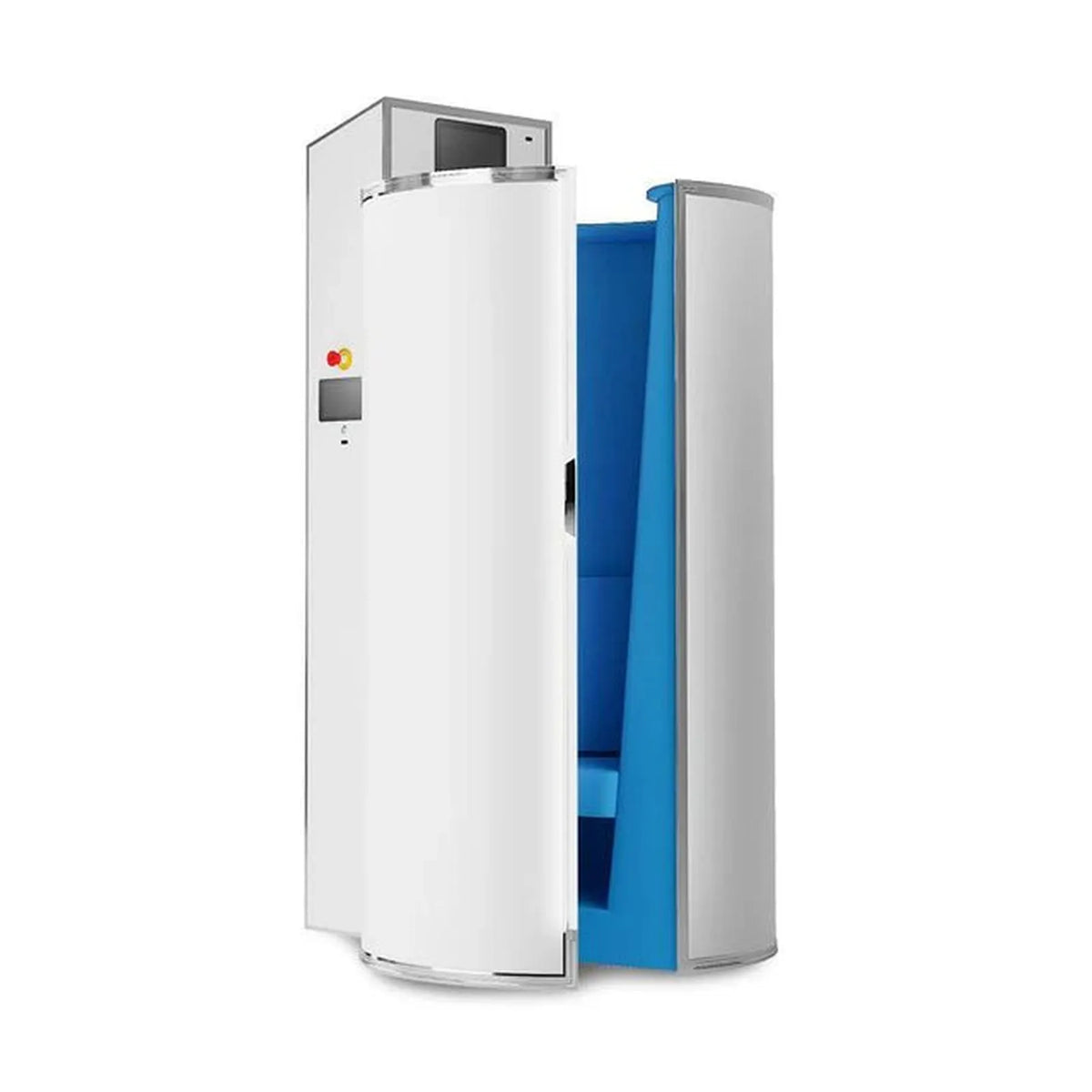
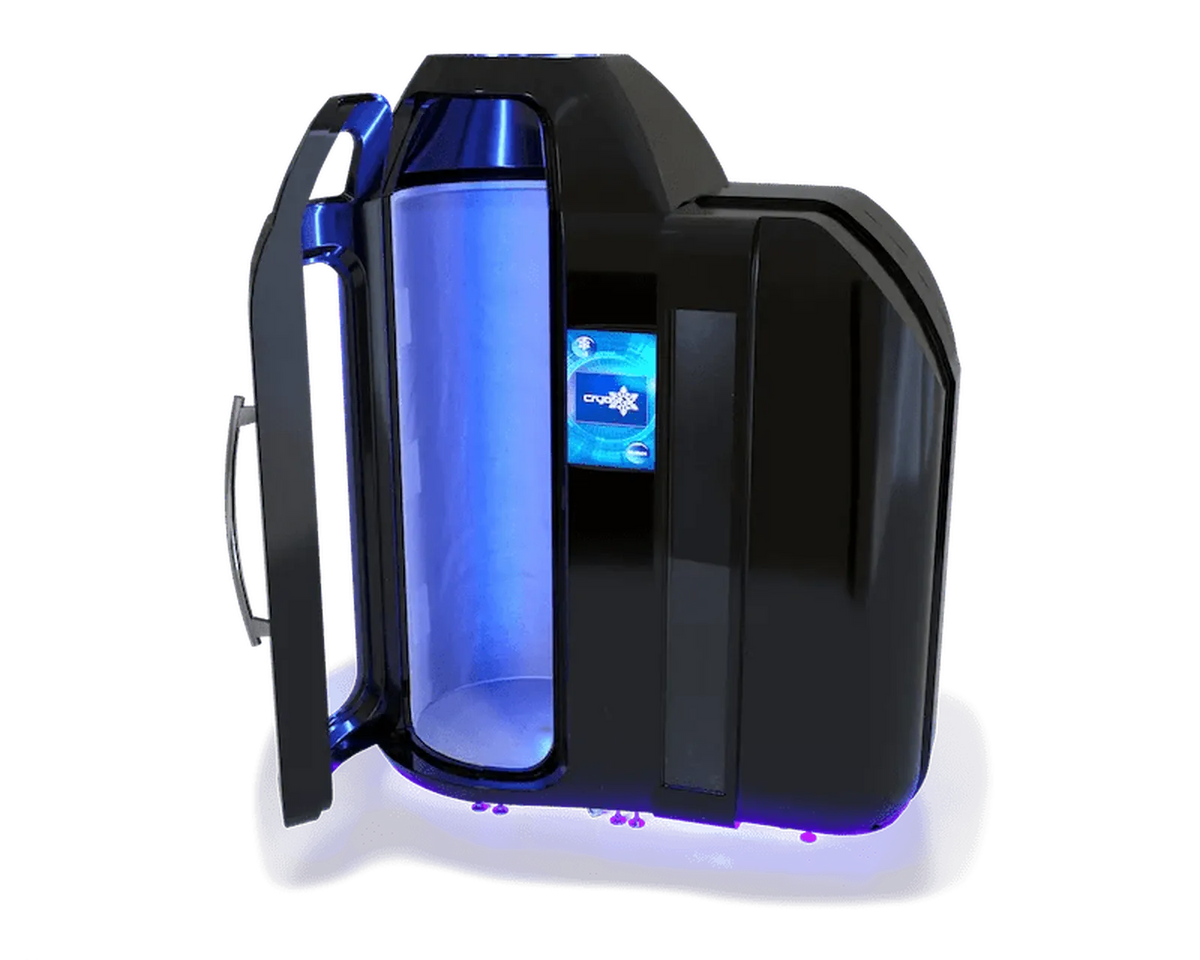
For most people building a home routine, a cold plunge is the more practical option for evening use. Facility owners weighing a chamber can compare electric cryotherapy chambers, and home buyers can browse cold plunge tubs. If you have not stood in a chamber before, our guide to what happens during a cryotherapy session walks through it.
Cryotherapy recovery and sleep: how they connect
Cryotherapy recovery and sleep are linked in the research, but improved sleep measures did not translate into measurably faster recovery in these trials. That is an important distinction for anyone buying equipment mainly for recovery.
In the runner study, the sleep changes came with no difference in fatigue or muscle-damage markers across 48 hours. In the 2024 cryotherapy trial, the authors found no statistical effect on muscle soreness or perceived recovery the next morning.
So the realistic framing is this: cold exposure may nudge some sleep measures, and sleep matters for recovery, but the studies have not shown the chain running all the way through. How often you use cold therapy also matters; our cryotherapy frequency guide covers scheduling.
What to expect, and what not to expect
Expect a cold session to feel intense at first, then to leave you feeling cooler for a while afterward. How that feels before bed varies from person to person.
Do not expect a guaranteed change in how fast you fall asleep or how deeply you sleep. The 2024 trial's authors noted that their participants were good sleepers tested in winter, conditions that may not be the most favorable for detecting an effect.
The fairest test is your own: keep the same bedtime, add an evening session a few times a week, and note how you sleep compared with nights without it.
Talk to your doctor first if you have a heart condition, high blood pressure, Raynaud's, a diagnosed sleep disorder, or are pregnant. Cold exposure places real stress on the cardiovascular system, and persistent sleep problems deserve a medical evaluation rather than a new routine.
Frequently asked questions
Does cryotherapy help you sleep better?
It may help some people a little, but the evidence is limited. Small studies in young, healthy athletes found that evening cold exposure did not harm sleep, and one cold-water immersion trial recorded more deep sleep and fewer night-time arousals. A whole-body cryotherapy trial found no change in sleep stages. No study shows cryotherapy reliably improves sleep in people with sleep problems, so treat it as a possible support, not a fix.
Is it OK to cold plunge before bed?
In small controlled studies of young, trained male athletes, an evening cold plunge did not disrupt sleep. Start with roughly an hour between the plunge and bedtime (some people prefer several hours), rewarm gently, and keep your head above water. If the plunge leaves you feeling alert rather than sleepy, move it earlier in the day. Check with your doctor first if you have a heart or blood pressure condition.
How long before bed should you do cryotherapy or a cold plunge?
The studies that measured sleep finished cold exposure roughly one to four hours before bed. In one whole-body cryotherapy trial, a session about one hour before bedtime produced a lower core temperature after bedtime than a session straight after evening training. Neither timing changed sleep stages, so about an hour before bed is a reasonable starting point to test.
Is a cold plunge or whole-body cryotherapy better for sleep?
Neither has been shown to be clearly better. One cold-water immersion study recorded more early-night deep sleep with head-under immersion, while a whole-body cryotherapy study found no change in sleep stages but stronger overnight parasympathetic activity. For a home evening routine, a cold plunge is usually the more practical choice because it is easy to schedule around bedtime.
Will better sleep from cold therapy speed up my recovery?
Not necessarily. In the studies linked here, changes in sleep measures did not come with measurably faster recovery. One trial found no difference in fatigue or muscle-damage markers over 48 hours, and another found no effect on muscle soreness or perceived recovery the next morning. Sleep supports recovery, but cold therapy has not been shown to complete that chain.
Talk to us before you buy
Thinking about adding cold therapy to your evening routine? Browse our cryotherapy chambers, and talk to us before you buy. We will help you work out whether a chamber or a cold plunge fits your space, your schedule and your goals.