
Continuous Wave vs. Pulsed Red Light Therapy: Which Is Best?
Red light therapy has become one of the most popular tools in home wellness, recovery technology, skin health routines, and performance-focused recovery rooms. As more consumers compare red light therapy panels, one technical question comes up often: should you choose continuous wave red light therapy or pulsed red light therapy?
Both modes are used in photobiomodulation, also called PBM. Continuous wave delivers light in a steady, uninterrupted stream. Pulsed red light therapy turns the light on and off at selected intervals. The difference sounds simple, but it can affect comfort, dosing, device design, and how users think about red light therapy settings.
This guide explains the difference between continuous wave and pulsed light therapy, how each mode is commonly used, what to look for in a red light panel, and how to choose the best red light therapy device for your home or professional wellness space.
Disclaimer: This article is for educational purposes only and does not provide medical advice, diagnosis, or treatment. Red light therapy and photobiomodulation research is ongoing. Individual results vary, and users should follow manufacturer instructions and consult a qualified healthcare professional when appropriate.
What Is Continuous Wave Red Light Therapy?
Continuous wave red light therapy means the device emits light steadily throughout the treatment session. The LEDs or light source remain on without intentional pulsing or interruption.
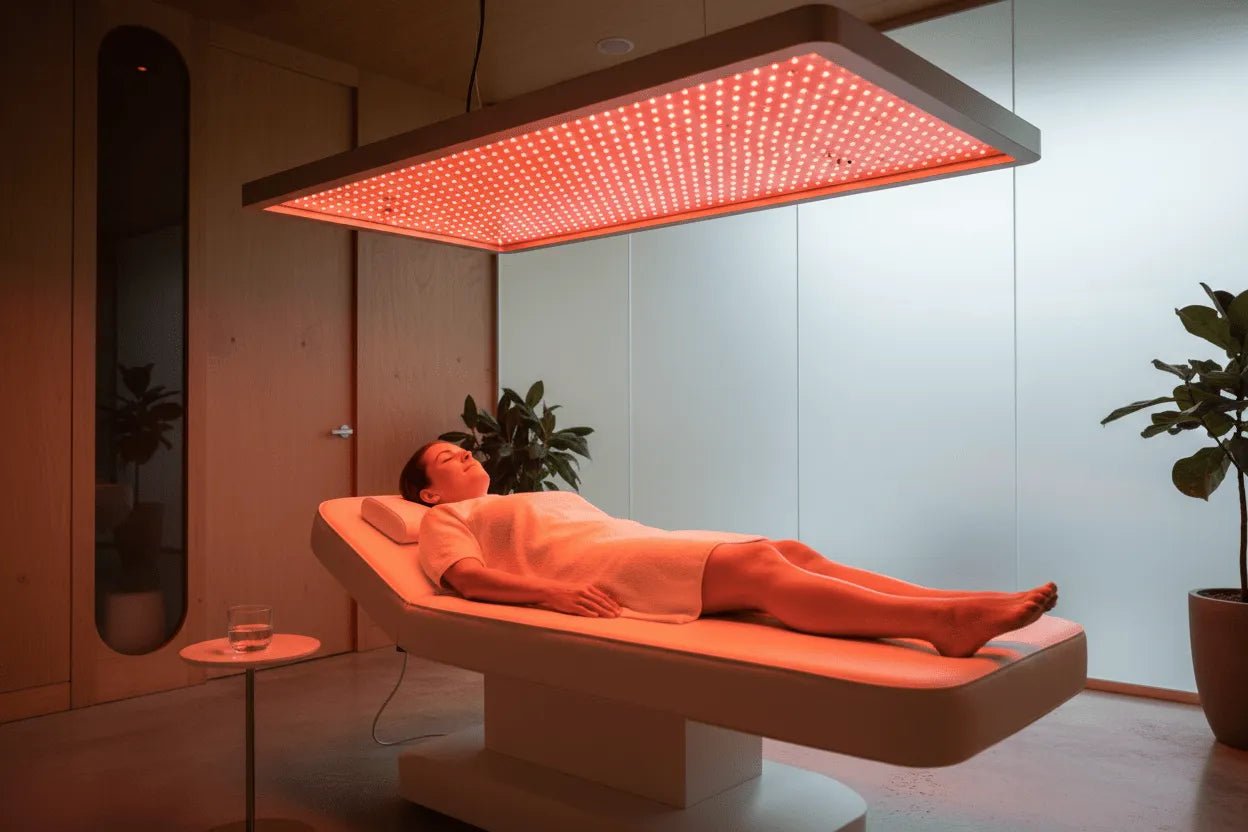
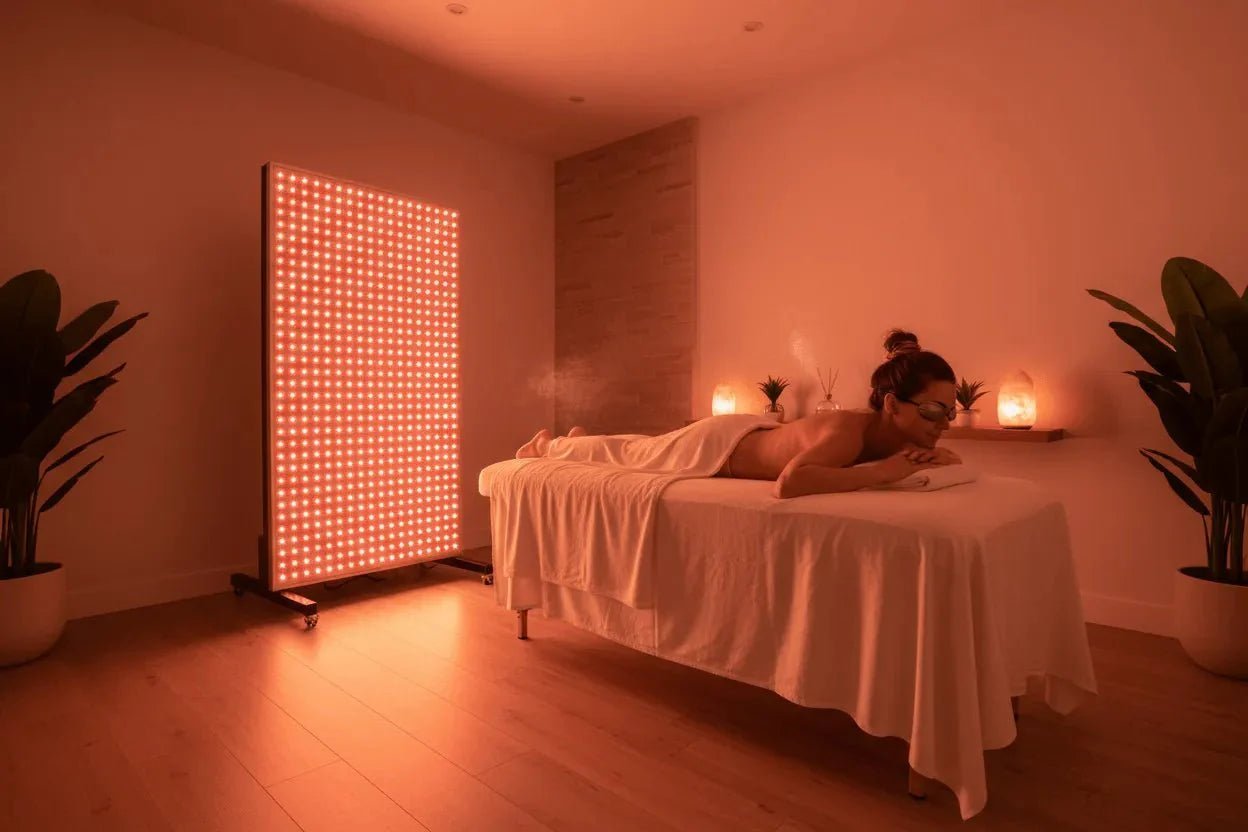
This is the most common format used in many home red light therapy panels because it is simple, consistent, and easier for consumers to understand. Continuous wave photobiomodulation is often used in full-body red light therapy panels, face-focused devices, handheld devices, and general wellness light therapy systems.
Common benefits of continuous wave red light therapy include:
- Simple operation
- Consistent light delivery
- Easy session planning
- Common availability in home red light panels
- Useful for broad treatment areas
- Often preferred for beginner-friendly routines
For shoppers comparing red light panels, continuous wave mode is usually the most familiar and easiest to use. When evaluating devices, it is also worth reviewing low-EMF design, flicker performance, and testing transparency. Learn more in our guide: The Low-EMF Red Light Guide: How to Test Your Device for Magnetic Fields and Flicker.
Explore Wellari’s Red Light Therapy Collection to compare home and professional wellness systems.
What Is Pulsed Red Light Therapy?
Pulsed red light therapy delivers light in repeated on-and-off cycles instead of one steady stream. This may also be referred to as pulsed photobiomodulation, pulsed LED therapy, pulsed near infrared light therapy, or frequency-based red light therapy.
In pulsed mode, the device may use a selected pulse frequency, often measured in hertz (Hz). For example, a pulsed setting may cycle the light on and off multiple times per second.
Some advanced red light therapy devices include pulsed settings so users can compare different modes within the same system. Others use only continuous wave output.
Common reasons people look for pulsed red light therapy include:
- Interest in advanced photobiomodulation settings
- Preference for adjustable red light therapy frequency settings
- Curiosity about pulsed near infrared light therapy
- Interest in recovery-focused protocols
- Desire for more device customization
Continuous Wave vs. Pulsed Red Light Therapy: The Simple Difference
The easiest way to understand the difference is this:
- Continuous wave: light stays on steadily during the session.
- Pulsed: light turns on and off in repeated cycles.
Both can be used in red light therapy and near infrared therapy. The best option depends on your goals, device design, comfort preferences, and how much control you want over your settings.
Why This Difference Matters for Buyers
When buying a red light therapy device, shoppers often focus on wavelength and power output. Those are important, but they are not the only factors. Output mode can also influence the user experience.
Important red light therapy buying guide factors include:
- Continuous wave vs. pulsed light mode
- Red and near infrared wavelength options
- Flicker performance
- Irradiance at realistic treatment distance
- Full-body vs. targeted treatment coverage
- EMF testing transparency
- Session timer and controls
- Ease of use
- Warranty and customer support
For many home users, the best red light therapy panel is not necessarily the most complex one. It is the one that is easy to use consistently and fits your wellness routine.
Continuous Wave Red Light Therapy: Best Use Cases
Continuous wave red light therapy is often a strong choice for users who want a straightforward home wellness routine. Because the light output is steady, it is easier to understand and easier to repeat.
Continuous wave may be a good fit for:
- General wellness routines
- Full-body red light therapy sessions
- Skin-focused red light therapy
- Beginner users
- Broad-area exposure
- Simple recovery routines
- Users who do not want to manage pulse settings
Continuous wave devices are also common in home red light therapy panels because they are easier to operate and explain.
Pulsed Red Light Therapy: Best Use Cases
Pulsed red light therapy may appeal to users who want more control over device settings or who are comparing advanced photobiomodulation features.
Pulsed mode may be a good fit for:
- Users who want adjustable red light therapy frequency settings
- Advanced home wellness routines
- Professional wellness settings
- Users comparing pulsed photobiomodulation research
- People who want more device customization
- Those interested in pulsed near infrared light therapy
However, pulsed mode is not automatically better. Device quality, wavelength, treatment distance, power output, and consistency still matter.
Does Pulsed Red Light Therapy Penetrate Deeper?
This is one of the most common questions. Some studies suggest pulsed and continuous wave modes may produce different biological responses under specific research conditions. Other research is still ongoing, and results may depend heavily on wavelength, dose, tissue type, frequency, and device design.
For consumer wellness content, it is best to avoid saying pulsed light always penetrates deeper or is always superior. A more accurate way to say it is:
Pulsed light may offer different dosing and delivery characteristics, but the overall result depends on the complete device and protocol.
For home users, the most important practical factors are still wavelength, irradiance, treatment distance, session length, and consistency.
Understanding Wavelengths: Red vs. Near Infrared Light
Before comparing pulsed vs. continuous wave modes, it helps to understand wavelength. Red light therapy devices commonly use red light and near infrared light.
- Red light: often used for skin-focused applications and surface-level exposure.
- Near infrared light: often selected for deeper tissue wellness applications because it is less visible and may interact differently with tissue.
Many red light panels combine red and near infrared wavelengths so users can support broader wellness goals from one device.
If you're building a complete wellness technology setup, oxygen concentrator selection can also play an important role in hyperbaric chamber systems. Read our guide: Oxygen Concentrators for Home HBOT: A Guide to Required PSI and LPM.
Understanding Dose: More Important Than Mode Alone
One of the biggest mistakes buyers make is assuming that pulsed mode or continuous wave mode alone determines quality. In reality, dose matters.
Photobiomodulation dosing may be influenced by:
- Wavelength
- Irradiance
- Treatment distance
- Session duration
- Skin type
- Device output
- Continuous or pulsed mode
- Consistency over time
Because of this, the best red light therapy settings are usually the ones recommended by the manufacturer for the specific device you are using.
What Are Red Light Therapy Frequency Settings?
Frequency settings usually refer to pulsed mode. If a red light device offers pulsed output, the frequency may describe how many times per second the light cycles on and off.
Some users search for the “best frequency for red light therapy,” but there is no universal pulse frequency that is best for every person or every goal.
When evaluating red light therapy frequency settings, consider:
- Does the device explain what each setting does?
- Can pulsed mode be turned off?
- Does the device also offer continuous wave mode?
- Are the settings easy to use?
- Does the company provide clear guidance?
Is Pulsed Red Light the Same as Flicker?
No. This is an important distinction.
Pulsed red light therapy is an intentional device setting where the light turns on and off in a controlled pattern.
Unwanted flicker is often related to power supply or LED driver design and may occur even when the device is not marketed as pulsed.
A device can be intentionally pulsed and still be well designed. A device can also claim continuous output but still show unwanted flicker if the power electronics are poor.
For shoppers, it is helpful to ask whether the device provides:
- Continuous wave mode
- Optional pulsed mode
- Low-flicker or flicker-tested design
- Transparent testing information
Which Is Better for Home Use?
For many home users, continuous wave red light therapy is the easiest starting point. It is simple, predictable, and widely available. Users do not need to understand pulse frequency, duty cycles, or advanced photobiomodulation settings to build a consistent routine.
Pulsed red light therapy may be better for users who want more customization or who are buying a device with advanced mode options.
Choose continuous wave if you want:
- Simple setup
- Steady output
- Beginner-friendly operation
- Broad-area sessions
- Fewer settings to manage
Choose pulsed mode if you want:
- More customization
- Adjustable frequency settings
- Advanced photobiomodulation options
- A device that lets you compare modes
For many buyers, the best option is a red light panel that offers continuous wave as the standard mode and optional pulsed settings for users who want more control.
What to Look for in a Red Light Therapy Panel
Whether you choose continuous wave or pulsed red light therapy, the overall quality of the device matters most.
Look for:
- Red and near infrared wavelength options
- Clear irradiance information
- Realistic treatment distance guidance
- Optional pulsed settings if desired
- Continuous wave mode for simple use
- Low-flicker design
- Low-EMF testing transparency
- Session timer
- Strong warranty support
- Home or commercial use suitability
Wellari lists panel systems as their own collection: Red Light Panels.
Browse Wellari’s Red Light Therapy Collection to compare red light panels for home wellness and professional recovery spaces.
How Red Light Therapy Fits Into a Recovery Routine
Red light therapy is often used as part of a broader wellness and recovery environment. Many users combine red light therapy with hyperbaric oxygen therapy, cold plunge sessions, and infrared sauna routines to create a complete home wellness experience. If you are planning a dedicated wellness space, read our guide: Design Your Dream Home Wellness Room.
Common complementary wellness categories include:
- Cold therapy
- Infrared saunas
- Hyperbaric chambers
- Compression therapy
- Mobility work
- Sleep optimization
Explore related Wellari wellness categories:
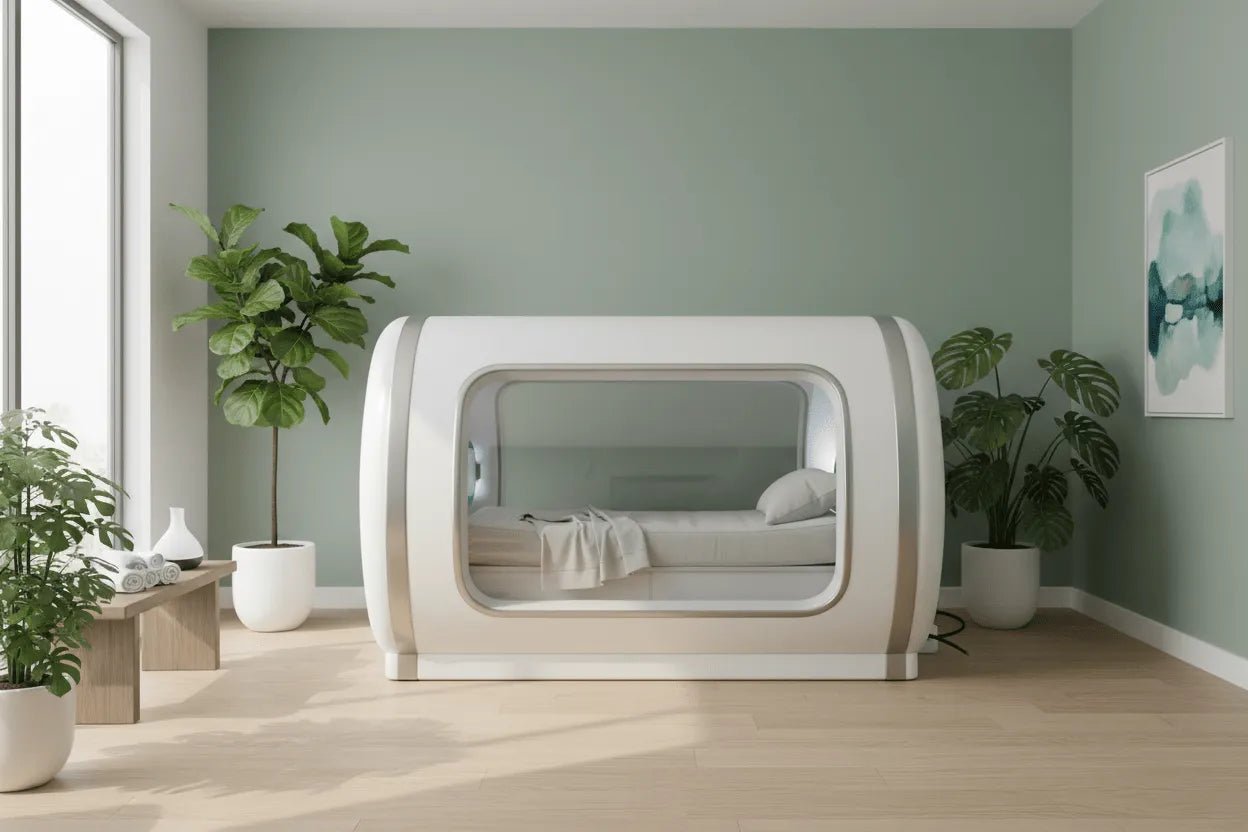
Hyperbaric oxygen therapy is another popular recovery modality often paired with red light therapy. To learn more about home hyperbaric wellness systems, visit HBOT at Home: What to Expect, Safety Checklist, and How Often to Use a Hyperbaric Chamber.
Related Wellari Wellness Resources
Want to learn more about red light therapy, recovery technologies, and building a complete wellness environment? Explore these related Wellari Wellness guides:
The Low-EMF Red Light Guide: How to Test Your Device for Magnetic Fields and Flicker
Design Your Dream Home Wellness Room: A Complete Guide to Creating Your Personal Sanctuary
HBOT at Home: What to Expect, Safety Checklist, and How Often to Use a Hyperbaric Chamber
Oxygen Concentrators for Home HBOT: A Guide to Required PSI and LPM
FAQ: Continuous Wave vs. Pulsed Red Light Therapy
What is continuous wave red light therapy?
Continuous wave red light therapy delivers light in a steady, uninterrupted stream throughout the session. It is common in many home red light therapy panels and is often preferred for simple, consistent use.
What is pulsed red light therapy?
Pulsed red light therapy turns the light on and off in repeated cycles. These cycles may be controlled by frequency settings, often measured in hertz.
Is pulsed red light therapy better than continuous wave?
Not always. Pulsed mode may offer more customization, but continuous wave mode is simple and effective for many users. The best option depends on device quality, user goals, settings, and consistency.
Does pulsed red light therapy penetrate deeper?
Some research suggests pulsed and continuous wave light may behave differently under certain conditions, but penetration depends on wavelength, device output, distance, and tissue interaction. Pulsed light should not be assumed to be automatically superior.
What pulse frequency is best for red light therapy?
There is no universal best pulse frequency for every user or goal. If your device offers pulsed settings, follow the manufacturer’s guidance and use conservative session planning.
Can I switch between continuous and pulsed modes?
Some red light therapy devices allow users to switch between continuous wave and pulsed modes. If your device offers both, follow the instructions for each setting.
Is continuous wave red light therapy good for beginners?
Yes. Continuous wave mode is often the easiest option for beginners because it provides steady output with fewer settings to manage.
Is pulsed red light therapy the same as flicker?
No. Pulsed mode is intentional and controlled. Unwanted flicker is usually related to power supply or LED driver design.
Which is better for a full-body red light therapy panel?
Many full-body panels use continuous wave output because it is simple and consistent. Some advanced panels may also include optional pulsed settings.
What should I look for when buying a red light therapy panel?
Look for wavelength options, irradiance transparency, treatment distance guidance, low-flicker design, low-EMF testing, warranty support, and whether the device offers continuous wave or pulsed settings.
Sources
National Institutes of Health – Photobiomodulation: Underlying Mechanism and Clinical Applications
National Institutes of Health – Photobiomodulation: Lasers vs. Light Emitting Diodes
National Institutes of Health – Comparative Analysis of Pulsed and Continuous Wave Modes
Cleveland Clinic – Red Light Therapy Overview
Final Takeaway
Continuous wave and pulsed red light therapy both have a place in modern photobiomodulation. Continuous wave mode is simple, steady, and beginner-friendly. Pulsed red light therapy offers more customization and may appeal to users who want advanced red light therapy settings.
For most home users, the best choice is not about chasing the most technical mode. It is about choosing a high-quality device, following recommended treatment distance and session times, and staying consistent.
Explore Wellari’s Red Light Therapy Collection to compare red light panels designed for home wellness, recovery, skin health, and photobiomodulation applications.