
Sitting vs Lying Hyperbaric Chambers: Form Factor and Room Fit
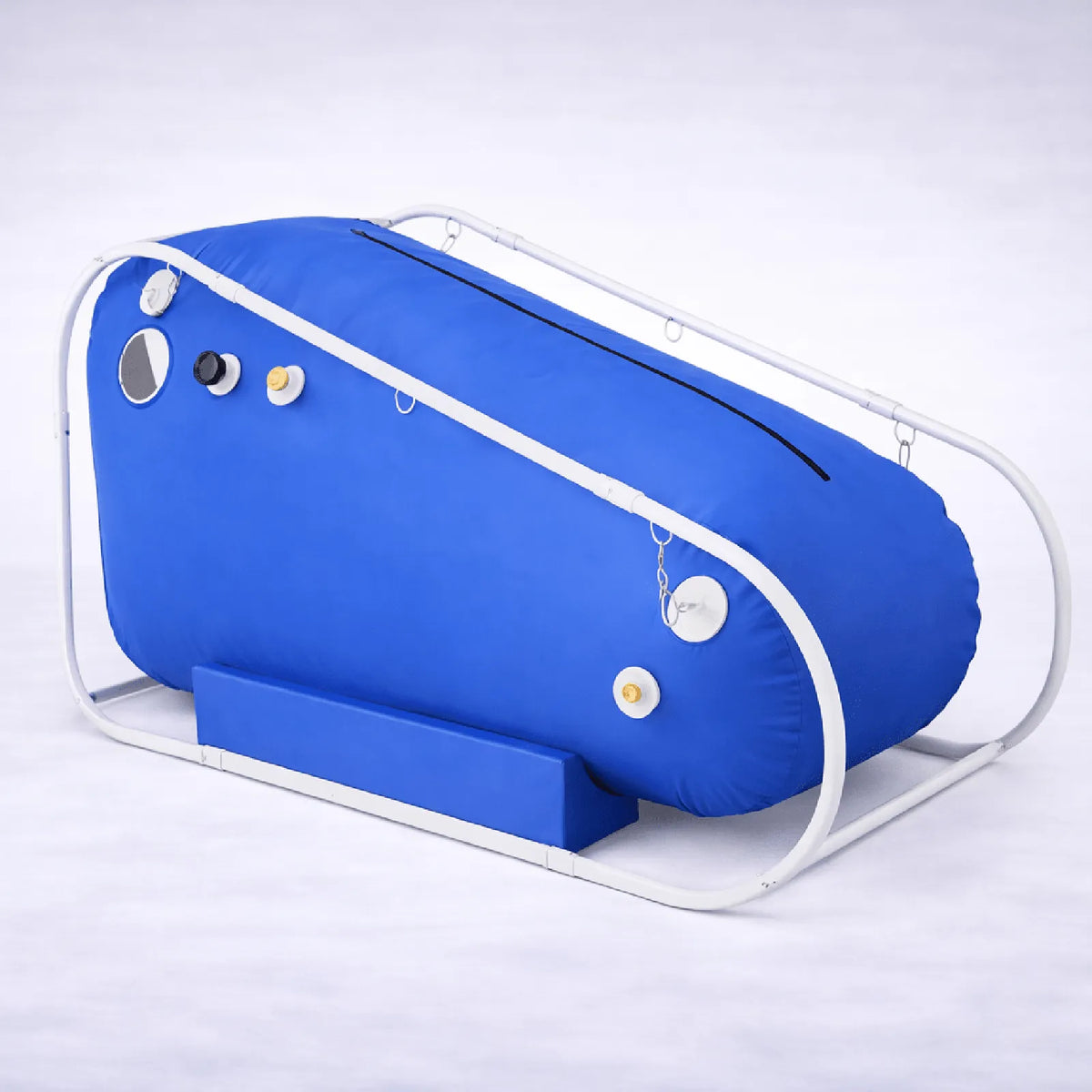
Short answer: sitting and lying hyperbaric chambers differ in shape, not in kind. A lying chamber is long and low: it needs a clear run of floor and you get in at floor level. A sitting chamber is shorter and taller: it needs less floor length, more height, and you sit upright in a chair. Choose by the room you have and by how you want to get in and out. Then check the numbers for the exact model, because "sitting" does not guarantee a small footprint. Both formats are in our hyperbaric chamber collection.
Sitting vs lying at a glance
| Lying | Sitting | Convertible | |
|---|---|---|---|
| Shape | Long and low | Shorter and taller | Long, with room for a recliner |
| What the room must offer | Floor length | Height, and floor for the chair's depth | Floor length and width |
| Position inside | Flat | Upright or semi-reclined in a chair | Either |
| Getting in | Lower yourself to floor level | Step in and sit | As for lying |
| Check before buying | Clear floor on the entry side | Ceiling height and whether the chair is included | Both sets of checks |
What the listings actually say
Form factor is easiest to judge from real dimensions. These are from the manufacturers' own specification pages for the OxyCheny CY8 and CY9 and the OxyRevo Space60.
| Model | Format | Listed size | Listed weight |
|---|---|---|---|
| OxyCheny CY8 | Lying | 850 mm diameter × 2100 mm long | 25 kg, chamber |
| OxyCheny CY9 | Sitting | Length 1600 × width 650 × height 1200 mm | 34 kg, chamber |
| OxyRevo Space60 | Sitting, rigid shell | Length 200 × width 86 × height 153 cm | 800 kg |
Three things stand out. The sitting CY9 saves half a metre of length over the lying CY8 and stands taller. The rigid sitting Space60 is nearly as long as a lying chamber: sitting describes the posture, not the size. And the weights differ by a factor of more than twenty, which changes the floor and the delivery question entirely. Convertible chambers, made for both positions, also exist; ask for their dimensions in the same three-figure form.
Room fit: floor versus height
For a lying chamber, mark its length and width on the floor and add space on the side where the zipper or door opens. For a sitting chamber, check the height against your ceiling and anything hanging from it, then mark the footprint. Summit to Sea describes its upright Dive Vertical as suited to rooms with limited floor area but adequate ceiling height, which is the trade in one line.
In both cases the chamber is not the only thing on the floor. Compressors, an oxygen concentrator and a cooler need their own space and an outlet within reach. Our room requirements and site planning guide covers the layout, floor loading and delivery route, and our guide to oxygen concentrator requirements covers that machine.
Getting in and out
This is the difference you meet at every use. Entering a lying chamber means getting down to floor level and sliding in. Entering a sitting chamber means stepping in and sitting on a chair. If kneeling or lying flat is difficult for you, try the movement before you buy, and ask:
- How high is the entry threshold?
- Can the chamber be opened and closed from inside without help?
- What are the interior width and height, and is there a stated user height or weight limit?
- For wheelchair users, does the manufacturer offer an access model, and what does entry involve in practice?
The chair
A sitting chamber is only as comfortable as its seat. Check whether a chair is included and whether it reclines. OxyRevo lists the Space60 with a folding chair for sitting or reclining. For any other model, ask whether a chair is part of the purchase.
Does the format change how the chamber runs?
Format and operating pressure are separate specifications. Summit to Sea, for example, states that its upright Dive Vertical runs at the same operating pressure as the lying chambers in its range. Do not infer pressure from posture, or the reverse; read the rated pressure on each listing. Questions about what pressure is appropriate for you belong with a qualified medical professional, not with a product page.
Checklist
- Length, width and height of the chamber, and the same for your room.
- Clear space on the entry side.
- Where the compressor, concentrator and cooler will stand.
- Entry: threshold height, and whether it opens from inside.
- Chair: included or not, reclining or not.
- Weight of each component, how it is delivered, and who moves it into the room. At 800 kg, a chamber such as the Space60 is not something a household moves itself.
- Warranty terms; see our warranty and serviceability checklist.
- Which standards the chamber is built to. The engineering standard for these vessels is ASME PVHO-1; ask the manufacturer whether the model is built to it.
Frequently asked questions
Does a sitting hyperbaric chamber take up less space?
It usually needs less floor length and more height, but not always less floor overall. Compare the listed dimensions of the specific models.
Can you sit up in a lying hyperbaric chamber?
Only if the model is designed for it. Convertible chambers are listed for both positions; check the interior height of any other.
Do sitting chambers come with a chair?
Some do. Check the included-items list.
Is a sitting chamber easier to get into?
It can be, because you step in and sit instead of lowering yourself to the floor. It depends on the threshold height and on you, so ask for the entry dimensions.