
Commercial Red Light Therapy Beds: A Facility Checklist for Gyms and Spas
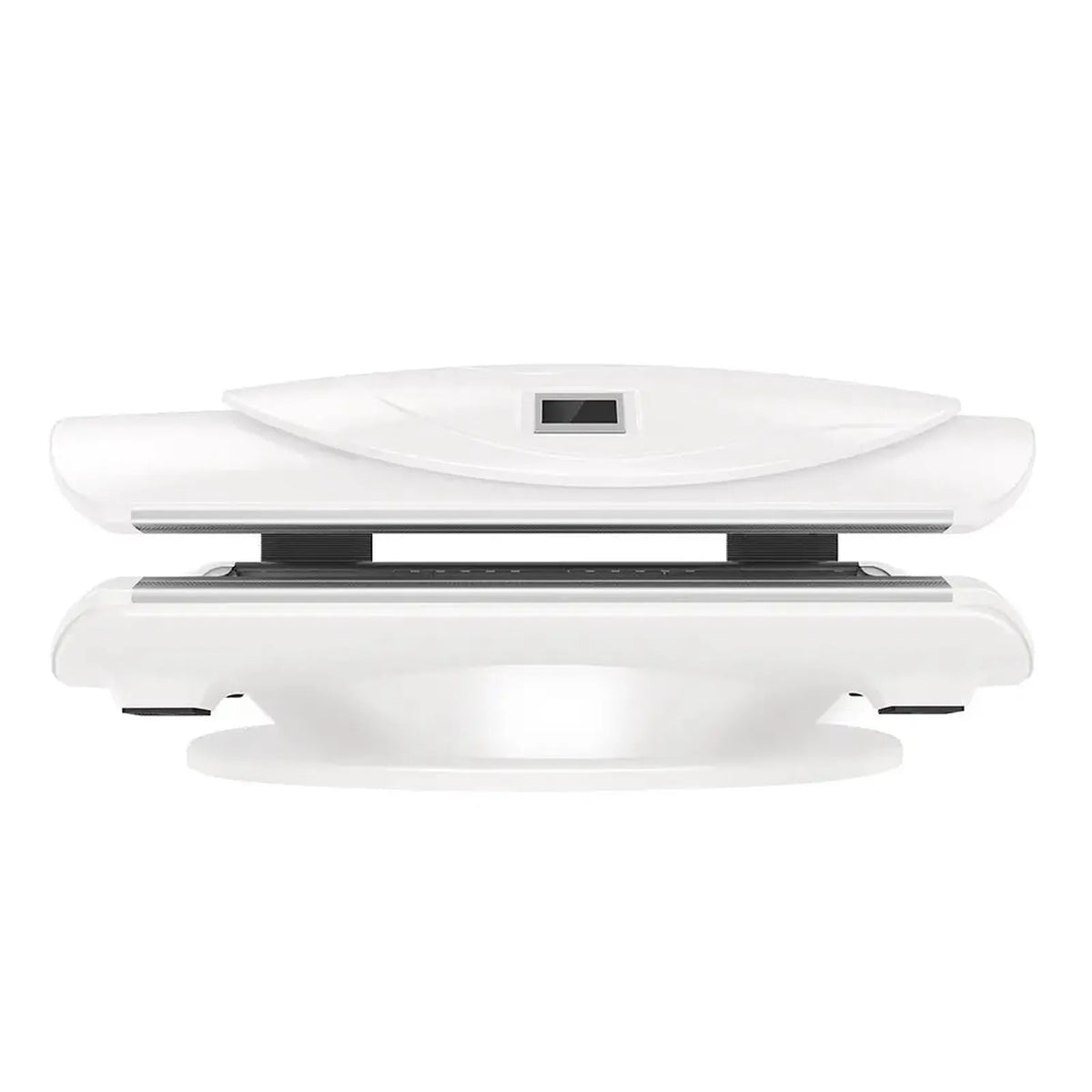
Short answer: a commercial red light therapy bed is a full-body LED unit built to be used by many clients a day. For a gym, spa or studio, the bed's light output is only part of the decision. Check that your building can power it, that it fits the room and the route in, that the warranty covers business use, that staff can clean and run it between clients, and that any claims the manufacturer makes are backed by documents you can see. Start with the specifications on our red light beds and loungers collection, then work through the checklist below.
Facility checklist at a glance
| Area | What to get in writing | Who confirms it |
|---|---|---|
| Electrical | Voltage, amperage, plug or hardwire, dedicated circuit | Licensed electrician |
| Room and route | Installed and crated dimensions, weight, clearances | You and your installer |
| Users | Maximum user weight; how users get on and off | Manufacturer |
| Warranty | Term, parts covered, whether commercial use is covered | Manufacturer, in the warranty text |
| Cleaning | Approved cleaning products and procedure | Manual |
| Eye safety | Eyewear supplied; photobiological safety report | Manufacturer |
| Accessibility | Room layout and access | Your accessibility adviser |
| Claims | Documents behind any regulatory or performance statement | Manufacturer; public databases |
1. Electrical service
Commercial beds are not always plug-in appliances. The M7 Series bed in our range, for example, is listed for 220V professional service, with professional installation and dedicated electrical service recommended. Get the voltage, amperage and connection type from the manufacturer and give them to a licensed electrician before you sign a lease or order a bed. Work must follow the electrical code adopted in your jurisdiction, which in the United States is based on NFPA 70, the National Electrical Code.
2. Room, route and floor
Ask for installed dimensions, crated dimensions and weight. Then check three things: the route from the delivery point to the room, the floor the bed will stand on, and the space around it for a client to get on and off and for staff to clean. Format changes the footprint. An open lounger and an enclosed bed with a canopy take up space differently, and a canopy needs room to open. Take the installed dimensions of the exact model from its manufacturer.
Ask the manufacturer what the bed needs from the room in ventilation and ambient temperature, and whether it has cooling fans. We do not quote heat or noise figures because the manufacturers we list do not publish them consistently.
3. Users
Ask for the maximum user weight and plan for it in your intake process. The M7 Series is listed for users up to 150 kg (330 lb). Ask how a client with limited mobility gets on and off the bed.
4. Warranty and service for business use
A warranty written for home use may shorten or exclude cover in a commercial setting. Read the warranty text itself, not the summary. The M7 Series is listed with a three-year manufacturer warranty; ask what it covers, who carries out repairs, and how long parts take. Our warranty and serviceability checklist lists the questions.
5. Cleaning between clients
Every client touches the same surface. Ask the manufacturer which cleaning products are approved for the acrylic or contact surface, and build that procedure and its time into your booking gaps. Check whether using a product the manual does not approve affects the warranty.
6. Eye safety
Ask what eyewear is supplied and what the manual requires clients to wear. Ask whether the bed has been assessed to IEC 62471, the photobiological safety standard for lamps and lamp systems, and for a copy of the report.
7. Accessibility
A business open to the public may have obligations under the Americans with Disabilities Act. The U.S. Access Board publishes the ADA Accessibility Standards. Take advice on how they apply to your treatment room and the route to it.
8. Claims and documents
Manufacturers describe their beds in different ways, and some refer to regulatory status. Treat every such statement as a request for a document. If a manufacturer says a device has FDA 510(k) clearance, ask for the number and look it up in the FDA's public 510(k) database. If it claims an electrical safety listing, ask which laboratory issued it; Intertek listings can be searched in its product directories.
The same applies to what you tell your own clients. Describe the equipment and the session. Do not promise outcomes.
Estimating running cost
We do not publish a cost-per-session figure, because it depends on your bed, your bookings and your tariff. To estimate it, use the bed's rated power, the hours it runs and your commercial electricity rate. Our operating costs guide shows the method.
Frequently asked questions
What electrical supply does a commercial red light therapy bed need?
It varies by model. One bed in our range is listed for 220V professional service. Get the manufacturer's requirement and have an electrician confirm your premises can meet it.
Does a home warranty cover a bed used in a business?
Not necessarily. Read the warranty text for a commercial-use clause before you buy.
How much space does a red light therapy bed need?
Take the installed dimensions from the manufacturer and add room for the canopy to open, for clients to get on and off, and for cleaning.
How do I check a manufacturer's regulatory claim?
Ask for the document or number behind it and look it up in the issuing body's public database.