
Hyperbaric Oxygen Therapy Explained: Understanding HBOT & Its Proven Health Benefits
Introduction: Why Oxygen Is the Missing Variable in Modern Recovery
Oxygen is fundamental to normal repair processes in the human body — yet in everyday life, some tissues may receive less-than-ideal oxygen delivery due to factors like injury, inflammation, aging, reduced circulation, or high physiological stress.
Hyperbaric Oxygen Therapy (HBOT) was developed to support oxygen availability by delivering oxygen in a pressurized environment.
Originally used in hospital and military settings, HBOT has expanded into wellness, recovery, and longevity routines. Today, athletes, clinicians, and performance-focused individuals use HBOT to support recovery, cognitive performance routines, and long-term resilience.
This guide explains what HBOT is, how it works, what it’s commonly used for, and how it can fit into a modern longevity and recovery stack.
What Is Hyperbaric Oxygen Therapy (HBOT)?
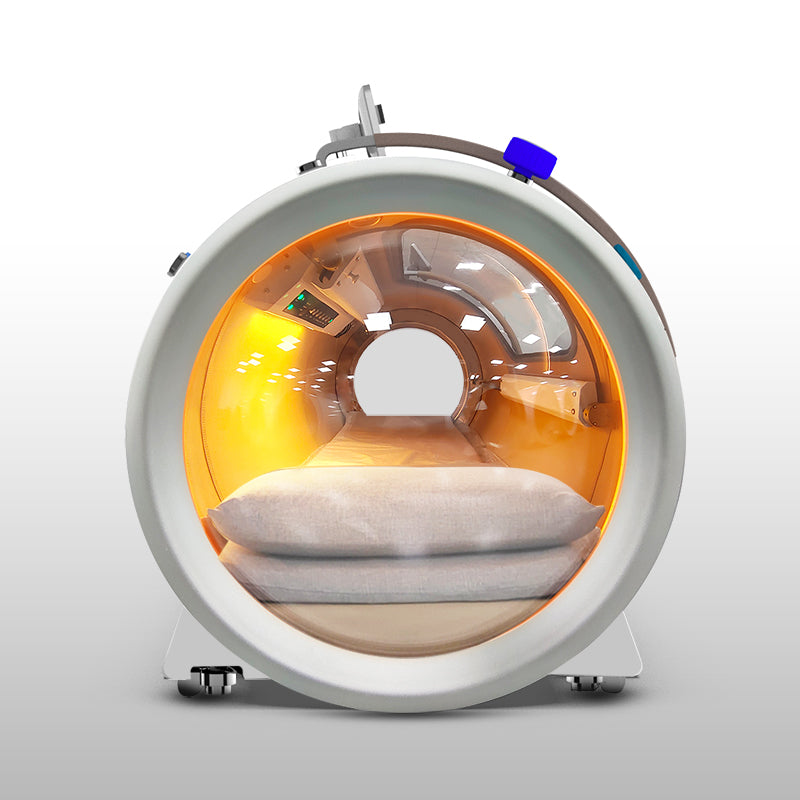
Hyperbaric Oxygen Therapy involves breathing oxygen inside a pressurized chamber. By increasing atmospheric pressure, oxygen can dissolve into blood plasma — not just red blood cells.
This can help oxygen reach tissues that may otherwise receive limited circulation, including:
- Areas affected by injury or reduced blood flow
- Inflamed joints and connective tissue
- Brain tissue
- Post-surgical or recovery areas
HBOT is often discussed for its potential to support cellular repair processes, recovery routines, and metabolic efficiency.
For broader longevity context, see:
👉 The Ultimate Longevity Stack Explained: Infrared, Cryotherapy, HBOT & Red Light Therapy
How HBOT Works at the Cellular Level
Increased Oxygen Saturation
Under increased pressure, oxygen can dissolve into plasma at levels far above normal breathing, which may improve oxygen diffusion into areas with limited oxygen availability.
Inflammation & Oxidative Stress Support
HBOT is studied for its potential to support inflammatory balance and mitochondrial efficiency. In recovery routines, this may help the body return to baseline more efficiently after stress or injury.
Angiogenesis & Tissue Repair Support
HBOT is researched for its potential to support:
- New blood vessel growth (angiogenesis)
- Collagen production
- Stem cell mobilization
These mechanisms are commonly discussed in the context of wound healing support, recovery routines, and tissue resilience.
What Does Hyperbaric Oxygen Therapy Actually Treat?
Clinically Recognized Applications
HBOT has decades of clinical research and is used in medical settings for specific indications, including:
- Non-healing wounds
- Radiation tissue injury
- Carbon monoxide poisoning
- Traumatic brain injury (TBI) support in select cases
- Post-surgical recovery support in specific clinical contexts
Performance, Recovery & Wellness Applications
In wellness and performance routines, HBOT is commonly used to support:
- Athletic recovery and injury recovery routines
- Cognitive performance routines (focus, mental clarity)
- Inflammation management support
- Fatigue and burnout recovery routines
- Longevity-focused wellness protocols
For a recovery-focused perspective, see:
👉 Unlock Rapid Healing: How Hyperbaric Chambers Support Recovery
HBOT vs. Other Oxygen & Recovery Modalities
HBOT is often used as part of a broader recovery stack alongside complementary wellness technologies.
HBOT + Red Light Therapy
Red light therapy is commonly used to support mitochondrial energy pathways, while HBOT supports oxygen delivery — a combination many users include in cellular recovery routines.
Learn more:
👉 Unlocking Red Light Therapy: Benefits & Buying Guide
HBOT + Cold Exposure
Cold exposure can support stress resilience and inflammation management routines, while HBOT is used for oxygen-based recovery support.
Related guide:
👉 Cold Plunge Protocols: Beginner to Advanced
HBOT + Infrared Therapy
Infrared therapy is often used for circulation and relaxation routines, which many users combine with oxygen-based recovery for a broader wellness approach.
Deep dive:
👉 The Science of Infrared Therapy in 2025
Types of Hyperbaric Chambers: What to Know Before Buying
Soft-Shell Chambers
- Lower pressure (often referred to as mild HBOT)
- Home-friendly footprint
- Commonly chosen for recovery and wellness routines
Hard-Shell Chambers
- Higher pressure capabilities
- Often used in clinical or professional environments
- Commonly selected for intensive or frequent protocols
Comparison guide:
👉 Hard vs. Soft Shell Hyperbaric Chambers: Buyer’s Guide
Who Should Consider HBOT?
HBOT is commonly explored by:
- Athletes and active individuals
- People rebuilding routines after injury or surgery (with medical clearance)
- Professionals experiencing cognitive fatigue
- Longevity-focused wellness users
- Individuals stacking multiple recovery modalities
Important: If you have any medical conditions (especially cardiovascular or pulmonary concerns), consult a qualified healthcare professional before starting HBOT.
Build a Home HBOT Setup
Modern wellness technology makes HBOT accessible for home and professional use.
👉 Shop Hyperbaric Chambers
👉 Shop Red Light Therapy
👉 Shop Cold Plunge Systems
👉 Shop Infrared Saunas
Final Thoughts: Oxygen Is a Performance Multiplier
Hyperbaric Oxygen Therapy isn’t a fad — it’s a well-established modality used in both medical and wellness settings. By supporting oxygen availability at the tissue level, HBOT can be a valuable tool in recovery and longevity routines.
Used alone, it can be powerful. Stacked intelligently with complementary wellness tools, it can become a core pillar of a modern recovery strategy.
HBOT doesn’t replace strong habits — it can help amplify them.