How Long to Cold Plunge and How Often: A Guide by Goal (Including Women)
Short answer: How long to cold plunge depends on your goal. For muscle soreness after exercise, a meta-analysis of nine trials found 11-15 minute immersions gave the best results. For general wellbeing, studies have used anything from 30 seconds to 2 hours, with no agreed dose. Beginners should start with short sessions and build up gradually.
Key takeaways
- The best-supported duration is for post-exercise soreness: 11-15 minutes per session, from a 2016 meta-analysis of nine randomized trials whose authors flag low-quality studies and a small effect.
- For stress, mood, sleep and fat loss, no study has established an optimal duration or weekly frequency.
- Research protocols range from 30-second daily cold showers to 12-minute plunges four times a week, which tells you how wide the uncertainty is.
- Only 1 of 11 studies in a 2025 review included women, and it was a cold-shower trial, so sex-specific plunge durations are not yet evidence-based.
- The first minutes in cold water are the riskiest; keep your head above water and talk to your doctor first if you have a heart condition.
How long should you cold plunge?
You should cold plunge for as long as your goal requires and no longer, and for most goals that is shorter than many people assume. Cold-water immersion, the research term for a cold plunge, means sitting in cold water; the 2025 review discussed below only counted immersion to chest level or deeper (plus one cold-shower trial).
The clearest numbers come from recovery research. A 2016 systematic review and meta-analysis of nine randomized trials concluded that an immersion time of 11-15 minutes can provide the best results for muscle soreness compared with passive recovery. The same review described the benefit as only slightly better than passive recovery.
That figure applies to soreness after exercise. It is not a general wellness target, and it assumes you have already built up to tolerating that much cold.
Duration and water temperature work together, so this guide focuses on time and frequency. For setting the water itself, see our guide to the ideal cold plunge temperature.
How long to cold plunge by goal
How long to cold plunge changes with what you want from it, and the evidence behind each goal is very uneven. The table below summarizes what researchers actually used, drawn from the two reviews linked in this article.
| Goal | Session length used in research | How often it was used | What was found | Strength of evidence |
|---|---|---|---|---|
| Muscle soreness after exercise | 11-15 minutes | After a hard session | Slightly less soreness than passive recovery | Low: the authors cite low-quality studies and a small effect (meta-analysis of 9 RCTs) |
| Stress | Varied widely across studies | Varied | Lower stress 12 hours after immersion, but not immediately, at 1 hour, 24 hours or 48 hours | Grade B in the review; effect seen at 12 hours only |
| Mood | Varied widely across studies | Varied | Inconclusive | Limited |
| Sleep | 15 minutes at 14.1°C | 5 consecutive days after heat training | Better self-rated sleep quality than passive recovery | One small trial in men |
| Fat loss | Not established | Not established | Not measured in the reviews cited here | None from these reviews |
A 2025 systematic review of healthy adults found that the immersions in its included studies used temperatures ranging from 7°C to 15°C and durations ranging from 30 seconds to 2 hours. That spread is the real answer for wellbeing goals: there is no agreed dose yet.
Recovery
For post-exercise recovery, 11-15 minutes is the most defensible target once you are acclimated. If you lift for strength or muscle size, timing matters as much as duration; our article on cold plunging before or after a workout covers that trade-off.
Mood and stress resilience
The same 2025 review found a reduction in stress 12 hours after immersion but called the evidence on mood inconclusive. Shorter sessions you can repeat consistently are a sensible way to explore this goal, because the research has not established that longer sessions work better for it.
Fat loss
The reviews cited here did not measure fat loss, and the 2025 review lists weight-related outcomes among the things future trials still need to study. Any specific "minutes for fat loss" figure you see is ahead of the evidence.
How often should you cold plunge?
There is no research-backed weekly frequency for cold plunging, and the 2025 review explicitly calls for studies on the optimal temperature, duration and frequency of exposure. What exists is a handful of study protocols that show what has been tried.
- Daily, very short: the largest trial in the 2025 review used cold showers of 30, 60 or 90 seconds every day for 30 consecutive days. Showers are not plunges, but this is the main evidence for short daily exposure.
- Four times a week: one small study used 12 minutes at 7°C (about 45°F), four times a week for three weeks, and found no clinically relevant change in inflammation markers.
- Five days in a row: the sleep study above used 15 minutes after heat training on five consecutive days.
- After hard sessions: the soreness research applies cold after demanding exercise, not on a fixed weekly schedule.
A practical rule follows from this: pick a frequency you can sustain, keep sessions consistent, and change one variable at a time so you can tell what is working.
A beginner ramp you can actually follow
A beginner should start at the shortest exposure used in the 2025 review's studies, 30 seconds, and build from there only as breathing stays calm. The cold-shower trial's 30, 60 and 90-second doses make reasonable early steps.
From there, add time in small steps over several sessions rather than jumping straight to a long plunge. Recovery-focused users can work toward the 11-15 minute range; wellbeing-focused users do not need to. If you want a staged plan to follow, our beginner-to-advanced cold plunge progression plan sets out the stages in order.
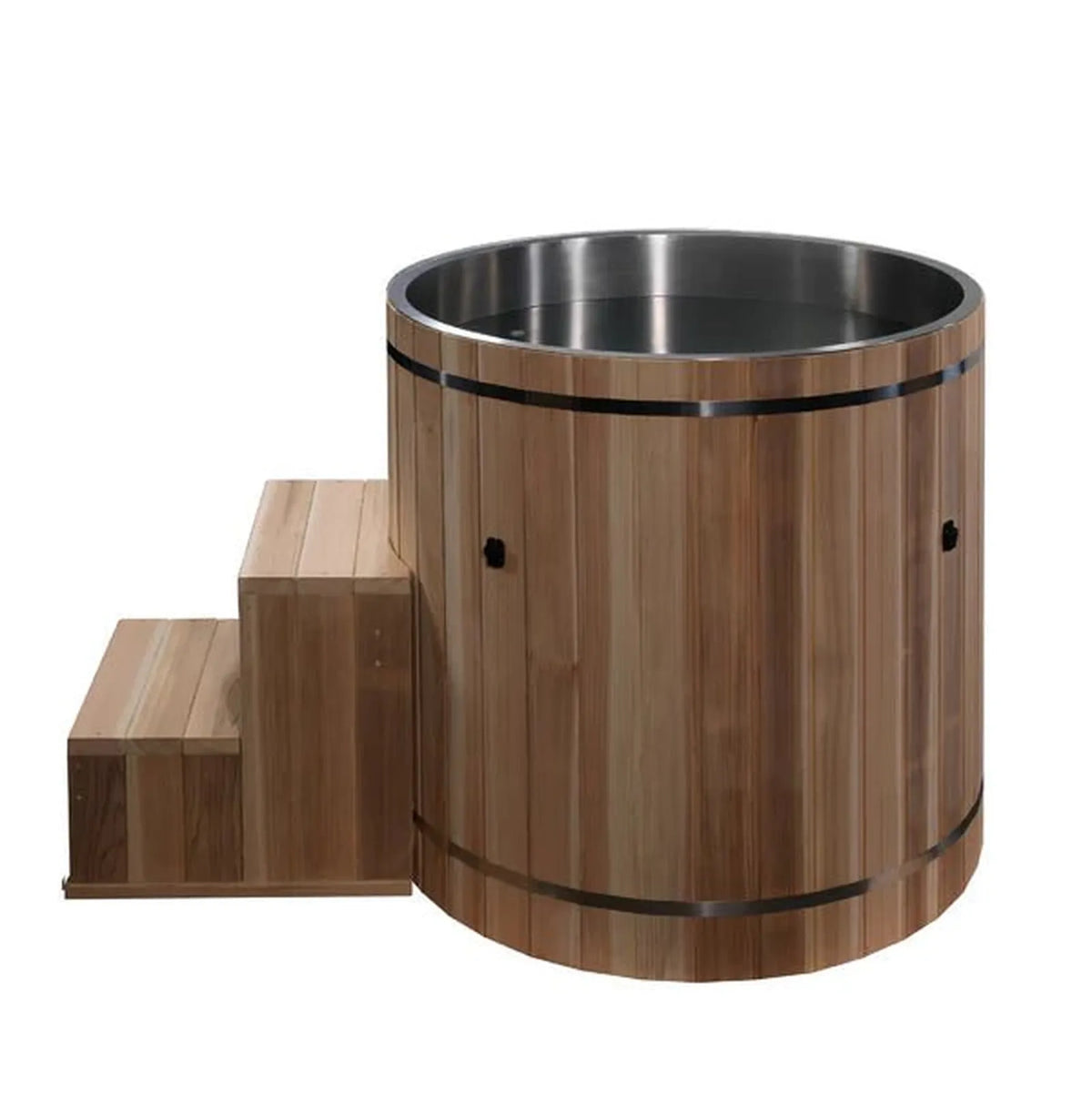
A consistent water temperature makes this ramp easier to follow, because a minute at one temperature is not the same dose as a minute at another. That is the job of a cold plunge chiller, which is designed to hold a set temperature between sessions. You can compare tubs across our full cold plunge range; check the manufacturer's specifications for the temperature range of any model you consider.
Are cold plunges good for women?
Cold plunges can be part of a healthy routine for women, but the research base is too small to say whether women should use different durations than men. In the 2025 review, female participants came from one study, and all other studies were comprised of 100% male participants.
The few direct comparisons that exist point to real differences worth respecting. In a small controlled study of seven women and seven men who held a hand and foot in 8°C water for 40 minutes, women experienced elevated cardiovascular strain compared with their male counterparts. That was a hand-and-foot test, not a full plunge, so it supports caution rather than a specific number.
The sensible approach for women is the same conservative ramp, with extra attention to how you feel during and after each session. Our guide to cold plunge protocols for women covers temperature settings and cycle-aware planning in more depth.
When is the best time to cold plunge?
The best time to cold plunge depends on the goal, because the effects researchers measured appear at different times. The 2025 review found the stress reduction 12 hours after immersion, not immediately, and described the effects of cold-water immersion as highly time-dependent.
For sleep, the review notes one study in which cold-water immersion after high-intensity exercise did not affect that night's sleep quantity or quality, so an evening plunge is not automatically a problem. For training, the decision is about your workout, which our timing article linked above covers.
For most people, the best time is the one that fits a routine you will keep, at a point in the day when you can rewarm properly afterward.
When to stop: cold shock and heart risk
Get out of a cold plunge as soon as you cannot control your breathing, feel chest pain, dizziness or confusion, or start shivering hard. The early minutes carry the most risk because of the cold shock response, the body's automatic gasp, rapid breathing and spike in heart rate on entering cold water.
The 2025 review describes that response as including significant increases in norepinephrine and systolic blood pressure within 2-15 minutes of immersion. Putting your head under adds another risk: a review in The Journal of Physiology reported that cold water submersion can induce a high incidence of cardiac arrhythmias in healthy volunteers.
- Keep your head and face above the water.
- Enter slowly and focus on slowing your breathing before you settle in.
- Never plunge alone if you are new to it or have any health concerns.
- Do not drink alcohol before a plunge.
Talk to your doctor before you start if you have a heart condition, high blood pressure, Raynaud's, or are pregnant. Our article on cold plunge safety and heart health covers who should get medical clearance first.
Frequently asked questions
How long should a beginner stay in a cold plunge?
A beginner can start with about 30 seconds, the shortest exposure used in the studies of a 2025 review, and add time gradually over several sessions as breathing stays calm. There is no need to rush toward long sessions. The 11-15 minute range that appears in recovery research applies to acclimated users managing soreness after exercise, not to someone on their first week of cold plunging.
Is 5 minutes in a cold plunge enough?
For general wellbeing, the research has not established that longer sessions work better, so a few minutes may be enough. Research protocols have ranged from 30 seconds to 2 hours with no agreed dose. For muscle soreness after exercise, the best results in a meta-analysis came from 11-15 minute immersions, so a recovery-focused user may eventually want longer sessions.
How many times a week should you cold plunge?
No study has established an ideal weekly frequency, and a 2025 systematic review called for research on exactly that. Protocols have included daily 30 to 90-second cold showers, 12-minute plunges four times a week, and sessions after hard workouts. Choose a frequency you can sustain, keep it consistent, and adjust based on how you recover and feel.
Should women cold plunge for less time than men?
The evidence does not yet support a different duration for women, mainly because women have barely been studied. In one 2025 review, all but one included study enrolled only men. A small hand-and-foot immersion study found higher cardiovascular strain in women, which supports a conservative start and close attention to how you feel rather than a fixed shorter time.
Is it OK to cold plunge every day?
Daily exposure has been studied, but in a 2025 review it was mainly short cold showers of 30 to 90 seconds rather than long plunges. If you plunge daily, keep sessions short and consistent and watch how you sleep, recover and feel. People who strength train should also consider timing around workouts. Anyone with a heart or blood pressure condition should check with a doctor first.
Talk to us before you buy
Ready to build a routine around the right duration and frequency for your goal? Browse our cold plunges, and talk to us before you buy. We will help you match a tub and chiller to your space, your electrical setup and the way you plan to use it.