

Cryotherapy vs. Ice Baths: A Full Guide to Cold Exposure Benefits, Risks & What to Buy
Cold exposure therapy has moved from niche athletic recovery into mainstream wellness routines. Today, users commonly choose between cryotherapy (ultra-cold, short exposure) and cold plunges (cold water immersion with longer exposure).
This guide explains the differences, potential benefits, safety considerations, and what to buy when building a cold recovery setup.
The Rise of Cold Exposure Therapy
Structured cold exposure is commonly used to support recovery routines, circulation, stress resilience, and contrast therapy when paired with heat or light modalities.
Recommended reads:
- Daily Contrast Therapy Guide
- Cold Plunge Protocols
- Cold Plunge vs Cold Shower
- Reset Your Nervous System
What Is Cold Exposure?
Cold exposure is the intentional use of low temperatures to create a controlled physiological stress response.
- Vasoconstriction (temporary narrowing of blood vessels)
- Changes in nerve signaling that influence perceived soreness
- Neurochemical responses affecting alertness
- Rewarming circulation response
Modern equipment — engineered plunge tubs, chillers, and cryotherapy chambers — allows more consistent and measurable protocols.
Cryotherapy Explained
What It Is
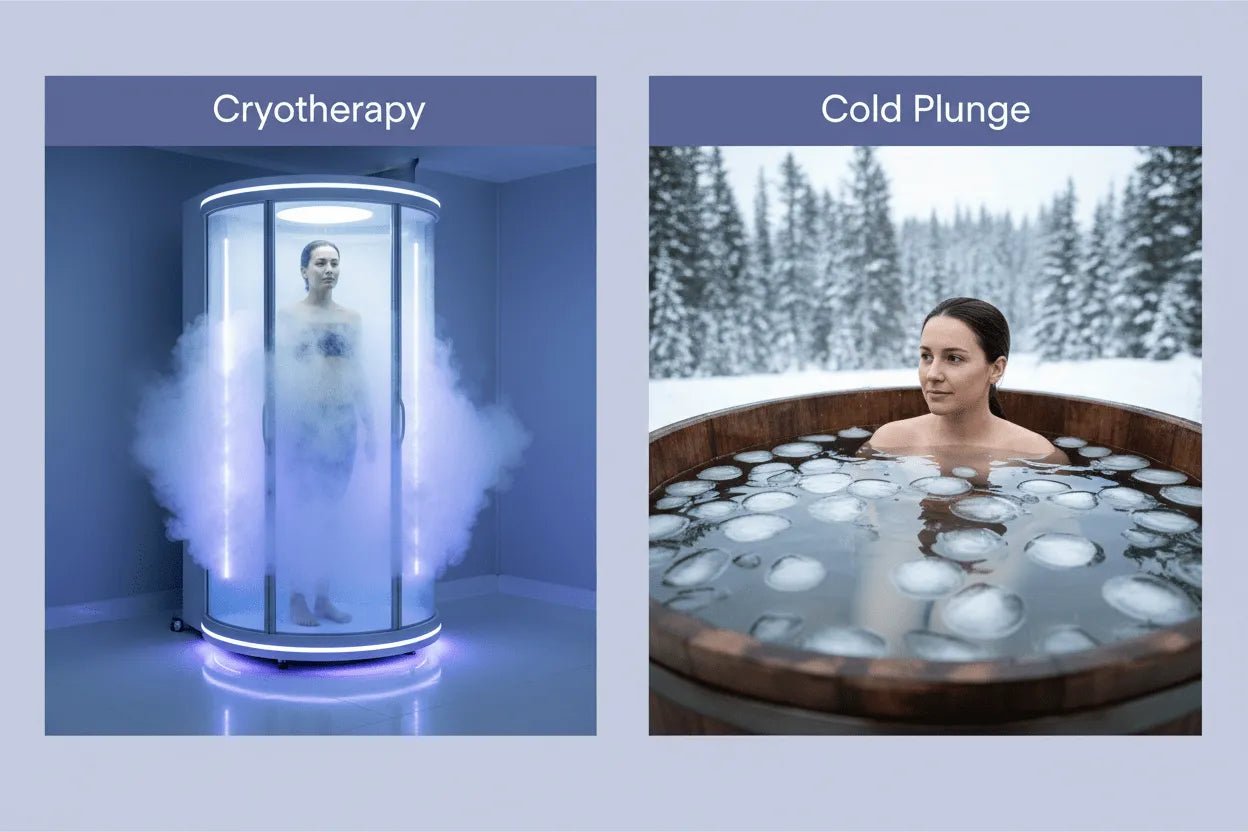
Whole-body cryotherapy exposes the body to extremely cold air for a short duration, typically a few minutes.
How It Works
Cryotherapy provides an intense cold stimulus that may support soreness management and post-training recovery routines.
Common Benefits
- Short recovery sessions
- Perceived soreness reduction
- Energy and alertness boost for some users
- Convenient facility-based sessions
Safety Notes
- Not suitable for some cardiovascular conditions
- Requires proper supervision and equipment
- Follow manufacturer or facility protocols
Shop cryotherapy:
Cold Plunges Explained
What They Are
Cold plunges involve immersion in cold water for longer durations compared with cryotherapy. Systems range from simple tubs to engineered plunge + chiller setups.
How They Work
Water conducts heat efficiently, making cold immersion a powerful tool for repeatable recovery routines.
Common Benefits
- Consistent home routines
- Recovery habit building
- Strong pairing with sauna contrast therapy
- Cost-effective long-term use
Safety Notes
- Start gradually to avoid cold shock
- Avoid excessive duration
- Consult a clinician if you have cardiovascular concerns
Shop cold plunge:
Cryotherapy vs Cold Plunge: Key Differences
- Temperature & Duration: Cryo colder but shorter; plunges longer
- Dry vs Wet Cold: Water often feels more penetrating
- Accessibility: Cryo facility-based; plunges home-friendly
- Cost: Cryo per-session; plunge upfront investment
System approach:
Deeper Physiology
The Cold Pump
Cold narrows blood vessels, while rewarming widens them — a circulation pattern commonly associated with recovery routines.
Brown Fat Activation
Cold exposure may stimulate brown adipose tissue, which plays a role in thermogenesis and metabolic regulation.
Pain Signaling
Cold can temporarily influence inflammatory signaling and perceived discomfort.
Which Method Is Right?
- Cryotherapy: Fast, facility-based recovery
- Cold plunge: Consistent home routine
- Both: Full recovery stack
What to Buy Checklist
- Home: plunge + chiller
- Enthusiast: add sauna contrast
- Facility: cryotherapy + plunge + compression
Safety Note
This article is educational and not medical advice. If you have cardiovascular conditions, blood pressure concerns, pregnancy, Raynaud’s, cold sensitivity, or related conditions, consult a qualified professional before starting cold exposure.
Final Thoughts
Cryotherapy and cold plunges provide different forms of cold exposure. Cryotherapy delivers short, intense sessions often used in professional settings, while cold plunges support consistent home routines.
Choosing the right method depends on your goals, budget, and consistency — the most important factor for long-term results.


%20and%20cold%20plunges%20(cold...)