
Understanding Green Light Therapy for Light Sensitivity and Comfort
Unlike red light or near-infrared light, green light does not primarily work through deep tissue penetration. Instead, current research suggests it may influence how the visual system and brain process light and pain signals.
At Wellari Wellness, we do not currently offer green light therapy products. This article is intended as an educational guide to help readers understand the difference between green light therapy, red light therapy, and other home wellness technologies.
Green light therapy should not be considered a cure or standalone treatment chronic pain, fibromyalgia, or any medical condition. If you experience chronic pain, neurological symptoms, or severe light sensitivity, speak with a qualified healthcare professional before trying any light-based wellness approach.
What Is 520nm Green Light Therapy?
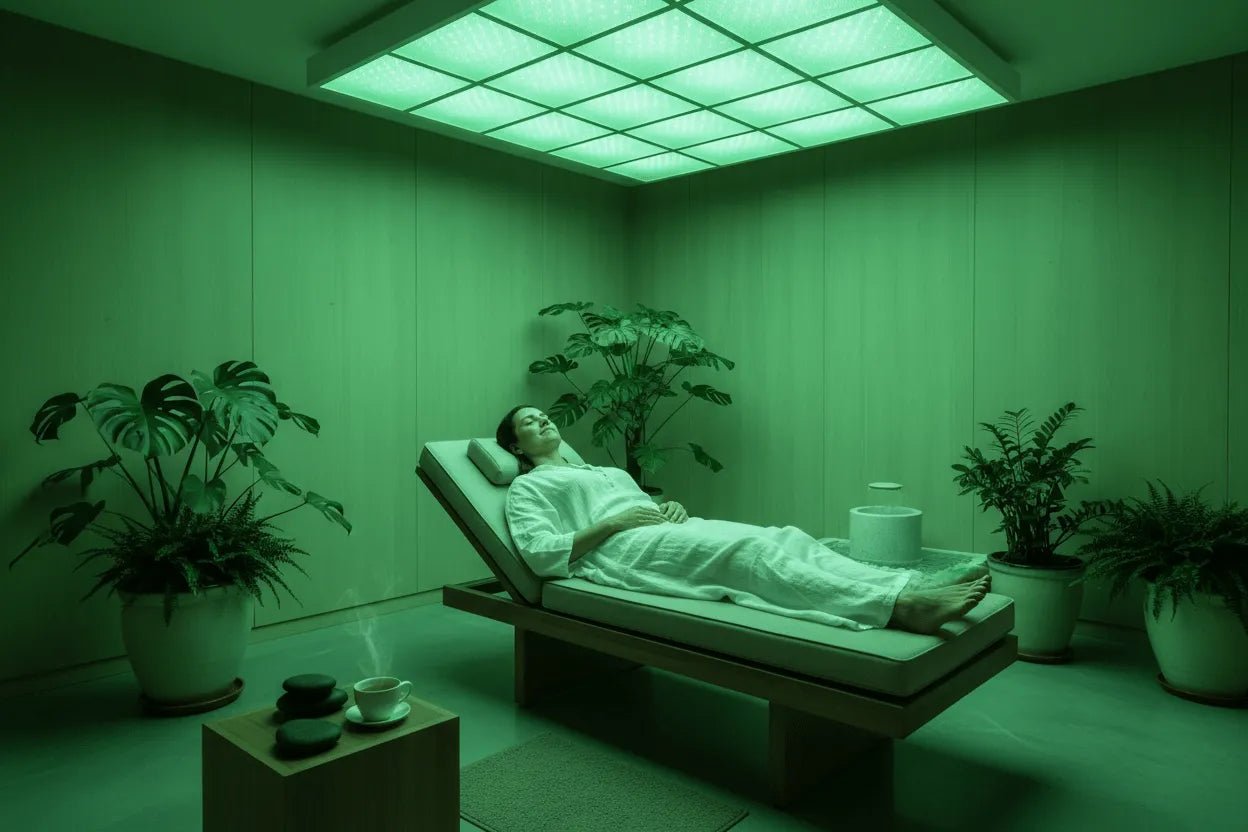
Green light therapy typically refers to exposure to a narrow band of green light, often discussed around the 520 nanometer wavelength range. This is different from a standard green bulb, colored LED strip, or broad-spectrum light with a green tint.
The research interest is focused on narrow-band green light, meaning the device emits a more precise wavelength range instead of a wide mix of visible light. That distinction matters because light sensitivity research has focused on specific green light exposure, not general colored lighting.
In simple terms, green light therapy is being studied for how it may interact with the eyes, visual pathways, and pain-processing systems in the brain. Red light and near-infrared light are more commonly studied for tissue-level photobiomodulation, skin wellness, muscle recovery, and cellular energy support.
Why Green Light Is Different from Red Light Therapy
Red light therapy and near-infrared therapy are often used in wellness routines because these wavelengths may support cellular energy, skin appearance, and recovery-focused routines. Green light therapy is different because it appears to work more through the visual system than through deep tissue exposure.
- Red light therapy: Commonly used for skin wellness, recovery routines, and cellular energy support.
- Near-infrared light: Often used for deeper tissue exposure and recovery-focused wellness routines.
- Green light therapy: Being studied for light sensitivity, and neurological pain processing through visual pathways.
If you are researching red and near-infrared options for general wellness, Wellari’s Red Light & Near-Infrared Buyer’s Guide explains how red and near-infrared wavelengths are commonly used in home wellness devices.
What the Research Says About Green Light and Migraine
Green light therapy has received attention because some studies suggest narrow-band green light may be better tolerated by people with migraine-related light sensitivity than other wavelengths of light.
A University of Arizona study published in Cephalalgia evaluated green light exposure in people with episodic. The study reported reductions in headache days and quality-of-life improvements, with no reported side effects from green light exposure in that study. You can review the study through PubMed Central.
Other research from Harvard Medical School has discussed how a narrow band of green light may be less likely to worsen migraine-related photophobia compared with other light colors.
This does not mean green light therapy is proven to work for everyone. Green light therapy should be viewed as an emerging, non-drug area of research that may be worth discussing with a healthcare provider, especially for people interested in light sensitivity and migraine-friendly environments.
How Green Light May Affect Pain Processing
Researchers are studying whether green light may influence pain processing through the visual system and the body’s own pain-modulating pathways. Some preclinical research suggests green light exposure may interact with endogenous opioid signaling, which refers to the body’s natural pain-regulation system. Green light therapy should not be described as a guaranteed pain treatment, opioid replacement, or cure for chronic pain. A more accurate statement is that early research suggests green light may influence pain-processing pathways, but more human research is needed.
Green Light Therapy and Fibromyalgia Research
Green light therapy is also being explored in relation to chronic pain conditions such as fibromyalgia. Fibromyalgia involves complex nervous system sensitivity, pain processing, sleep disruption, and fatigue. Because of this, researchers are interested in non-drug approaches that may support comfort and nervous system regulation.
However, green light therapy should not be marketed as a treatment for fibromyalgia. If someone has fibromyalgia or chronic widespread pain, they should work with a licensed medical professional to build a care plan.
For home wellness support, many people also explore complementary routines such as red light therapy, sauna, cold therapy, gentle movement, stress reduction, and sleep optimization. These routines should be used to support wellness, not replace medical care.
Why Wavelength Precision Matters
One of the most important points in green light therapy research is that wavelength precision matters. A regular green bulb is not the same as a narrow-band 520nm green light device.
- The studies generally focus on narrow-band green light, not generic colored bulbs.
- Exposure time, brightness, distance, and room lighting conditions may matter.
- Green light research is different from red light therapy research.
- Device claims should match the specific wavelength and research being referenced.
- People with migraine or neurological symptoms should consult a healthcare professional.
Does Wellari Wellness Sell Green Light Therapy Products?
No. Wellari Wellness does not currently offer green light therapy products. This article is educational and is not intended to promote a green light device.
Wellari Wellness does offer related wellness technologies, including red light therapy, sauna, cold therapy, and home wellness equipment. These products are intended for general wellness support and are not medical devices unless specifically stated by the manufacturer.
Green Light vs. Red Light: Which One Should You Research?
The right technology depends on your goal.
- If your goal is light sensitivity-friendly lighting research: green light therapy may be worth discussing with a healthcare provider.
- If your goal is skin wellness or recovery routines: red and near-infrared light therapy may be more relevant.
- If your goal is whole-body relaxation: sauna, cold therapy, and recovery spaces may be better places to start.
- If your goal is chronic pain support: speak with a medical professional before relying on any device-based approach.
For red and near-infrared education, start with Wellari’s Red Light & Near-Infrared Buyer’s Guide. For broader home recovery planning, review our guide to designing a home wellness room.
Explore Related Wellari Wellness Resources
If you are comparing light therapy, recovery tools, and wellness room equipment, these additional Wellari resources may help:
- Red Light & Near-Infrared Buyer’s Guide
- Red Light Therapy Showdown: Panels vs. Beds vs. Wearables
- Saunas for Relaxation & Wellness Support
- Shop All Cold Therapy
- Design Your Dream Home Wellness Room: A Complete Guide
Authority Resources on Green Light Therapy Research
For readers who want to review the research directly, these outside sources provide helpful background:
- Cephalalgia / PubMed Central: Evaluation of Green Light Exposure on Headache Frequency and Quality of Life
- University of Arizona Health Sciences: Green Light Therapy and Migraine Research
- Harvard Medical School: Green Light for Migraine Relief
- Science Translational Medicine: Green Light Analgesia Research
FAQ: Green Light Therapy, Light Sensitivity
Does Wellari Wellness sell green light therapy products?
No. Wellari Wellness does not currently offer green light therapy products. This article is educational and is designed to help readers understand the research and how green light differs from red and near-infrared therapy.
Is green light therapy the same as red light therapy?
No. Green light therapy and red light therapy use different wavelengths and are studied for different purposes. Red and near-infrared light are commonly used in wellness routines related to skin, recovery, and cellular energy support. Green light is being studied more for photophobia, and pain-processing pathways.
Can green light therapy cure migraine?
No. Green light therapy should not be described as a cure for migraine. Some studies suggest narrow-band green light may help reduce headache frequency or light sensitivity for certain people, but migraine is a medical condition that should be managed with professional guidance.
Can I use a regular green bulb for green light therapy?
A regular green bulb is not the same as a narrow-band 520nm green light device used in research. If you are evaluating green light therapy, look carefully at wavelength specifications and speak with a healthcare provider.
Is green light therapy safe?
Some studies have reported good tolerability, but individual responses vary. People with migraine, eye conditions, neurological symptoms, seizures, or severe light sensitivity should consult a healthcare professional before trying light-based therapy.
What should I use if I am interested in red light therapy instead?
If your goal is general wellness, skin support, recovery routines, or red and near-infrared education, visit Wellari’s Red Light & Near-Infrared Buyer’s Guide.
Final Takeaway
Green light therapy is an emerging area of research, especially for migraine and light sensitivity. The most important takeaway is that green light therapy is not the same as red light therapy, and narrow-band wavelength precision matters.
Wellari Wellness does not currently sell green light therapy products, but we believe education matters. If you are researching light-based wellness tools, compare the science carefully, avoid exaggerated medical claims, and speak with a qualified healthcare professional if you are managing migraine, chronic pain, fibromyalgia, or any neurological condition.
For related wellness education, explore Wellari’s Red Light & Near-Infrared Buyer’s Guide, compare red light therapy panels, beds, and wearables, or learn how to design a home wellness room.
Medical disclaimer: This article is for educational purposes only and is not medical advice. Wellari Wellness products are intended for general wellness use only and are not intended to diagnose, treat, cure, or prevent any disease. Always consult a qualified healthcare professional before starting light therapy, migraine chronic pain protocols, or any wellness routine, especially if you have a medical condition.