

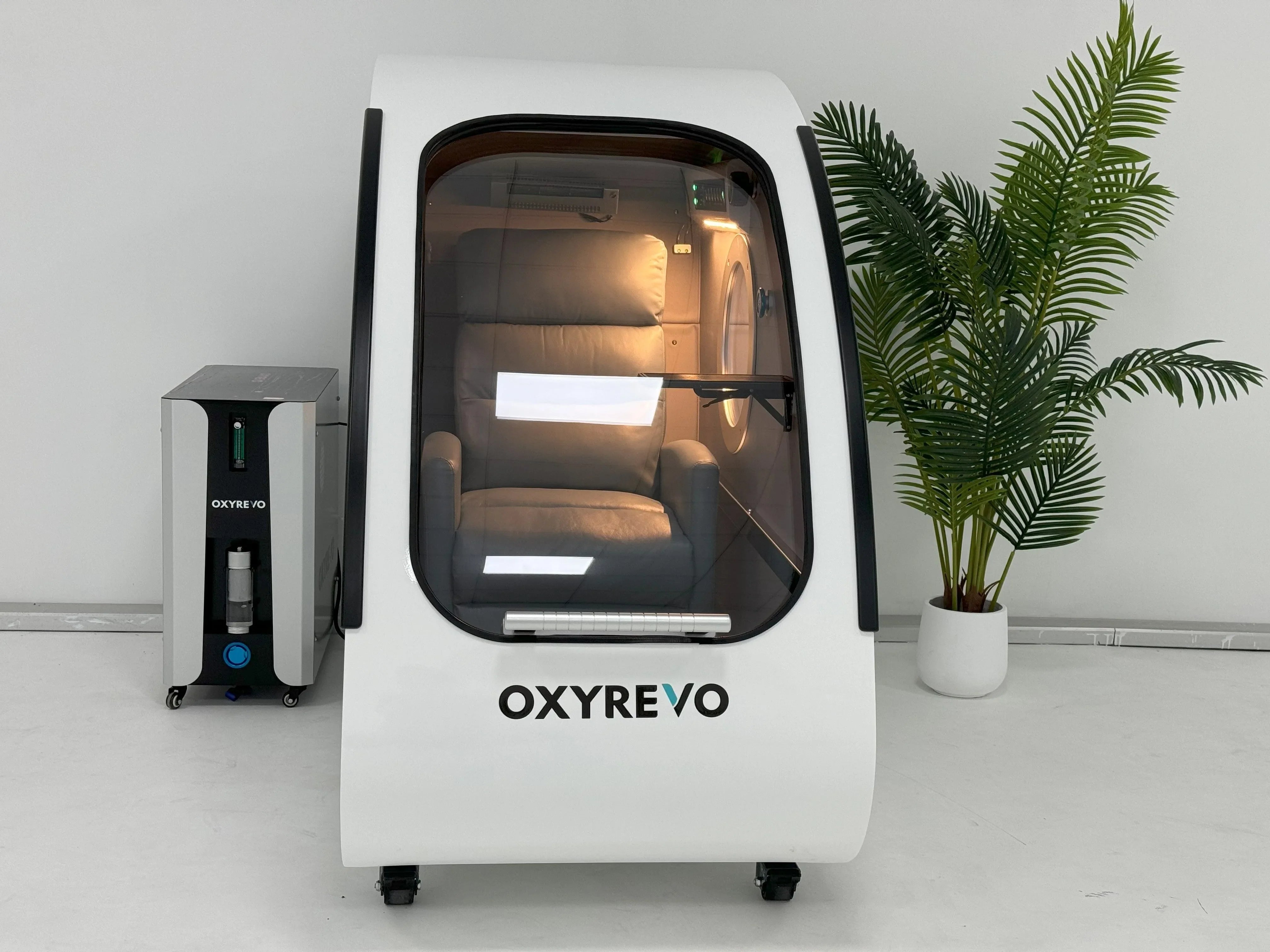
Hyperbaric Oxygen Therapy (HBOT): Your Comprehensive Guide to What It Is and How It Works
Hyperbaric Oxygen Therapy (HBOT) is one of the most researched tools in modern recovery and regenerative care. It delivers higher concentrations of oxygen under increased atmospheric pressure — supporting biological processes involved in tissue repair, inflammation management, and recovery.
If you’re exploring HBOT for recovery, wellness optimization, or home use, this guide explains what HBOT is, how it works, what it may support, what a session feels like, and how to choose the right chamber.
Shop chambers:
What Is Hyperbaric Oxygen Therapy (HBOT)?
HBOT involves breathing oxygen inside a pressurized chamber. Increasing pressure allows oxygen to dissolve into blood plasma — not just red blood cells — which may support oxygen delivery to tissues where circulation is limited.
For fundamentals:
👉 Hyperbaric Oxygen Therapy Explained
How HBOT Works
Pressure + Oxygen = Tissue Saturation
Under pressure, oxygen diffuses more effectively into tissues, supporting recovery processes in areas affected by stress, inflammation, or reduced circulation.
Mechanisms Often Studied
- Improved oxygen availability
- Inflammatory balance support
- Angiogenesis (new blood vessel formation)
- Immune function support
- Collagen and tissue repair pathways
Evidence-based overview:
👉 What HBOT Actually Treats
Conditions & Goals HBOT Is Used For
Clinical applications
- Non-healing wounds
- Radiation tissue injury
- Carbon monoxide poisoning
- Decompression sickness
Recovery & wellness goals
Many users explore HBOT as part of a broader recovery stack alongside cold exposure, infrared therapy, and red light therapy.
Longevity context:
👉 The Ultimate Longevity Stack
Hard vs Soft Shell Chambers
- Hard shell: Higher pressure capability, clinical feel
- Soft shell: Home-friendly, portable, accessible
Full comparison:
👉 Hard vs Soft Shell Buyer’s Guide
What to Expect During an HBOT Session
- Gradual pressurization
- Ear pressure similar to flying
- Sessions often 60–120 minutes
- Many people rest or listen to audio
Some feel relaxed afterward, others energized. Benefits typically build across consistent sessions.
Safety Considerations
HBOT is generally well tolerated when used appropriately.
Common effects
- Ear pressure
- Temporary fatigue
- Temporary vision changes
Rare risks
- Oxygen toxicity
- Fire risk (why safety protocols matter)
HBOT in a Recovery & Longevity Stack
HBOT is often combined with other modalities to support recovery routines.
Related reads:
Explore Wellari collections:
- Cold Plunges
- Infrared Saunas
- Red Light Panels
- Red Light Masks
- Red Light Belts & Wraps
- Red Light Mats & Blankets
Conclusion: Is HBOT Right for You?
HBOT can be a valuable tool when recovery, tissue repair, or resilience are priorities — especially when integrated into a consistent wellness routine.
Need the comparison?
👉 Read the Buyer’s Guide

%20is%20one%20of%20the%20most%20researched%20tools%20in%20modern%20recovery%20and%20regenerative%20care.%20It%20delivers%20higher%20concentrations%20of%20oxygen%20under%20increased%20atmospheric%20pressure%20%E2%80%94%20sup...)