

Article: Dynamic Compression vs. Compression Socks: What to Know About Circulation Support
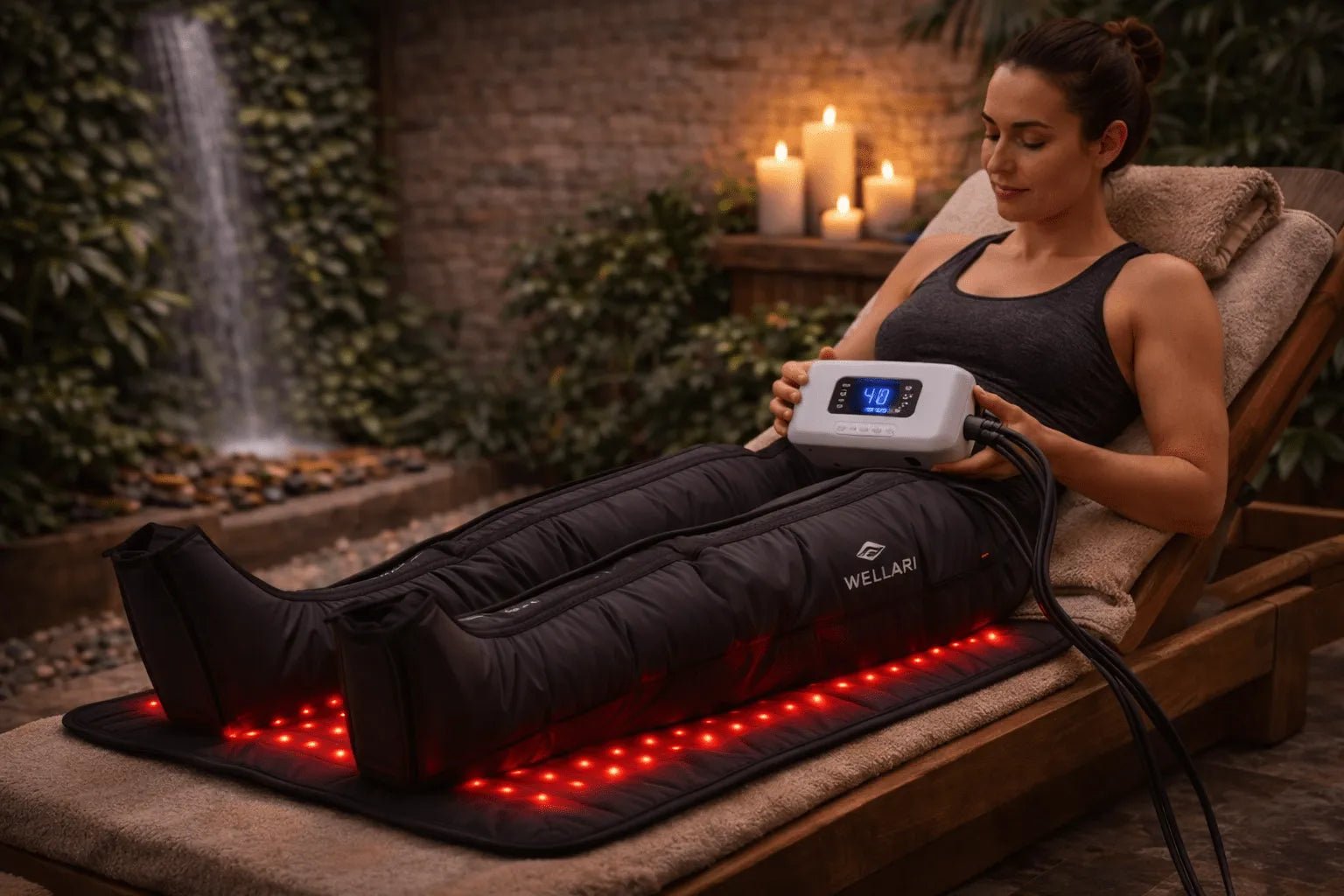
Dynamic Compression vs. Compression Socks: What to Know About Circulation Support
Compression therapy is commonly associated with athletic recovery, but it is also discussed in relation to leg heaviness, swelling, circulation support, and fluid-management routines. The key is understanding the difference between everyday compression garments and dynamic compression devices — and knowing when medical guidance is important.
At Wellari Wellness, we believe recovery and wellness tools should be explained clearly and responsibly. Compression boots, intermittent pneumatic compression devices, and compression garments may support recovery routines and leg comfort for some users, but they should not be presented as cures or standalone treatments for chronic venous insufficiency, lymphedema, edema, vascular disease, or any medical condition.
This guide explains how dynamic compression differs from compression socks, why the calf muscle pump matters, what to consider for home use, and how to approach compression safely.
Important: This article is for educational purposes only and is not medical advice. Compression products are not intended to diagnose, treat, cure, or prevent disease. Speak with a qualified healthcare professional before using compression therapy if you have chronic venous insufficiency, lymphedema, edema, peripheral arterial disease, blood clots, deep vein thrombosis, heart disease, diabetes, neuropathy, open wounds, infection, pregnancy, or any medical condition.
What Is Compression Therapy?
Compression therapy uses external pressure on the body, most often the legs, to support circulation-related wellness goals and comfort. It can include compression socks, sleeves, wraps, pneumatic compression boots, or more advanced intermittent pneumatic compression systems.
Compression is commonly used in several different contexts:
- Post-workout recovery routines
- Leg comfort after long periods of standing or sitting
- Travel-related leg heaviness
- Athletic recovery and soreness management
- Clinician-guided care for certain circulation or swelling concerns
The important distinction is that wellness use and medical use are not the same. If you have persistent swelling, pain, skin changes, visible varicose veins, wounds, or one-sided leg swelling, speak with a healthcare professional before relying on compression products.
Compression Socks vs. Dynamic Compression Devices
Compression socks and dynamic compression devices both use pressure, but they work differently.
- Compression socks: Apply steady, passive pressure while worn.
- Dynamic compression devices: Use inflatable chambers that inflate and deflate in cycles.
- Intermittent pneumatic compression, or IPC: A type of dynamic compression that applies timed pressure through air-filled sleeves or boots.
Compression socks may be useful for daily support and are often easier to wear during work, travel, or standing. Dynamic compression devices are usually used during dedicated recovery sessions at home, in clinics, or in wellness settings.
Neither option is automatically better for everyone. The right choice depends on your goals, health status, comfort, mobility, and whether a clinician has recommended a specific compression level.
Why the Calf Muscle Pump Matters
The lower legs rely heavily on movement. When you walk, the calf muscles contract and help move blood upward against gravity. This is often called the calf muscle pump.
When people sit or stand for long periods, the calf muscle pump is less active. This can contribute to feelings of leg heaviness, fatigue, or temporary swelling in some people. Walking, ankle pumps, leg elevation, hydration, and compression may all be part of a leg-comfort routine.
Dynamic compression devices are designed to create a squeeze-and-release pattern that may mimic aspects of the calf muscle pump. For wellness users, this can feel like a structured leg recovery session.
What Is Intermittent Pneumatic Compression?
Intermittent pneumatic compression, or IPC, uses air-filled sleeves or boots that inflate and deflate in a programmed cycle. Some systems use sequential compression, meaning pressure starts lower on the leg and moves upward.
IPC has been studied in medical and recovery settings for circulation support, swelling-related concerns, and recovery protocols. A PubMed Central review discusses intermittent pneumatic compression and its use in venous and lymphatic conditions. You can review the research here: PubMed Central: Intermittent Pneumatic Compression Review.
For Google-compliant language, the safest statement is: intermittent pneumatic compression is being studied and used in supervised settings for circulation and fluid-management support, but it should not be described as a guaranteed treatment or cure for medical conditions.
Can Dynamic Compression Support Leg Comfort?
Dynamic compression may support leg comfort and recovery routines for some users by creating a rhythmic pressure pattern. Many people use compression boots after workouts, long travel days, or extended periods of standing.
Dynamic compression may support:
- Post-workout recovery routines
- Temporary relief from heavy legs
- Relaxation after long periods of standing or sitting
- Circulation-focused wellness routines
- Home recovery sessions
However, compression devices should not be marketed as guaranteed treatments for chronic venous insufficiency, edema, lymphedema, vascular disease, or blood flow disorders. Those conditions require medical evaluation and may need clinician-directed treatment.
Compression Therapy and Chronic Venous Insufficiency
Chronic venous insufficiency, or CVI, occurs when veins in the legs have difficulty moving blood back toward the heart. Symptoms may include swelling, heaviness, aching, skin changes, varicose veins, or ulcers in more advanced cases.
Cleveland Clinic describes chronic venous insufficiency as a condition where leg veins do not allow blood to flow back up to the heart properly. You can review their overview here: Cleveland Clinic: Chronic Venous Insufficiency.
Compression may be part of a clinician-guided CVI management plan, but pressure level, device type, and safety screening matter. People with possible arterial disease, neuropathy, wounds, or severe swelling should not self-prescribe high-pressure compression.
A compliant way to frame this is: dynamic compression is one option that may support circulation and fluid-management routines for some people when used under appropriate medical guidance.
Compression Therapy and Edema
Edema means swelling caused by fluid buildup in tissues. It can have many causes, including prolonged standing, injury, medications, vein issues, lymphatic conditions, heart disease, kidney disease, or other medical concerns.
Mayo Clinic notes that edema can be linked to many underlying causes and should be evaluated when persistent, severe, painful, or one-sided. You can review their overview here: Mayo Clinic: Edema Symptoms and Causes.
Because swelling can sometimes signal serious conditions, it is important not to treat persistent edema as a simple recovery issue. If swelling is new, painful, one-sided, worsening, or associated with shortness of breath, chest pain, redness, warmth, or skin changes, seek medical care.
Compression Therapy and Lymphedema
Lymphedema involves lymph fluid buildup and often requires specialized care. Compression garments, manual lymph drainage, exercise, skin care, and pneumatic compression devices may be part of a treatment plan, but they should be guided by a trained professional.
Dynamic compression devices are used in some lymphedema management plans, but the right device, pressure, and frequency should be determined by a clinician. Improper use may worsen symptoms or create skin issues for some people.
For this reason, Wellari recommends speaking with a healthcare professional before using compression devices for diagnosed lymphedema or chronic swelling.
Pressure Settings: Why More Is Not Always Better
Compression pressure is usually measured in millimeters of mercury, or mmHg. Higher pressure is not automatically better and may be unsafe for some users.
Too much pressure may cause discomfort, numbness, skin irritation, or circulation concerns. Too little pressure may not provide the intended support. People with vascular conditions should have pressure recommendations made by a healthcare professional.
Before using compression boots or sleeves, consider:
- Starting with lower pressure settings
- Using shorter sessions at first
- Avoiding compression over numb or painful areas
- Checking skin before and after sessions
- Stopping if you feel pain, tingling, numbness, or unusual symptoms
Who Should Speak With a Doctor Before Using Compression?
Compression therapy is not appropriate for everyone. Speak with a qualified healthcare professional before using compression socks, sleeves, boots, or IPC devices if you have:
- Deep vein thrombosis or blood clot history
- Peripheral arterial disease or poor arterial circulation
- Chronic venous insufficiency
- Lymphedema or chronic swelling
- Heart failure or significant heart disease
- Diabetes with neuropathy or circulation concerns
- Open wounds, ulcers, infection, or fragile skin
- Severe pain, redness, warmth, or one-sided swelling
- Pregnancy
- Recent surgery or injury
Seek urgent medical attention if you have sudden one-sided leg swelling, chest pain, shortness of breath, coughing blood, severe calf pain, or signs of a blood clot.
Home Use: How to Build a Safer Compression Routine
If a healthcare professional confirms compression is appropriate for you, or if you are using compression for general recovery and leg comfort, start conservatively.
A safer beginner approach may include:
- Use the device according to manufacturer instructions.
- Start with shorter sessions and lower pressure.
- Do not use compression while sleeping unless specifically directed.
- Do not use compression over broken, infected, or irritated skin.
- Keep sessions comfortable, not painful.
- Track how your legs feel before and after use.
- Ask a healthcare professional if symptoms persist or worsen.
Compression should leave you feeling supported and comfortable. It should not cause pain, numbness, discoloration, or worsening swelling.
Lifestyle Habits That Support Leg Circulation
Compression may work best as part of a broader leg-health and recovery routine. Depending on your situation, helpful habits may include:
- Walking regularly to activate the calf muscle pump
- Taking movement breaks during long sitting periods
- Elevating legs when appropriate
- Staying hydrated
- Managing sodium intake if advised by a clinician
- Maintaining a healthy weight
- Following a clinician-recommended exercise plan
- Monitoring symptoms and skin changes
NYU Langone notes that lifestyle changes can support chronic venous insufficiency care in many cases. You can review their overview here: NYU Langone: Lifestyle Changes for Chronic Venous Insufficiency.
Where Compression Fits Into a Home Recovery Space
Compression tools are often part of a broader home recovery and wellness environment. Many users also explore red light therapy, cold therapy, sauna, stretching, hydration, and sleep optimization.
Explore related Wellari resources:
- Compression & Recovery Collection
- Shop All Recovery
- Shop All Cold Therapy
- Red Light & Near-Infrared Buyer’s Guide
- Saunas for Relaxation & Wellness Support
- Design Your Dream Home Wellness Room: A Complete Guide
Authority Resources on Compression and Circulation
For readers who want to review medical and research information directly, these outside resources may help:
- Cleveland Clinic: Chronic Venous Insufficiency
- Mayo Clinic: Edema Symptoms and Causes
- PubMed Central: Intermittent Pneumatic Compression Review
- NYU Langone: Lifestyle Changes for Chronic Venous Insufficiency
FAQ: Dynamic Compression, Compression Socks, and Circulation Support
Is dynamic compression better than compression socks?
Not necessarily. Dynamic compression and compression socks work differently. Compression socks provide steady pressure during wear, while dynamic compression devices use timed inflation and deflation. The better option depends on your goals, health status, and professional guidance.
Can compression boots help with swollen legs?
Compression boots may support leg comfort and fluid-management routines for some users, but swollen legs can have many causes. Persistent, painful, one-sided, or worsening swelling should be evaluated by a healthcare professional.
Can I use compression therapy for chronic venous insufficiency?
Compression may be part of a clinician-guided plan for chronic venous insufficiency, but pressure level and device type should be recommended by a healthcare professional.
Can compression therapy help with lymphedema?
Compression devices may be used in some lymphedema care plans, but lymphedema should be managed by trained healthcare professionals. Do not self-treat diagnosed lymphedema without guidance.
How long should a compression boot session last?
Session length depends on the device, pressure setting, user tolerance, and intended use. Many users start with shorter sessions and lower settings, then adjust based on comfort and manufacturer guidance.
Who should avoid compression therapy?
People with blood clots, severe arterial disease, uncontrolled heart failure, open wounds, infection, severe pain, or certain circulation problems should avoid compression unless cleared by a healthcare professional.
Can compression replace medical treatment?
No. Compression products should not replace medical evaluation or treatment. They may support comfort or clinician-guided care, but medical conditions such as CVI, edema, and lymphedema require professional guidance.
Where can I compare compression recovery products?
You can explore Wellari’s Compression & Recovery Collection or visit Shop All Recovery for related recovery tools.
Final Takeaway
Dynamic compression and compression socks can both play a role in circulation-focused wellness and recovery routines, but they are not interchangeable and should not be used carelessly for medical conditions.
Compression socks provide steady support, while dynamic compression devices create a timed squeeze-and-release pattern. For general wellness users, compression may help with leg comfort and post-activity recovery. For people with chronic venous insufficiency, edema, lymphedema, or vascular disease, medical guidance is essential.
Explore Wellari’s Compression & Recovery Collection, browse Shop All Recovery, or learn how to build a complete recovery space with the Home Wellness Room Guide.
Medical disclaimer: This article is for educational purposes only and is not medical advice. Wellari Wellness products are intended for general wellness use only and are not intended to diagnose, treat, cure, or prevent any disease. Always consult a qualified healthcare professional before using compression therapy, especially if you have chronic venous insufficiency, edema, lymphedema, vascular disease, blood clot history, heart disease, diabetes, neuropathy, pregnancy, wounds, or any medical condition.