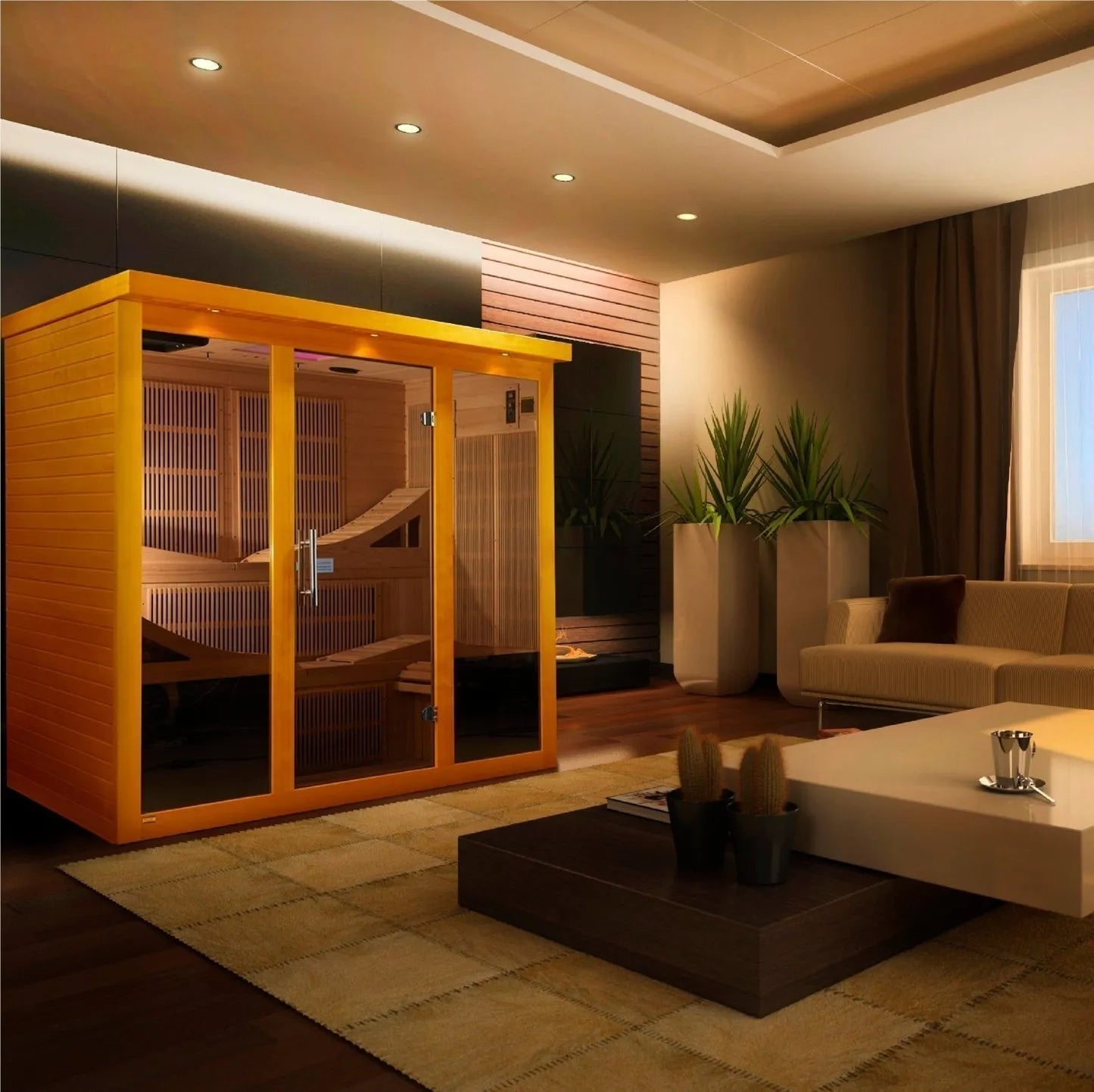
Infrared & Full-Spectrum Saunas: Your Path to Detox, Longevity & Accelerated Recovery
As the wellness industry evolves, heat therapy has moved far beyond traditional steam rooms. Infrared and full-spectrum saunas offer a modern, evidence-informed approach to relaxation, recovery, and long-term wellness—delivering deep warming effects at more tolerable temperatures than many traditional saunas.
Rather than primarily heating the air around you, infrared sauna systems use targeted infrared wavelengths to warm the body more directly. This can support circulation, a deep sweat response, and post-training recovery routines—without the intense ambient heat of conventional saunas.
This guide breaks down how infrared and full-spectrum saunas work, their realistic benefits, and how to choose the right system for your goals.
The Evolution of Heat Therapy
Traditional saunas rely on convection—heating the air to raise body temperature. While many people enjoy the experience, the high ambient temperature can feel uncomfortable or inaccessible for some users.
Infrared saunas work differently. By emitting infrared wavelengths that can warm the body more directly, they can create a strong heat stimulus at lower cabin temperatures—often making sessions feel more tolerable and easier to do consistently.
Why Infrared & Full-Spectrum Saunas Are Popular in Modern Wellness
Infrared and full-spectrum saunas are commonly used to support:
- Circulation and oxygen/nutrient delivery
- Muscle relaxation and post-workout recovery routines
- Stress relief and relaxation
- A consistent sweat response (often at lower cabin temps)
- Overall “recovery habit” building (consistency tends to matter most)
Because many infrared systems operate at lower ambient temperatures (often around 120–140°F), sessions may be longer and more comfortable for some users.
👉 Shop Infrared & Full-Spectrum Saunas
https://wellariwellness.com/collections/infrared-saunas
Understanding Infrared Sauna Technology
Traditional vs. Infrared Saunas
| Feature | Traditional Sauna | Infrared Sauna |
|---|---|---|
| Heating method | Hot air / steam | Radiant infrared wavelengths |
| Typical cabin temperature | 150–200°F | 120–140°F (varies by model/user tolerance) |
| Heat sensation | High ambient heat | Deep warming at lower ambient temps |
| Comfort for longer sessions | Can feel intense | Often more tolerable for many users |
In plain terms: infrared saunas are designed to warm your body more directly, which can be a better fit for people who want heat therapy without extremely high air temperatures.
The Infrared Spectrum Explained
Far Infrared (FIR)
Often associated with deep warming, relaxation, and sweat response.
Mid Infrared (MIR)
Often discussed in the context of tissue warming and circulation support.
Near Infrared (NIR)
Commonly used in light-therapy contexts (and some full-spectrum saunas), often associated with skin-level and cellular-support applications.
What “Full-Spectrum” Really Means
Full-spectrum saunas typically combine NIR + MIR + FIR, offering a broader range of wavelengths within one system.
For deeper insight into light-based wellness and wavelength basics, read:
👉 Red Light Therapy Explained: Benefits, Science & Device Guide
https://wellariwellness.com/blogs/buyers-guide/red-light-therapy-unpacking-the-science-benefits-wavelengths-and-device-selection
Sweating & “Detox”: Keep Claims Realistic
Infrared sauna use commonly supports a deep sweat response and relaxation, which many people include in wellness routines.
Important clarification: sweating is primarily a thermoregulation process. Your liver and kidneys are the body’s primary detox organs. Sauna use is best viewed as a supportive wellness practice, not a replacement for medical detoxification or treatment.
Recovery & Comfort: Why Athletes Use Infrared Saunas
Infrared heat may support recovery routines by promoting relaxation, circulation, and muscle comfort after training. Many athletes use sauna sessions as part of a consistent post-workout rhythm to help reduce perceived soreness and improve recovery consistency.
If you’re combining heat and cold for recovery and nervous system balance, explore cold exposure resources here:
👉 Cold exposure (search Wellari)
https://wellariwellness.com/search?q=cold+exposure
Longevity & Long-Term Wellness Routines
Regular sauna use is often discussed in longevity-focused routines due to its relationship with:
- Heat stress adaptation (including heat-shock response pathways)
- Relaxation and stress management habits
- Cardiovascular conditioning effects (often described as a “mild cardio-like” stimulus during sessions)
To see how heat integrates with a broader wellness stack, read:
👉 The Ultimate Longevity Stack Explained
https://wellariwellness.com/blogs/buyers-guide/the-ultimate-longevity-stack-explained-infrared-cryotherapy-hbot-red-light-therapy
Infrared Saunas + Red Light Therapy: A Popular Combination
Some systems integrate sauna heat with red/near-infrared light panels. This can be attractive for users who want a single routine that supports both deep warmth and light-therapy exposure.
👉 Shop Red Light Therapy (search Wellari)
https://wellariwellness.com/search?q=red+light+therapy
Temperature Contrast Therapy: Heat + Cold
Contrast therapy (sauna + cold exposure) is a popular approach used for:
- Perceived recovery support
- Circulation-focused routines
- Nervous system resilience training
- Relaxation after intense training blocks
Start here if you’re building a routine:
https://wellariwellness.com/search?q=cold+plunge
https://wellariwellness.com/search?q=cryotherapy
How to Choose the Right Infrared Sauna
Key factors to compare:
- Wavelength coverage: FIR-only vs. full-spectrum (NIR/MIR/FIR)
- Cabin size & layout: 1–2 person vs. larger family units
- Build quality & insulation: impacts heat consistency and efficiency
- Comfort features: lighting, seating ergonomics, controls, ventilation
- Design preferences: low-EMF marketing claims vary—focus on published specs/testing where available
- Add-ons: integrated red light panels, chromotherapy, audio, etc.
👉 Browse Infrared & Full-Spectrum Sauna Options
https://wellariwellness.com/collections/infrared-saunas
FAQ: Infrared & Full-Spectrum Saunas
Are infrared saunas better than traditional saunas?
It depends on your preference and tolerance. Infrared saunas often feel more comfortable at lower cabin temperatures, while traditional saunas provide a classic high-heat experience.
How often should I use an infrared sauna?
Many people start with 2–3 sessions per week and build up based on comfort. Common routines are 3–5 sessions/week for 20–40 minutes, but individual tolerance varies.
Can I combine sauna and cold exposure?
Yes—contrast routines are popular. Keep sessions conservative at first, hydrate, and stop if you feel lightheaded or unwell.
Do infrared saunas “detox” the body?
Saunas support sweating and relaxation, but the liver and kidneys are the primary detox organs. Avoid exaggerated detox claims and focus on consistent wellness habits.
References
- Harvard Health: Saunas and Your Health
- Mayo Clinic: Are Saunas Good for You?
- NIH / PMC: Clinical Effects of Regular Dry Sauna Bathing
- PubMed: Cardiovascular and Other Health Benefits of Sauna Bathing
Final Thoughts
Infrared and full-spectrum saunas can be a high-leverage addition to a wellness routine—especially for people who want a consistent heat practice for relaxation, recovery habits, and long-term wellness support. If you’re building a full stack, sauna therapy pairs naturally with cold exposure and red/near-infrared light routines.