
Cryotherapy Machine for Home: Space, Power and Supply Requirements
Short answer: a cryotherapy machine can be installed in a private home, but the house has to qualify. Before you choose a model, check six things: the delivery route, the floor, the room, the electrical service, the nitrogen or water supply the machine depends on, and who will operate and service it. Settle electrical service and nitrogen logistics first, because they depend on your address and not on the machine. Browse models in our cryotherapy equipment collection with this checklist beside you.
Home site checklist
| Check | What to get from the manufacturer | Who confirms it at your house |
|---|---|---|
| Delivery route | Crated dimensions and weight; how it is delivered | You, with a tape measure |
| Floor | Installed weight | A qualified professional if the floor is suspended |
| Room | Installed footprint and height; required clearances | You |
| Electrical service | Voltage, phase, amperage, plug or hardwire | A licensed electrician |
| Nitrogen (if used) | Use per session, tank size, ventilation and oxygen-monitoring requirement | A nitrogen supplier and your local fire authority |
| Water (if used) | Supply and drain connection sizes | A plumber |
| Operation and service | Operating instructions, installer, service coverage at a private address | You, in writing, before ordering |
1. Delivery route and floor
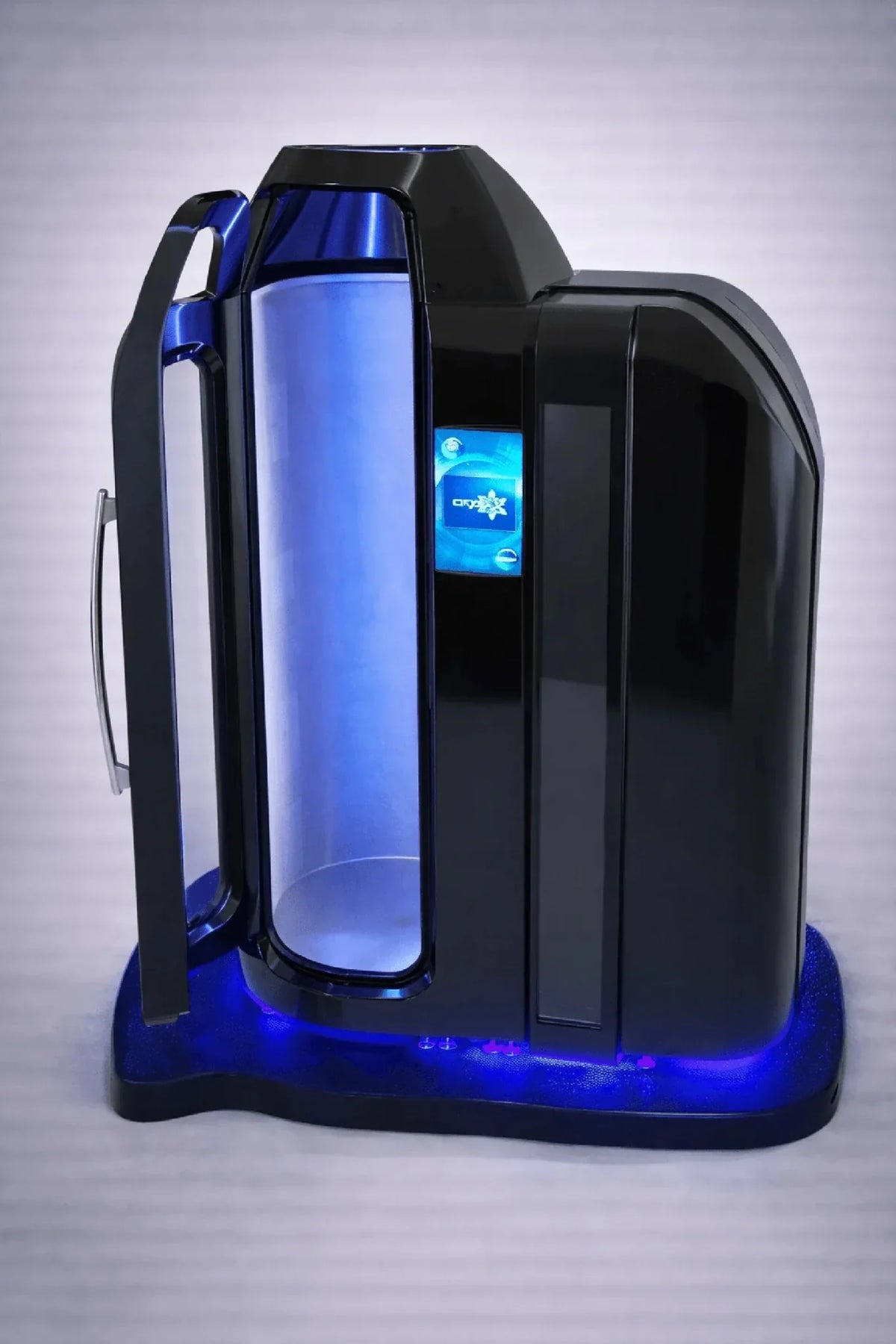
Cryotherapy machines arrive crated or on a pallet. The Cryomed Mini in our range, for instance, is delivered packed on one pallet, according to its manufacturer's specification page (where the model is now named CryoMe Mini). Ask for the crated dimensions and weight, then walk the route from the street to the room: door widths, steps, turns and any lift. Ask for the installed weight as well, and have a suspended floor checked by a qualified professional before the machine is ordered.
2. The room
Get the installed footprint and height in writing, with the clearances the manual requires. Ask for overall height, length and width as three separate figures, and measure your ceiling against the height. Allow space for the door to open and for a second person to stand beside the machine.
3. Electrical service
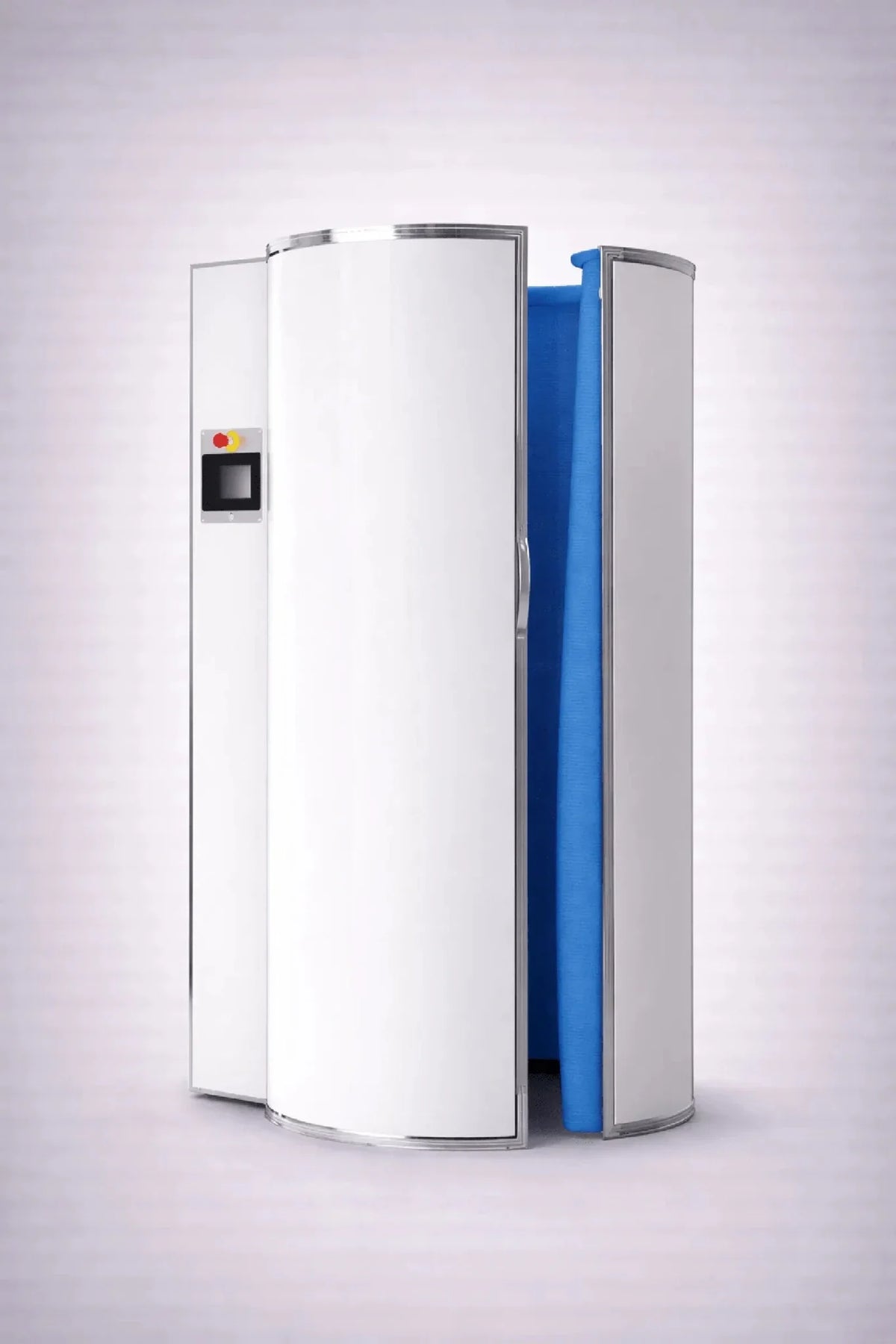
This is where home and commercial installations differ most. Some electric chambers require a three-phase connection. The Antarctica whole-body electric chamber in our range needs three-phase power (400V/50Hz or 208V/60Hz) and special installation, according to its manufacturer's specification. Many houses do not have three-phase service, so a three-phase machine may mean a utility service upgrade or may not be practical at all.
Give your electrician the manufacturer's voltage, phase and amperage and ask one question: can this address supply it? Work must follow the electrical code adopted where you live, in the United States NFPA 70, the National Electrical Code.
4. Nitrogen supply, if the machine uses it
A nitrogen-cooled machine avoids the three-phase question and raises a different one: liquid nitrogen has to be delivered, stored and vented safely in a house.
- Supply. Ask a local supplier whether it delivers to residential addresses, in what tank size, and how often you would need a refill at your expected use. Cryomed states 2.48 litres for a three-minute session of the Mini, plus 3.25 litres for pre-cooling.
- Storage. Ask the supplier and the manufacturer where a tank may be kept.
- Ventilation and monitoring. Nitrogen displaces oxygen without warning. The U.S. Chemical Safety Board's bulletin Hazards of Nitrogen Asphyxiation describes the risk, and OSHA defines an oxygen-deficient atmosphere as below 19.5 percent oxygen by volume (29 CFR 1910.134). Install the ventilation and oxygen monitoring the manual calls for, and ask your local fire authority whether storage rules such as NFPA 55 apply to your address.
5. Water, if the machine uses it
Some electric chambers are offered in a water-cooled version. Vacuactivus lists air-cooled, water-cooled and water-chiller versions of the Antarctica chamber above. Ask which version you are being quoted. If it needs water, get the supply and drain connection sizes in writing; the room then needs a supply and a drain within reach, and a plumber to connect them.
6. Operation, permissions and service
- Operation. Read the operating instructions before you buy. If the manufacturer requires an operator to be present, a machine at home needs a second trained person in the house every time it is used.
- Permissions. Tell your home insurer. If you rent, or live under a homeowners' association, ask first.
- Service. Ask who installs the machine, who repairs it at a private address, and what the warranty requires. Our warranty and serviceability checklist lists the questions to put in writing.
If the house does not qualify
Do not try to adapt the machine. Choose a different one whose stated requirements your house already meets, or decide against it. If you are still working out which kind of machine you are looking at, our guide to cryotherapy machine types explains the three.
Frequently asked questions
Can you have a cryotherapy chamber at home?
Yes, if the house can meet the machine's stated electrical, supply, space and ventilation requirements, and you can operate it as the manufacturer instructs.
How much space does a home cryotherapy machine need?
It depends on the model. Ask for the installed footprint, height and clearances, and add room for the door and for an operator.
Does a home cryotherapy machine need three-phase power?
Some electric chambers do. Check the listing and ask your electrician whether your address can supply it.
Can liquid nitrogen be delivered to a house?
That depends on local suppliers. Ask one before you order a nitrogen-cooled machine.