
Dynamic Stacking: Combining Compression Boots and EMS for Accelerated Muscle Circulation
After a hard workout, long run, demanding training session, or extended day on your feet, your legs may feel heavy, tight, or slow to recover. Many people describe this as fatigue, soreness, swelling, or a “heavy legs” feeling.
At Wellari Wellness, we believe recovery tools should be explained clearly and responsibly. Compression boots, pneumatic compression therapy, and electrical muscle stimulation, often called EMS, may support recovery routines by encouraging movement, circulation, and relaxation. However, they should not be presented as a cure or treatment for medical conditions.
This article explains how compression boots and EMS work, what the research suggests, how athletes and wellness users may approach these tools, and what to consider before adding them to a home recovery routine.
Important: This article is for educational purposes only and is not medical advice. Compression therapy and EMS products are not intended to diagnose, treat, cure, or prevent disease. Speak with a qualified healthcare professional before using compression boots, pneumatic compression, EMS, or recovery devices if you have blood clots, deep vein thrombosis, lymphedema, heart disease, vascular disease, diabetes, nerve damage, implanted electronic devices, pregnancy, or any medical condition.
Why Passive Recovery Is Not Always Enough
Rest is important, but passive rest does not always create much muscle movement. The body’s circulation and lymphatic systems rely partly on movement, breathing, and muscle contraction to help move fluid through the body.
After exercise or long periods of standing, some people may experience temporary heaviness, tightness, or mild swelling in the legs. Active recovery, walking, stretching, hydration, compression, and recovery tools may help some users feel more comfortable after physical activity.
The key is to avoid overstating the claim. Compression boots and EMS may support recovery, comfort, and circulation-related wellness routines, but they should not be described as guaranteed solutions for lymphatic disease, injury recovery, swelling disorders, or vascular conditions.
What Are Compression Boots?
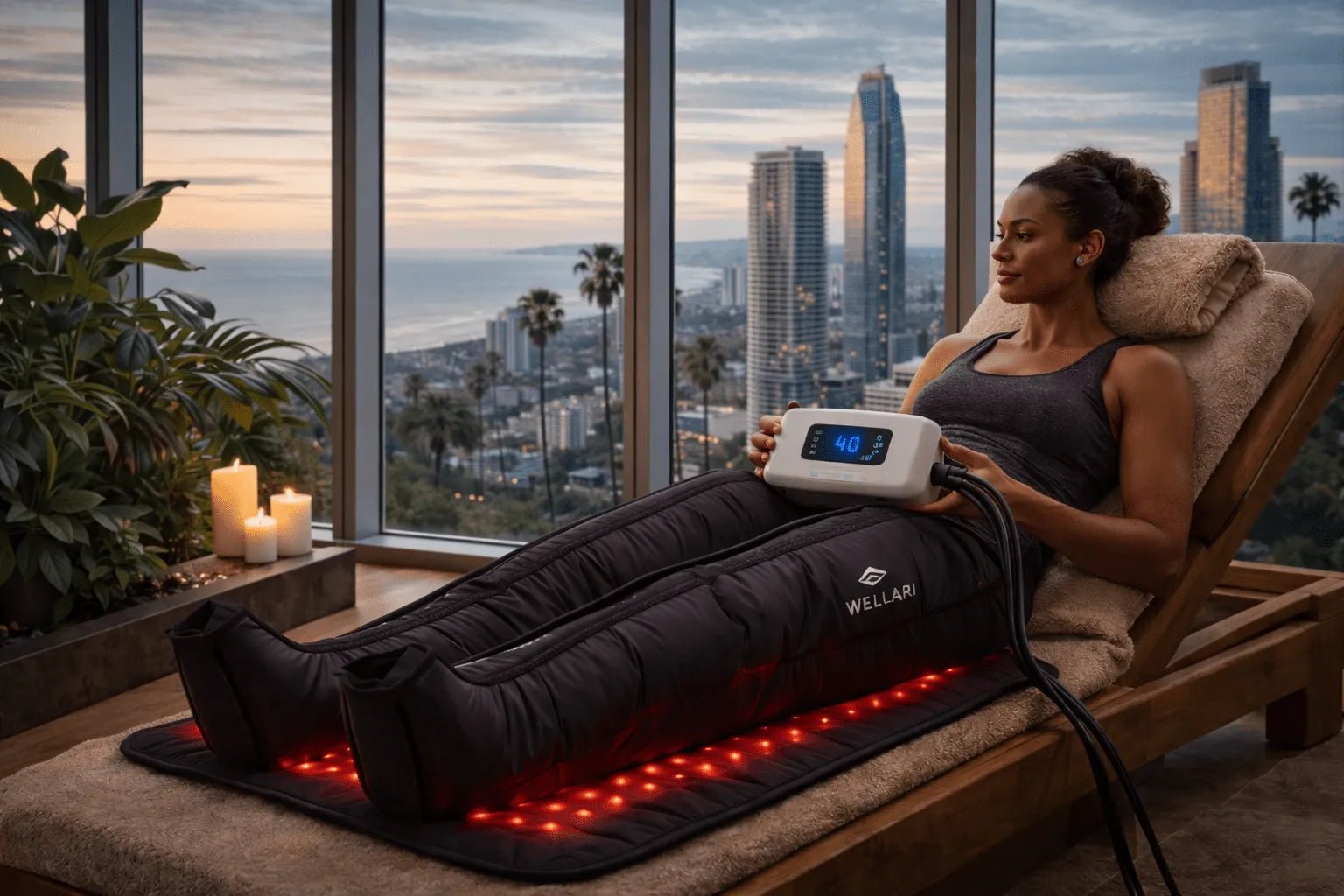
Compression boots use air-filled chambers that inflate and deflate around the legs. This is often called intermittent pneumatic compression, or IPC. Many devices use a sequential pattern, meaning compression begins lower on the leg and moves upward.
This type of pressure pattern is designed to create a massage-like squeezing effect. For athletes and wellness users, the goal is often to support relaxation, reduce feelings of leg heaviness, and encourage a post-workout recovery routine.
Compression boots may help support:
- Post-workout recovery routines
- Temporary relief from heavy legs
- Relaxation after training or long periods of standing
- Circulation-focused wellness routines
- A structured recovery habit at home
Research on intermittent pneumatic compression is mixed depending on the study, population, and protocol, but some evidence suggests IPC may help reduce perceived soreness and support recovery after exercise.
If you are comparing devices, Wellari groups this category as compression massage systems, which includes boot-style systems such as the Rapid Reboot REGEN Boots Package.
What Is EMS?
Electrical muscle stimulation, or EMS, uses controlled electrical pulses to trigger muscle contractions. EMS devices are used in different settings, including fitness, rehabilitation, performance, and recovery routines.
For general wellness and recovery, EMS may be used to create gentle muscle activation without traditional exercise load. This can be appealing after training because it allows the user to rest while still creating some muscle contraction.
EMS may support:
- Muscle activation routines
- Recovery-focused sessions after training
- Local circulation-related wellness goals
- Relaxation and muscle comfort
- Low-impact recovery routines
EMS should be used carefully and according to manufacturer instructions. It may not be appropriate for people with pacemakers, implanted electronic devices, seizure disorders, pregnancy, certain heart conditions, or neurological conditions unless cleared by a healthcare professional.
On the equipment side, Wellari’s EMS and muscle stimulation range includes units such as the Compex Sport Elite 3.0 EMS and TENS kit.
Compression Boots vs. EMS: How They Differ
Compression boots and EMS are often discussed together, but they work differently.
- Compression boots apply external pressure through inflatable chambers.
- EMS creates muscle contractions through electrical stimulation.
- Compression is more focused on external pressure and comfort.
- EMS is more focused on muscle activation.
Some users explore both because they target different aspects of recovery. Compression boots may help create a massage-like pressure pattern, while EMS may help activate muscles without a traditional workout.
Can Compression Boots Support Lymphatic Drainage?
Compression boots are often marketed for lymphatic drainage, but this claim should be handled carefully. The lymphatic system is complex, and people with diagnosed lymphedema or swelling disorders should work with a qualified clinician.
A compliant way to describe the benefit is this: compression boots may support a circulation-focused recovery routine and may help some users feel less leg heaviness after activity.
For people with clinical swelling, lymphedema, venous disease, or other medical conditions, compression should be guided by a healthcare professional. Incorrect pressure, improper use, or use with contraindications may create risk.
Can EMS Support Recovery?
EMS may be useful as part of a recovery routine because it creates muscle contractions without requiring traditional exercise. Some research has studied EMS in relation to blood flow, lactate clearance, performance recovery, and muscle soreness.
However, EMS should not be described as a guaranteed way to eliminate soreness, speed healing, flush toxins, or treat injuries. A safer statement is: EMS may support muscle activation and recovery routines when used appropriately.
People using EMS should start with low intensity, avoid placing electrodes near the heart or head unless directed by a medical professional, and follow the device’s instructions carefully.
Can You Use Compression Boots and EMS Together?
Some advanced recovery routines combine compression and EMS, but this should be done thoughtfully. Not all devices are designed to be used together, and combining modalities may increase intensity.
If a device or system is designed for combined use, the idea is that compression provides external pressure while EMS creates muscle activation. Together, they may support a more active recovery session than passive rest alone.
That said, more intensity is not always better. Beginners should start conservatively and avoid using multiple recovery tools at high intensity at the same time.
How to Start a Safer Recovery Routine
If you are new to compression boots, EMS, or recovery technology, start slowly and track how your body responds.
- Begin with shorter sessions.
- Use lower pressure or intensity settings first.
- Do not use devices over injured, numb, infected, or irritated areas.
- Stop if you feel pain, dizziness, numbness, burning, or unusual symptoms.
- Do not sleep in compression boots unless the manufacturer specifically allows it.
- Follow all device instructions and safety warnings.
- Ask a healthcare professional if you have circulation, nerve, heart, or clotting concerns.
A recovery routine should leave you feeling better, not overstimulated or uncomfortable. If symptoms worsen, discontinue use and seek professional guidance.
Who Should Speak With a Doctor Before Using Compression or EMS?
Medical guidance is especially important if you have:
- Deep vein thrombosis or blood clot history
- Severe vascular disease or circulation problems
- Heart disease or heart failure
- Uncontrolled high blood pressure
- Lymphedema or chronic swelling
- Diabetes with neuropathy or circulation concerns
- Pacemaker or implanted electronic device
- Seizure disorder
- Pregnancy
- Open wounds, infection, or skin irritation
Compression and EMS can be useful wellness tools for some users, but they are not appropriate for everyone.
How Compression and EMS Fit Into a Home Wellness Space
Compression and EMS are often part of a broader recovery environment. Many people combine recovery technology with sleep, hydration, stretching, red light therapy, sauna, cold therapy, and stress management.
For broader wellness planning, these Wellari resources may help:
- Red Light & Near-Infrared Buyer’s Guide
- Red Light Therapy Showdown: Panels vs. Beds vs. Wearables
- Saunas for Relaxation & Wellness Support
- Shop All Cold Therapy
- Design Your Dream Home Wellness Room: A Complete Guide
Authority Resources on Compression, EMS, and Recovery
For readers who want to review the research directly, these outside sources may help:
- PubMed Central: Intermittent Pneumatic Compression and Recovery
- PubMed Central: Lower-Limb Pneumatic Compression and Sports Recovery
- PubMed Central: Whole-Body EMS and Active Recovery
- PubMed Central: Recovery Methods, EMS, Massage, and Passive Rest
FAQ: Compression Boots, EMS, and Recovery
Do compression boots help with recovery?
Compression boots may support post-workout recovery routines by creating a massage-like pressure pattern and helping some users feel less leg heaviness. Results vary, and they should not be described as a guaranteed treatment for soreness, swelling, or injury.
Are compression boots the same as medical compression therapy?
Not always. Consumer recovery boots may differ from clinical compression devices in pressure range, intended use, and supervision. People with medical conditions should consult a healthcare professional before use.
Can EMS improve recovery?
EMS may support muscle activation and recovery-focused routines, but it should not be marketed as a cure, medical treatment, or guaranteed performance enhancer. Use EMS according to the manufacturer’s instructions.
Can I use EMS and compression boots together?
Some users combine EMS and compression, but only if the devices are designed for safe combined use. Start conservatively and avoid high-intensity settings until you understand your tolerance.
Who should avoid compression boots?
People with blood clots, severe vascular disease, uncontrolled heart conditions, certain swelling disorders, infection, open wounds, or circulation concerns should speak with a healthcare professional before using compression boots.
Who should avoid EMS?
EMS may not be appropriate for people with pacemakers, implanted electronic devices, seizure disorders, pregnancy, certain heart conditions, or neurological concerns unless cleared by a healthcare professional.
How long should a recovery session last?
Session length depends on the device and user tolerance. Many people start with shorter sessions and lower settings, then adjust gradually based on comfort and manufacturer guidance.
Final Takeaway
Compression boots and EMS can be useful tools for recovery-focused wellness routines when used safely and realistically. Compression provides external pressure, while EMS creates muscle activation. Both may support comfort, circulation-focused routines, and post-training recovery habits for some users.
The safest approach is to start conservatively, follow device instructions, avoid exaggerated claims, and seek medical guidance if you have any health concerns.
For broader home recovery planning, explore Wellari’s Home Wellness Room Guide, compare red and near-infrared therapy options, or review cold therapy tools for your recovery space.
Medical disclaimer: This article is for educational purposes only and is not medical advice. Wellari Wellness products are intended for general wellness use only and are not intended to diagnose, treat, cure, or prevent any disease. Always consult a qualified healthcare professional before using compression therapy, EMS, or recovery devices, especially if you have a medical condition.