
Cold Therapy & Longevity Science
Cold exposure has become a cornerstone of modern recovery, athletic performance, and longevity practices. From elite competitors managing intense training schedules to high-performing professionals seeking stress resilience, cold therapy is widely deployed to reduce inflammation, elevate mood, and accelerate physical recovery. However, choosing between gas-phase Whole-Body Cryotherapy (WBC) and liquid-immersion Cold Plunge Ice Baths requires understanding thermal conductivity physics, cellular adaptation, and long-session feasibility.
Reviewed and updated: July 2026 | Reading time: Approximately 12 minutes
Quick Verdict: Which Cold Method Wins?
Cold Plunges (Ice Baths) are the overall winner for deep muscle recovery, metabolic brown fat activation, and home longevity routines. Because water conducts heat away from the body 24 times faster than air, liquid immersion drives significantly deeper core cooling and tissue re-perfusion. Cryotherapy wins for speed and rapid central nervous system stimulation, delivering a quick 3-minute catecholamine surge without wet skin or long recovery times.
Thermal Physics: Air Conductivity vs. Liquid Conductive Cooling
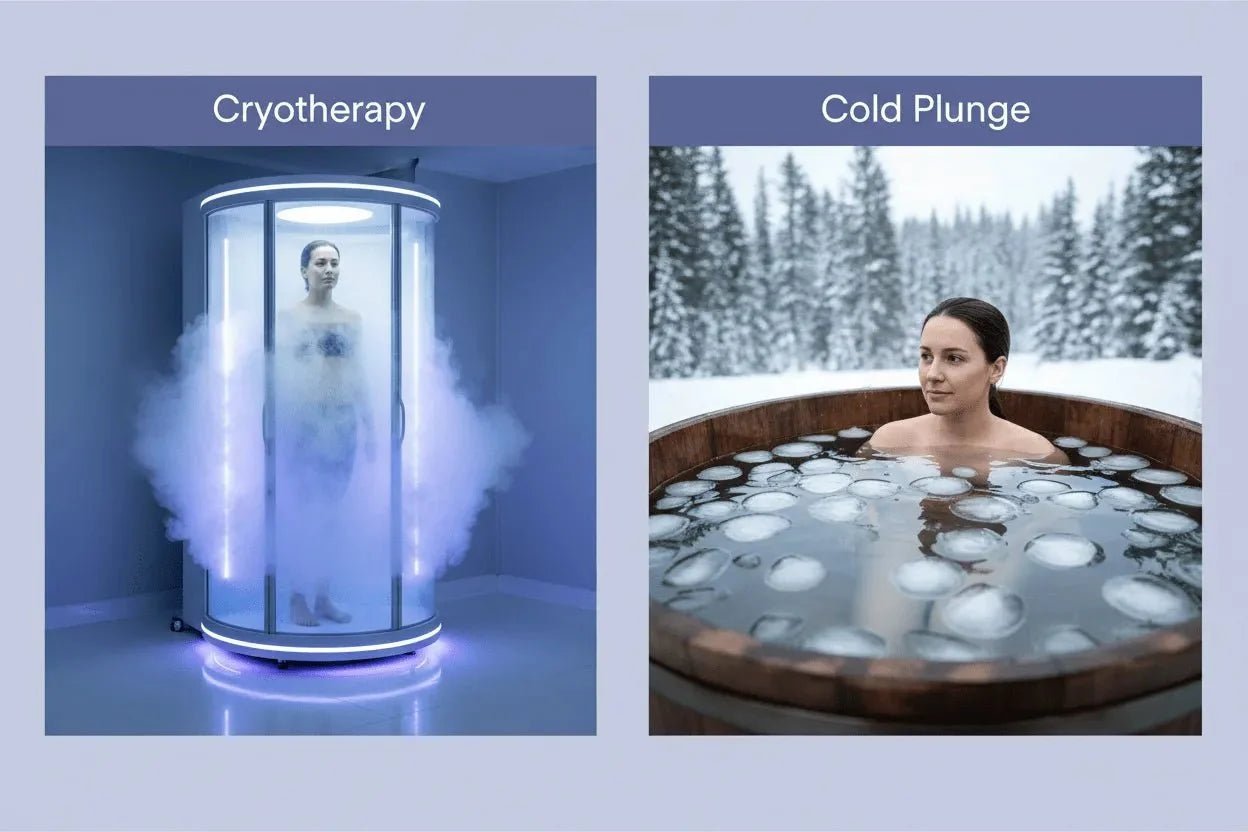
The primary physiological distinction between Whole-Body Cryotherapy (WBC) chambers (-160°F to -220°F) and Cold Plunge Tubs (38°F to 55°F) lies in thermal conductivity:
- Air Conduction (Cryotherapy): Cold air acts as an insulator. Despite extreme gas temperatures, skin contact is indirect and dry, rapidly cooling the outer epidermal layer without causing significant drop in deep core body temperature during a 3-minute session.
- Liquid Conduction (Cold Plunge): Water conducts thermal energy away from the human body approximately 24 times faster than air. Submerging up to the collarbones forces immediate peripheral vasoconstriction, driving blood inward to protect vital organs and providing true deep-tissue intramuscular cooling.
- Hydrostatic Pressure: Water exerts physical pressure on the body during immersion, promoting venous return and lymphatic drainage to clear metabolic waste from sore muscles.
👉 For a complete breakdown of cold protocols, read Cold Plunge Protocols: Your Progressive Recovery Roadmap.
Head-to-Head Comparison Matrix
| Comparison Category | Whole-Body Cryotherapy (Air Chamber) | Cold Plunge / Ice Bath (Water Immersion) |
|---|---|---|
| Operating Medium & Temp | Sub-zero nitrogen or electric cooled air (-160°F to -220°F) | Chilled, filtered liquid water (38°F to 55°F) |
| Session Duration | 2 to 4 minutes (Strict maximum) | 2 to 5 minutes (Up to 11 minutes total weekly) |
| Depth of Muscle Cooling | Moderate (Focuses on superficial skin receptors) | High (Deep tissue intramuscular cooling) |
| Hydrostatic Pressure | None (Gaseous air environment) | High (Physically aids lymphatic drainage) |
| Nervous System Response | Rapid sympathetic spike; immediate dopamine/norepinephrine surge | Balanced sympathetic spike followed by deep vagal parasympathetic tone |
| Accessibility & Placement | Facility-based; commercial nitrogen/electric requirements | Home-friendly; compact 110V/15A plug-and-play tub setups |
Whole-Body Cryotherapy: Extreme Temperatures & Fast Activation
Cryotherapy chambers utilize liquid nitrogen vapor or specialized refrigerated electric coils to cool ambient air down to -220°F.
Key Benefits of Cryotherapy:
- Rapid Catecholamine Elevation: The shock of sub-zero air triggers an instant release of norepinephrine and endorphins, providing a fast mental reset and mood boost.
- No Wet Hair or Clothing: Users enter the chamber wearing socks, gloves, and dry undergarments, making it highly convenient during busy workdays without needing to shower or change.
- Zero Re-Warming Lag: Because core muscle tissue remains warm, users can return immediately to physical activity or work.
Cold Plunges & Ice Baths: Deep Muscle Immersion & Hydrostatic Pressure
Cold plunging involves total body immersion in chilled water maintained by a dedicated cooling chiller. The combination of thermal conduction and hydrostatic pressure makes it the preferred tool for systemic athletic recovery.
Key Benefits of Cold Plunges:
- Deep Intramuscular Recovery: Water immersion cools muscle tissue several centimeters deep, significantly reducing delayed-onset muscle soreness (DOMS) after heavy leg days or endurance events.
- Vagus Nerve Stimulation: Submerging the chest and neck stimulates the vagus nerve, lowering resting heart rate and increasing Heart Rate Variability (HRV) over time.
- Metabolic Brown Fat Activation: Maintaining core thermal regulation in cold water triggers non-shivering thermogenesis, activating calorie-burning brown adipose tissue (BAT).
👉 Explore cold plunge setups: Wellari Wellness Cold Plunges Collection.
Which Is Better for Longevity & Healthspan?
For long-term healthspan and cellular adaptation, Cold Plunging is the clear winner.
Longevity research indicates that compounding health benefits depend on consistent, progressive cold exposure. Achieving the benchmark of 11 minutes total weekly cold exposure (split across 3 to 4 sessions at 50°F–55°F) is significantly easier, more affordable, and more sustainable with a dedicated home cold plunge tub compared to scheduling commercial cryotherapy visits.
👉 Learn how cold stacks with heat and light: The Ultimate Longevity Stack: Infrared, Cryotherapy, HBOT & Red Light Therapy.
Workout Timing: Avoiding Muscle Protein Blunting
Regardless of whether you choose cryotherapy or cold plunging, timing relative to your workout routine is critical:
- Hypertrophy / Resistance Training: Avoid cold plunging or cryotherapy for 4 to 6 hours after heavy weightlifting. Cold-induced vasoconstriction suppresses mTORC1 signaling and blunts the inflammatory response required for muscle hypertrophy.
- Endurance & Conditioning Days: Cold exposure immediately post-cardio or HIIT aids central nervous system recovery and reduces joint fatigue without impeding aerobic fitness.
👉 Compare cold air contrast: Cold Plunge vs. Cold Shower: Health Benefits Compared.
Home Infrastructure: All-in-One Plunges vs. Smart Chillers
Installing a home cold plunge eliminates the daily hassle and expense of buying bag ice:
- Integrated Water Chillers: Modern 0.8 HP to 1.0 HP chillers keep water continuously cooled between 37°F and 55°F, equipped with automated dual-temp heating and cooling modes for year-round contrast therapy.
- Sanitation & Filtration: Look for multi-stage filtration featuring 20-micron sediment filters combined with automated Ozone (O3) or UV-C purification to maintain crystal-clear water without heavy chemicals.
- Tub Construction: Hygienic 304 stainless steel or high-density drop-stitch inflatable tubs provide superior thermal insulation and all-weather outdoor durability.
👉 Browse cooling hardware: Wellari Water Chillers for Cold Plunges.
Planning Case Study: Commercial Studio vs. Home Wellness Lounge
Scenario A (Commercial Sports Clinic): A high-traffic recovery facility catering to corporate executives who need quick 3-minute recovery sessions in business attire.
Winner: Whole-Body Cryotherapy Chamber. Zero wet skin, high throughput, and immediate cognitive alertness.
Scenario B (Home Recovery & Longevity Suite): An athlete building a garage or patio wellness lounge for daily recovery, stress management, and contrast therapy.
Winner: Insulated Stainless Steel Cold Plunge with 1.0 HP Smart Chiller. Deep muscle cooling, 100% automated temperature control, and zero ongoing session fees.
Frequently Asked Questions
Is 3 minutes in cryotherapy equal to an ice bath?
No. Due to thermal conductivity, water conducts heat 24 times faster than air. A 3-minute cold plunge in 45°F water lowers muscle and core temperatures significantly deeper than 3 minutes in a sub-zero gas cryotherapy chamber.
Can I put a cold plunge tub in my garage or outdoor patio?
Yes. Modern cold plunges equipped with all-weather 0.8 HP to 1.0 HP chillers and thermal covers operate smoothly in garages or covered outdoor patios.
How often should I cold plunge for recovery?
Most athletes and longevity enthusiasts plunge 3 to 5 times per week, aiming for a total weekly cold exposure threshold of 11 minutes.
Do cold plunges require constant chemical water treatment?
No. Systems equipped with continuous Ozone (O3) or UV-C sanitation and 20-micron filtration keep water clean naturally, requiring minimal chemical additives.
Upgrade Your Recovery Routine with Wellari Wellness
Discover our full collection of all-weather cold plunges, fast-cooling chillers, and contrast therapy systems.
Shop Cold Plunges Explore Cold Plunge ChillersResearch & Clinical Sources
- National Institutes of Health (PubMed / PMC), "Cold Water Immersion vs. Whole-Body Cryotherapy: Muscle Temperature & Recovery Analysis."
- European Journal of Applied Physiology, "Human Physiological Responses to Immersion into Cold Water: Catecholamines & Thermogenesis."
Wellari Wellness Editorial Note
Wellari Wellness provides educational guides on cold exposure, thermal wellness, and recovery hardware. Cold therapy devices are non-medical thermal wellness products. Consult a medical professional before starting cold exposure if you have underlying cardiovascular conditions.